A few brands to compare
These examples can help you identify features and accessories to check for a specific model; they do not cover every cooker hood made by each brand.
Falmec
The Plane Plus NRS range is worth considering if you want a wall-mounted or island hood and noise is a priority.
- Falmec offers 90 cm and 120 cm versions of the Plane Plus NRS, with a stated extraction rate of 800 m³/h.
- Falmec promotes NRS acoustic technology as a feature; check the declared noise level, installation method and accessories for the version you choose.
Bosch
The CleanAir 17000172 recirculation module shows why it is important to choose an accessory that is compatible with your hood.
- Bosch recommends replacing this module annually and checking compatibility using the E-Nr. reference.
- This replacement interval applies to the CleanAir module mentioned here, not to all Bosch filters.
Elica
If you plan to use recirculation, check Elica replacement filters by model reference.
- Elica recommends replacing its CFC0140343 charcoal filter every 3 to 4 months, according to the product instructions.
- Check that this reference is suitable for the hood you are considering; its recommended lifespan does not apply to other filters.
Siemens
The LC91KLT60 is an example of a wall-mounted hood to consider if you are looking at both extraction and recirculation.
- Siemens lists a width of 90 cm and stated extraction rates of 441 m³/h at maximum in extraction mode and 1 007 m³/h in intensive extraction mode.
- These extraction rates relate to different settings. Its wall-mounted design is not suitable for installation above a kitchen island.
Wall-mounted cooker hoods available from Joybuy
These models are designed for wall mounting and are either 60 cm or 90 cm wide, depending on the model. If your hob is on an island, don't assume this selection is suitable for ceiling mounting or installation above an island.
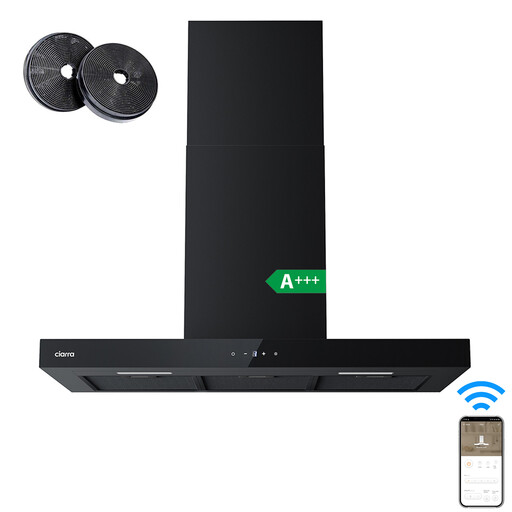 Image unavailable
CIARRA, 90 cm Wi-Fi wall-mounted cooker hood, 650 m³/h
Worth considering for a 90 cm wall-mounted space. The product name lists four speeds, including an intensive mode, and an extraction rate of 650 m³/h. For an open-plan living space, check the noise levels at the speeds you normally use, as well as which filter you need if you plan to use recirculation.
View on Joybuy
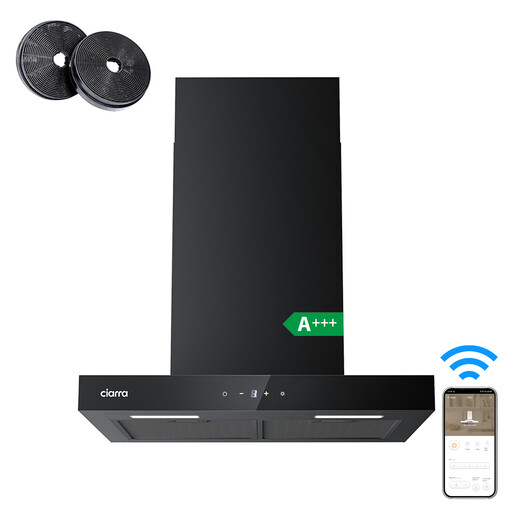 Image unavailable
CIARRA, 60 cm Wi-Fi wall-mounted cooker hood, 650 m³/h
Compare this model if you have a 60 cm wall-mounted space. The product name lists four speeds, including an intensive mode, and an extraction rate of 650 m³/h. Check the noise level at the settings you normally use and the filter reference required for recirculation.
View on Joybuy
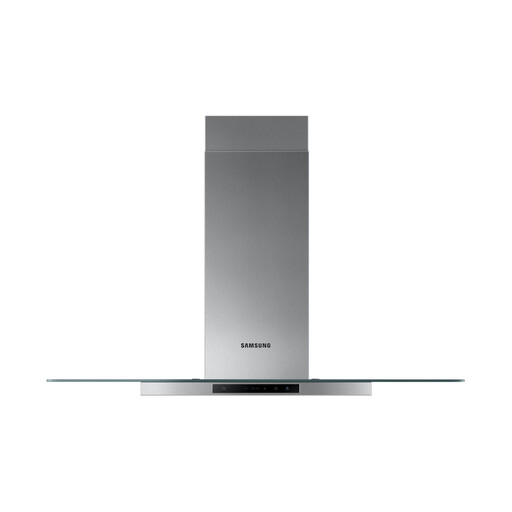 Image unavailable
Samsung NK36M5070FS, 90 cm wall-mounted cooker hood, 670 m³/h
For a 90 cm wall-mounted installation, check the connection required and the installation clearances for your hob. If you choose recirculation, the charcoal filter is listed as not included, so check which reference is compatible. Also check the noise levels at normal speeds rather than judging how comfortable it will be in the living room based only on intensive mode.
View on Joybuy
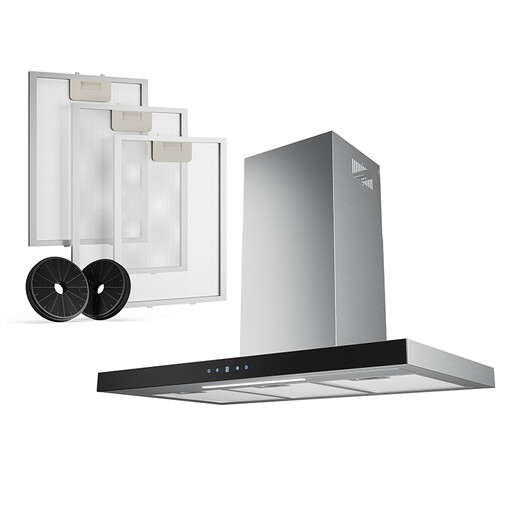 Image unavailable
Heinrich's HDU 7632 IX, 90 cm wall-mounted cooker hood, 564 m³/h
Worth considering for a 90 cm wall-mounted space, with extraction or recirculation depending on your chosen installation. The product name states that a charcoal filter is included; check its reference and maintenance instructions, as well as the noise levels at the speeds you will use in an open-plan kitchen.
View on Joybuy
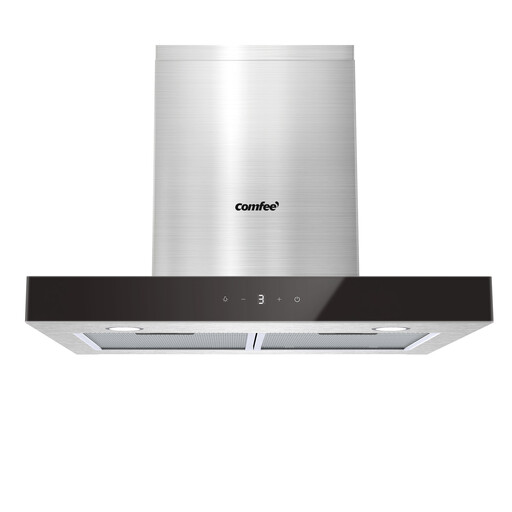 Image unavailable
Comfee TSHM77SS-60, 60 cm wall-mounted cooker hood, 650 m³/h
This 60 cm T-shaped design is worth comparing if your hob is against a wall. The product name lists both extraction and recirculation. For recirculation, check which odour filter is suitable and whether it is included. If noise in the living room is a factor in your decision, also check the dB(A) figures and the conditions under which they were measured.
View on Joybuy
Frequently asked questions
Does recirculation work in the same way as extraction to the outside?
No. Extraction sends the air drawn in outside through a duct, while recirculation filters the air and returns it to the room. If you are considering recirculation because there is no dedicated outlet, check which odour filter is compatible and how to maintain it before choosing your hood.
Which noise figure should you compare for an open-plan kitchen?
Compare dB(A) figures measured under the same conditions, then look for noise levels at the speeds you will use. EU regulations on cooker hood energy labelling define the declared noise level at the highest setting in normal use. This figure alone does not describe intensive mode or every setting you might use while cooking.
How often should you replace an odour filter?
Follow the instructions for your exact model rather than relying on a replacement interval that supposedly applies to all cooker hoods. Bosch recommends replacing the CleanAir 17000172 module annually, while Elica recommends replacing the CFC0140343 filter every 3 to 4 months. Check that your chosen filter is compatible with your appliance.
What should you check before planning extraction in a leasehold flat?
Ask a professional to identify the duct and check the lease, as well as the type of work involved. According to ANIL, work affecting communal areas or the external appearance of the building requires approval from the general meeting. Confirm the process that applies to your project before planning an outlet.
Can the energy label help you compare cooker hoods?
Yes, it is a useful starting point: ADEME says that energy labels for cooker hoods are available online and in shops. Check the model's product information too, to confirm the noise measurement conditions, dimensions and installation requirements.


