Kitchen without an outdoor outlet
You don't have a dedicated duct and want to use a cooker hood without creating an outlet. Check that the model supports recirculation, and find out the model numbers of the kit and filters you'll need.


For a kitchen without a dedicated duct, choose a cooker hood designed for recirculation or explicitly convertible to this mode, with a kit and filters that are compatible with its model number. An extraction hood is only suitable if there is a dedicated duct nearby that leads outdoors, as the ADEME advises; creating an outlet may also require permission. Recirculation avoids the need for this connection, but the filters need maintenance and it does not replace the home's ventilation.
You don't have a dedicated duct and want to use a cooker hood without creating an outlet. Check that the model supports recirculation, and find out the model numbers of the kit and filters you'll need.
You want to limit cooking smells spreading through the room. Check the stated performance in recirculation mode, how the filters need to be maintained and the noise level at the speed you plan to use.
Thinking about adding an outdoor outlet? First, identify the duct and check what permissions apply if the work affects communal areas or the building's exterior.
If there's no dedicated duct, start by checking that the hood is compatible with recirculation. Extraction and general ventilation are separate considerations: extraction requires a suitable outlet to the outside, while general ventilation helps maintain air circulation and manage humidity in your home.
Choose this: if there's no dedicated duct and the hood, kit and filters are compatible with recirculation mode.
Bear in mind: filtered air is returned to the kitchen, and the filters need to be maintained as described in the instructions.
Consider this: if there's a nearby, dedicated duct leading outdoors and the installation is suitable for the building.
Bear in mind: creating an outlet may involve technical checks and, depending on the work, permission.
| Factor | What to check | Who this matters to |
|---|---|---|
| Suitability for use without a duct | Check the instructions confirm recirculation mode, then find the model numbers of the kit and filters suited to your hood. | I want to use my cooker hood without creating an outdoor outlet, so compatibility with my kitchen comes before anything else. Around 50% of consumers would make this their top priority. |
| Cooking smells | Compare the stated figures for the same mode of use and make sure the hood is the right width for your hob. | I often cook in an open-plan kitchen, so my main concern is limiting the spread of cooking smells. This would be the top priority for around 30% of consumers. |
| Maintenance and fit | Check how the filters need to be maintained, the stated noise level, the dimensions and the clearances needed for installation. | I want a hood that fits neatly into my kitchen without demanding too much maintenance or making an irritating amount of noise day to day. Around 20% of consumers would prioritise these considerations. |
In France, Article 14 of the Order of 24 March 1982, published on Légifrance, prohibits connecting a motorised cooker hood to a shared air outlet system, whether mechanical or based on natural draught.
Have the type of duct identified before considering an extraction hood; do not connect the hood to a shared outlet.
Elica explains that not all of its cooker hoods can switch from one mode to another. Bosch says that a specific kit may be needed to use a hood in recirculation mode.
Check the model's instructions for the permitted operating mode, the kit and filter model numbers, and which accessories are actually included.
A recirculating cooker hood filters the air and returns it to the kitchen. Novy points out that home ventilation also plays a part in managing humidity.
If humidity or stale air is still your main concern, have your ventilation checked separately from your choice of cooker hood.
Under Article 25 of the Act of 10 July 1965, published on Légifrance, work by a flat owner that affects communal areas or the exterior of the building requires authorisation from the general meeting.
Before planning any drilling or connection, check the building's layout, the building rules and the permissions that apply to the work you have in mind.
These ranges can help you compare installation modes and accessories. Always check compatibility against the specific model number of the cooker hood.
A range worth exploring if you want to identify the precise cooker hood, recirculation kit and filters you need.
Cooker hoods in a range of styles to consider, depending on the space available and the installation mode you need.
Built-in and ceiling-mounted cooker hoods, as well as recirculation solutions, to consider when planning an integrated kitchen.
These wall-mounted cooker hoods offer a recirculation mode for kitchens without a dedicated duct. Compare their width with your hob and the available space, then check the filters and installation requirements for the model you're considering.
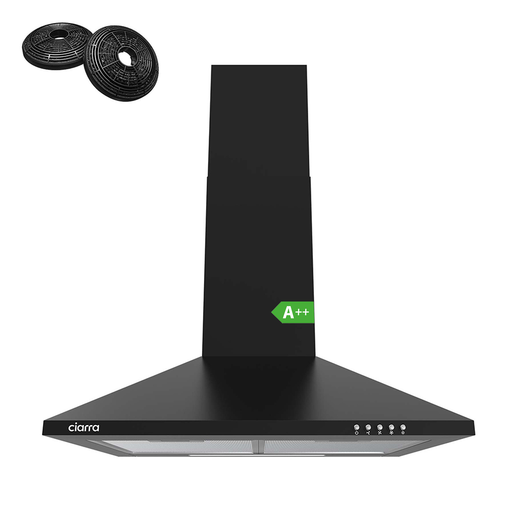 Image unavailable
Worth considering for a kitchen without a duct, provided recirculation mode is set up with compatible accessories.
Stated width: 60 cm; push-button controls. Check the model number of the filters supplied, how to maintain them and the clearance needed above the hob.
 Image unavailable
Its recirculation mode makes it suitable for a kitchen without an outdoor outlet, provided it can be fitted correctly in the available wall space.
Stated airflow: 580 m³/h; three speeds and touch controls. Check which filters are compatible, how often they need replacing and the installation dimensions in the instructions.
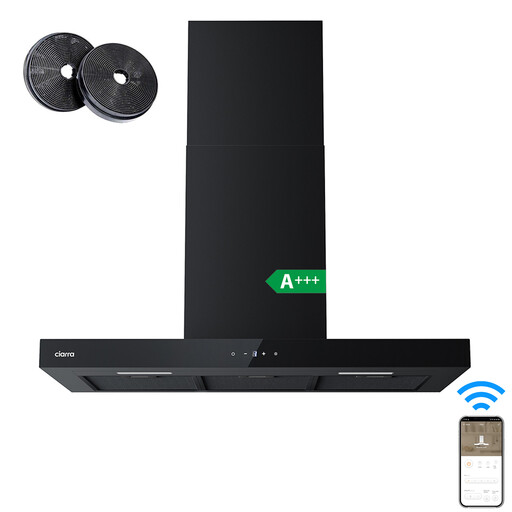 Image unavailable
Worth considering if you're looking for a recirculating hood and have room for a 90 cm wall-mounted model.
Stated airflow: 650 m³/h; four speeds, including a booster function, and touch controls. Check the installation clearances and filter maintenance requirements for this model.
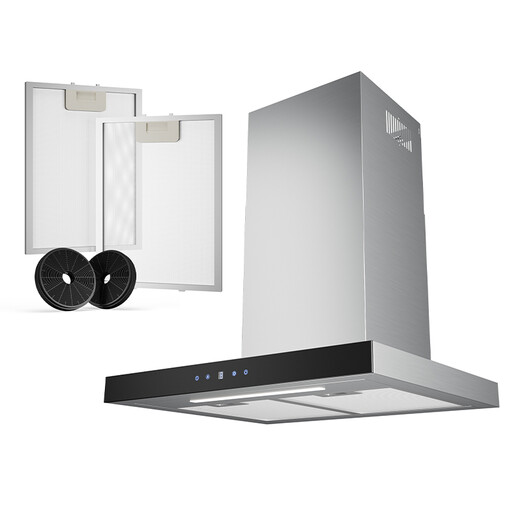 Image unavailable
Its recirculation mode means this model could suit a kitchen without a dedicated duct, once you've checked that it can be installed in your kitchen.
Stated airflow: 611 m³/h; touch controls and a charcoal filter listed as included. Check the model number of the replacement filter and the noise level if this is an important consideration for you.
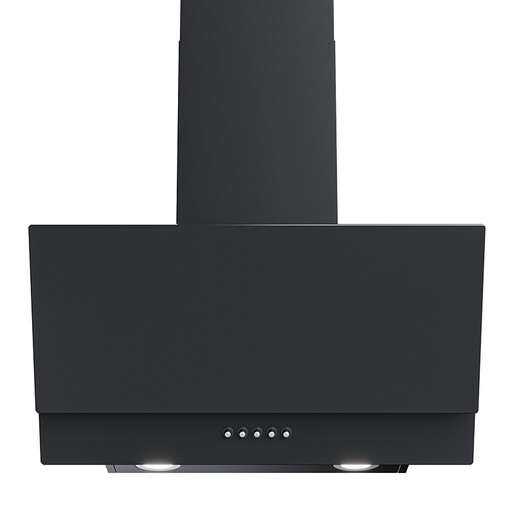 Image unavailable
This model offers recirculation for kitchens without an outdoor outlet. Make sure its angled design suits your hob and the available wall space.
Stated airflow: 300 m³/h; a charcoal filter is listed as included. Check the instructions for the replacement filter model number and check the noise level before you decide.
No, not to a shared air outlet system. In France, Article 14 of the Order of 24 March 1982, published on Légifrance, prohibits connecting an individual mechanical device, such as a cooker hood with a fan, to one, whether the shared outlet is mechanical or based on natural draught.
Yes, provided the model is designed for recirculation or explicitly convertible to this mode, and has a compatible kit and filters. Filtered air is returned to the kitchen. Check the instructions before buying, as Elica explains that not all cooker hoods can be converted.
No. A recirculating cooker hood filters the air and returns it to the room; it doesn't replace the ventilation system that manages air circulation and humidity in your home. If damp persists, have the ventilation checked separately.
Yes, if the work affects communal areas or the exterior of the building. Article 25 of the Act of 10 July 1965, published on Légifrance, requires authorisation from the general meeting in these cases. Before drilling, also check the building rules and the requirements that apply to your specific project.
Follow the cooker hood instructions and check the exact model number of its filter. How often it needs replacing depends on the filter and how you use it. For example, Bosch recommends replacing its 12020221 filter about every six months; this timeframe doesn't apply to other filters.