
Livraison le jour même ou le lendemain

Qualité garantie

Débloquez vos offres de bienvenue: Livraison GRATUITE | Jusqu'à -80 % | 30 jours d'essai gratuits à JoyPlus
Téléchargez l'application
A cooker hood isn’t chosen purely for its looks. A glass front, touch controls or a high airflow rate might catch your eye at first, but it’s the finer details that make the real difference day to day: dimensions, extraction method, noise level, filters and ease of maintenance.
In British kitchens, certain mistakes crop up time and again. The first is choosing a hood that’s too narrow for your hob. The second is mistaking the boost-mode airflow rate for everyday performance. The third concerns recirculation: without a suitable charcoal filter that’s replaced regularly, odours can linger even when the motor is running.
Here are the criteria to consider before comparing a wall-mounted cooker hood, an integrated hood or a decorative cooker hood.
A cooker hood should generally cover the full width of your hob, or even extend slightly beyond it if space allows. 60 cm cooker hoods suit standard hobs and compact kitchens. A 90 cm cooker hood offers a wider capture zone, particularly above a large hob or a range cooker.
Also remember to measure the available depth, the height under your wall units and the space above the hob. A slanted hood can free up more room in front of your face, while a telescopic or under-cabinet model will blend more discreetly into a small kitchen.
Expressed in m³/h, the airflow rate indicates the volume of air the appliance moves under specific conditions. However, you need to check whether this figure refers to the maximum rate, the boost mode or another duct configuration.
A powerful cooker hood can be worthwhile if you cook often, regularly deep-fry or have an open-plan kitchen. But a duct that’s too long, has too many bends or is the wrong diameter can reduce performance. The Samsung NK36M5070FS, for example, claims up to 670 m³/h in Boost mode and is designed for a 150 mm connection for external extraction.
A hood with external extraction pushes steam and odour-laden air outside. It requires a compatible duct and an installation that’s permitted in your home. Never connect the hood to a flue used for extracting fumes from a gas appliance or any other combustion equipment.
A recirculation hood, on the other hand, filters the air before returning it to the room. This solution works well for flats and kitchens without an external vent, but it needs compatible charcoal filters. Always check whether these are supplied or sold separately – this difference can significantly affect running costs.
Check the noise level in decibels at each speed, where this information is available. A quiet cooker hood isn’t a standardised regulatory category, so it’s better to compare the stated figures than to rely on marketing claims alone.
LED lighting above the cooking zone improves visibility, though it won’t replace your main kitchen lighting. To keep consumables to a minimum, choose a washable grease filter, preferably aluminium. Cleaning should follow the manufacturer’s instructions; some filters are dishwasher-safe, even if their appearance may change over time.
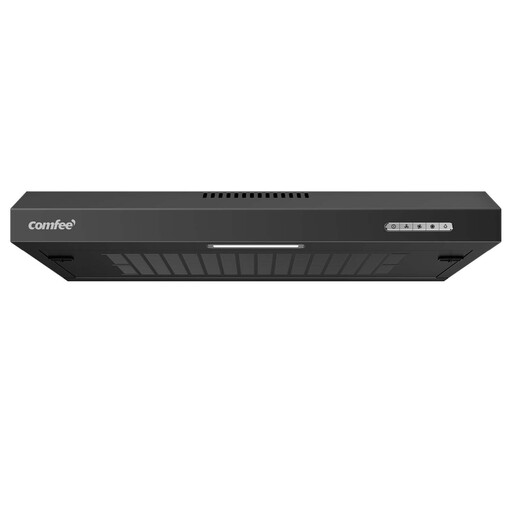
Why this suits this profile: Its 60 cm size and compact design fit neatly into a small kitchen, especially in a flat or rental property.
The listing mentions two installation modes, three speeds and a removable aluminium filter. In recirculation mode, you will need to buy the charcoal filter separately.
600 mm width, stated airflow of 200 m³/h, LED lighting and a stainless steel body.
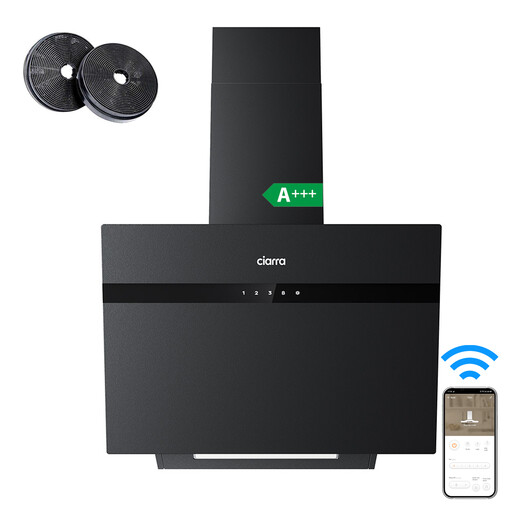
Why this suits this profile: Its matte black glass, touch controls and app-based operation appeal to contemporary kitchens where style matters as much as ease of use.
The listing clearly distinguishes recirculation from external extraction and mentions washable grease filters. The stated airflow should still be considered in the context of the mode used and the installation.
Maximum stated airflow of 650 m³/h, maximum noise level of 58 dB and two levels of LED lighting.
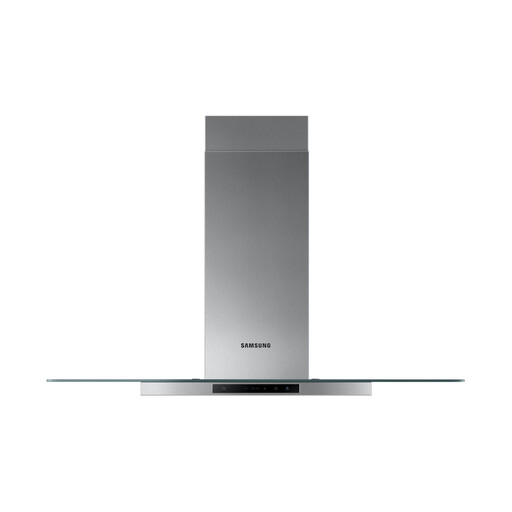
Why this suits this profile: Its generous size and four speed levels, including a timed Boost mode, suit frequent cooking in a spacious or open-plan kitchen.
The listing specifies the Boost mode duration, the duct diameter — 150 mm — and the option to use it in recirculation mode with a charcoal filter sold separately.
Maximum stated airflow of 670 m³/h, two 2.5 W LED lamps and dishwasher-compatible aluminium filters, according to the product listing.
We’ve put together a comprehensive, real-time updated list of products that meet these demanding selection criteria as well as European safety requirements.
For a standard hob, a 60 cm hood is the most common choice. A 90 cm width may be preferable above a large hob, for heavy-duty cooking or in an open-plan kitchen, provided you have enough wall space and height.
It can work perfectly well in this situation, as long as you use the charcoal filters specified by the manufacturer and replace them regularly. It reduces odours, but unlike a ducted hood, it doesn’t remove steam or humidity to the outside.
Running costs depend on the appliance’s power, its energy rating, how long you use it and whether you use Boost mode. Check the annual energy consumption on the energy label, and don’t forget the cost of charcoal filters and any duct installation fees.