A kitchen with a usable external duct
You’re fitting a new kitchen or replacing a cooker hood where a duct already leads outside. Before choosing extraction, make sure the duct can be used for your planned installation.


First, choose the type of installation your home can actually support: an extractor hood needs a usable duct to the outside, while recirculation is suitable when no such connection is possible. Then check the filters and accessories required for the specific model you’re considering, its noise level in the mode you plan to use, and its installation dimensions. Any changes to the duct may also require permission. If you’re installing an extractor hood, pay particular attention to the air supply if you have a fuel-burning appliance.
You’re fitting a new kitchen or replacing a cooker hood where a duct already leads outside. Before choosing extraction, make sure the duct can be used for your planned installation.
You can’t connect the hood to the outside, or modifying your home isn’t an option. You’ll need a model that supports recirculation, along with the filters it requires.
Consider the cabinet opening, the position above the hob and the noise level in your living space. Decide on the airflow system first, then choose a shape that suits the available space.
Consider this if: a duct to the outside can be used to remove cooking air from your home.
You’ll need to plan for: the connection and a suitable air supply. Changes to the building may require permission.
Consider this if: an external connection isn’t possible and your chosen model supports this mode.
You’ll need to plan for: filtered air being returned to the room, and maintenance of the carbon filter specified for your model.
Once you’ve settled on the installation type, compare the specifications in that same mode, then check maintenance, noise and the space available for fitting.
| Criteria | What to check before buying | Who this matters to |
|---|---|---|
| Duct and home | Check that the duct leads outside and can be used. If you’re planning any work, check the relevant permissions before choosing an extractor hood. | If the connection depends on my home or building work, I want to know what I can install before choosing an appliance. Around 40% of consumers put this first. |
| Cooking air | Compare airflow rates and results in the mode you’ll actually use: UFC-Que Choisir measures airflow with a carbon filter for recirculation, and without one for extraction. | If I cook often, I want to compare how each model handles smoke, odours and steam without confusing the two modes. This is the main consideration for around 30% of consumers. |
| Filters and maintenance | For recirculation, note the compatible kit and filter references, then check the replacement or regeneration instructions. | I prefer to know which filters I’ll need and what maintenance is involved before choosing a recirculating model. Around 20% of consumers prioritise this. |
| Noise and installation | Check the installation dimensions in the manual and compare noise levels at equivalent speeds, not just at the lowest setting. | In an open-plan kitchen or with an existing cabinet, I want the hood to fit without overlooking the noise level at the speed I’ll use. Around 10% of consumers prioritise this. |
A model may need a specific kit, and not every kit fits every hood. Bosch recommends checking the E-Nr reference in particular to find a kit that’s compatible with its models.
Note the hood’s exact reference, then check the manual for the accessories needed and what’s included.
The kit and carbon filters may be separate accessories, and their replacement or maintenance adds to the cost of using the hood.
An airflow figure measured in extraction mode won’t necessarily reflect performance with a carbon filter. UFC-Que Choisir uses separate test methods for these two configurations.
Compare figures measured in the same mode and, for noise, at the same speed where this is specified.
In a shared-ownership building, work affecting communal areas or the exterior appearance may require approval at a general meeting under Article 25 of the Law of 10 July 1965, published by Légifrance. ANIL states that a tenant needs the landlord’s written consent to modify the home or its equipment.
Check the specific plans, the rules that apply to your home and whether the duct can be used before starting work or choosing an extractor hood.
An extractor hood removes air from the room. Electrolux warns that without replacement air, it can affect the operation of a stove, fireplace or gas water heater.
If you have an appliance that burns fuel and relies on air from the room, ask a qualified professional to assess the set-up and air supply before installation.
Depending on the model, Bosch offers cooker hoods and kits for extraction or recirculation.
The range includes built-in canopy hoods, with installation options and filters that vary by model.
Elica offers cooker hoods and carbon filters, including regenerable options for certain compatible models.
These cooker hoods come in a range of styles, including under-cabinet, built-in and wall-mounted designs. For each one, check which installation mode your kitchen allows and what accessories you’ll need before choosing.
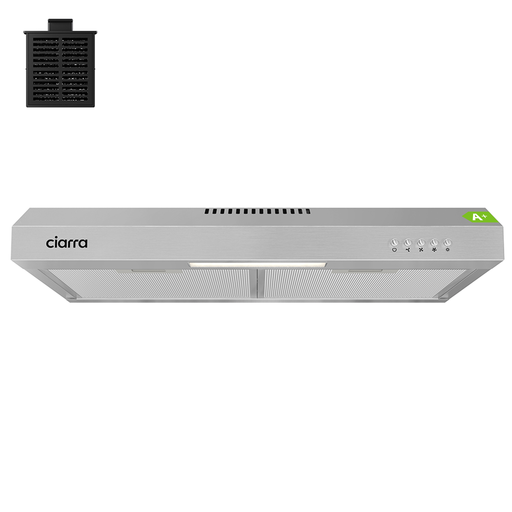 Image unavailable
Worth considering if you need a hood to fit under a cabinet and are still deciding between extraction and recirculation.
The product name indicates two ventilation options and push-button controls. For recirculation, check that the compatible CBCF009 kit and filter are suitable, and confirm which accessories are included.
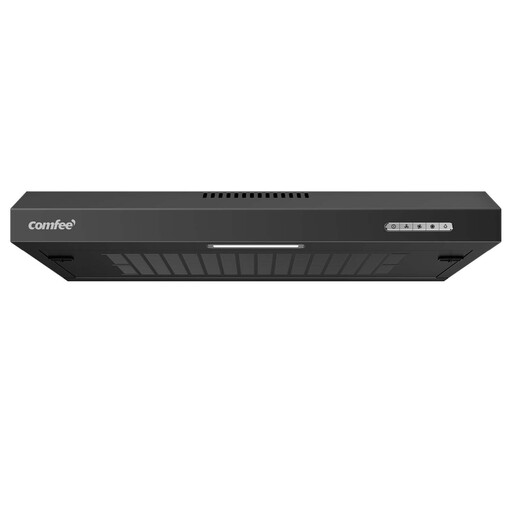 Image unavailable
This under-cabinet design is worth considering if you need to check both the available fitting space and the ventilation mode.
The product name mentions LED lighting. If you’re planning to use recirculation, check the reference for the compatible cotton filter, sold separately, and follow the model’s installation requirements.
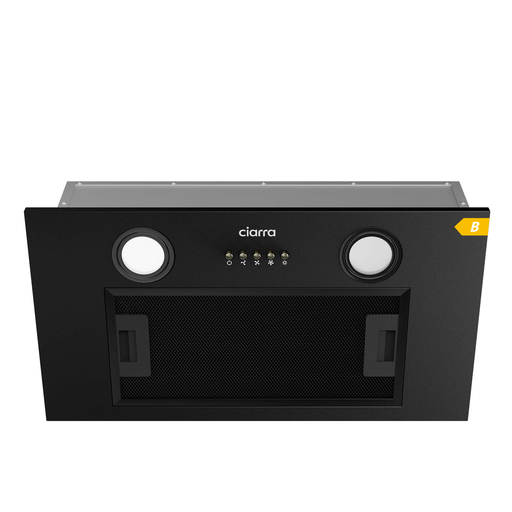 Image unavailable
Its built-in design is worth considering if you need a hood to fit inside a wall cabinet.
Check the cut-out dimensions and the intended connection type. For recirculation, check that the separately sold CBCF005 carbon filter is compatible. If the stated airflow rate is important to your choice, confirm the figure for this particular variant.
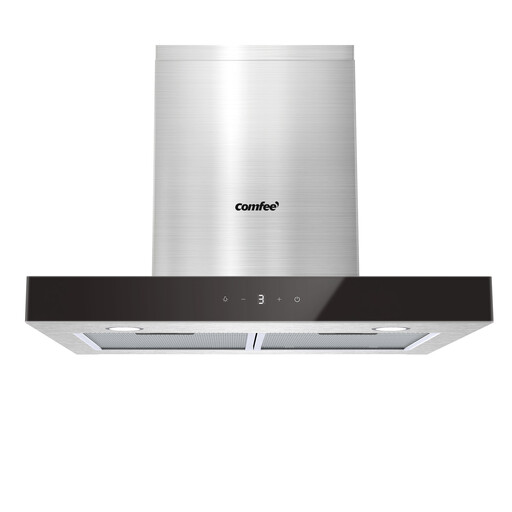 Image unavailable
This T-shaped hood may be suitable if its wall-mounted design works with your kitchen layout.
The product name mentions extraction and recirculation. Check the manual for the installation dimensions and, for recirculation, the reference of the compatible filter or kit before choosing this mode.
If the work affects communal areas or the exterior appearance of the building, it requires approval at a general meeting under Article 25 of the Law of 10 July 1965, published by Légifrance. Before planning an outlet, check the building’s co-ownership rules, the exact nature of the work and any other requirements that apply.
According to ANIL, modifying the home or its equipment requires the landlord’s written consent. Make sure the proposed connection is clearly defined before any work begins; the presence of a duct doesn’t, in itself, mean you’re allowed to alter it.
It depends on the filter and how you use it, so check the manual for the reference compatible with your hood. Electrolux recommends replacing its OdourClean Standard MCFB97 filter every 4 to 6 months, depending on use, while Elica recommends replacing its regenerable Long Life CFC0166361 filter every 2 years. It’s compatible with certain Rules hoods. These timeframes don’t apply to all filters.
Have the air supply and installation set-up checked before fitting the hood. Electrolux warns that an extractor hood without replacement air can affect a stove, fireplace or gas water heater. A qualified professional can assess any appliance that relies on air from the room.