Kitchen without an outside outlet
Check that the model can be used in recirculation mode and find out which filters it needs. Filtered air and steam are returned to the room.


If you have a dedicated outlet to the outside that can genuinely be used, compare cooker hoods with extraction. Otherwise, choose a model designed for recirculation and make sure you have the compatible filters. With recirculation, filtered air and steam are returned to the kitchen. Before choosing extraction, check the duct, the work involved and any permissions required for your home.
Check that the model can be used in recirculation mode and find out which filters it needs. Filtered air and steam are returned to the room.
You’d like to vent cooking air outside, but before any work begins, you’ll need to check the duct, the route for the ducting and any permissions required for your home.
The position of the hob, wall unit or island may determine which hood shape will work. Then check the dimensions, fitting height and access to the filters.
UFC-Que Choisir distinguishes between extraction, which vents air outside, and recirculation, which returns it to the kitchen. Your choice depends first on your home’s layout, then on the installation options and the maintenance you can manage.
| Factor | What to check before buying | Who it matters most to |
|---|---|---|
| Available extraction mode | Check whether a dedicated outlet can be used, or whether the model you’ve chosen is designed for recirculation and has compatible filters. | If there’s no established outside outlet, I want to know whether the model is genuinely designed for recirculation. This is a priority for around 36% of consumers. |
| Managing cooking emissions | Compare the specifications for the mode you’ll be using and check which filters are required. In recirculation mode, air and steam are returned to the room. | When I’m cooking, I want to choose a mode that suits how odours, grease and steam are handled. This comes ahead of other factors for around 29% of consumers. |
| Dimensions and installation | Measure the hob and cabinet, then follow the dimensions in the instructions. For the Bosch DWB97IM50, Bosch Électroménager France specifies a minimum distance of 550 mm above an electric hob and 650 mm above a gas hob; these measurements apply to this model. | If my hob is beneath a cabinet or on an island, I want a shape and size that will fit the space. Installation is the top priority for around 21% of consumers. |
| Noise and maintenance | Compare noise levels in the same mode and at a similar speed. Check how to clean the grease filter and maintain the odour filter for the model. | In an open-plan kitchen or when cooking frequently, I want to take noise and filter maintenance into account. These factors come first for around 14% of consumers. |
An unsuitable duct is not a solution for venting a cooker hood. In its advice published on 19 February 2019, UFC-Que Choisir advises against connecting a hood to a mechanical ventilation system (VMC) or chimney flue.
Check what the duct is intended for and whether you have permission to carry out the work before choosing extraction mode.
Creating an outlet may involve building work or mean that you need to rethink your installation plans.
A figure given for extraction does not necessarily reflect performance in recirculation mode. A model’s specifications may vary depending on the mode.
Compare figures for the mode you intend to use and, for noise, at a similar speed.
Your chosen mode may require specific accessories, and odour filters need to be maintained in line with the model’s requirements.
Before buying, note down the reference numbers for any accessories you need and check the maintenance instructions in the manual.
Depending on the model, you may need to buy compatible accessories and maintain the odour filters over time.
An integrated hood needs to fit the cabinet, and the minimum height varies depending on the model and the type of hob.
Measure the hob, cabinet and vertical clearance, then compare these measurements with the model’s instructions.
If the measurements don’t work, you may need to modify the cabinetry or choose a different appliance.
The examples below relate to specific models and their installation requirements; they don’t represent every range from these brands.
Wall-mounted cooker hoods with guidance on extraction and recirculation, as well as installation and filter searches by model.
The 90 cm LFT829X wall-mounted hood is an example of a model designed for a hob positioned against a wall.
The Stripe wall-mounted range is worth considering when appearance and installation dimensions are important to your project.
Consider an extractor hob if your project allows you to choose the hob and extraction system together.
This selection includes 60 or 90 cm wall-mounted cooker hoods, a 60 cm built-in hood and an induction hob with an integrated extractor. Check the extraction mode, dimensions and installation options to make sure they suit your kitchen.
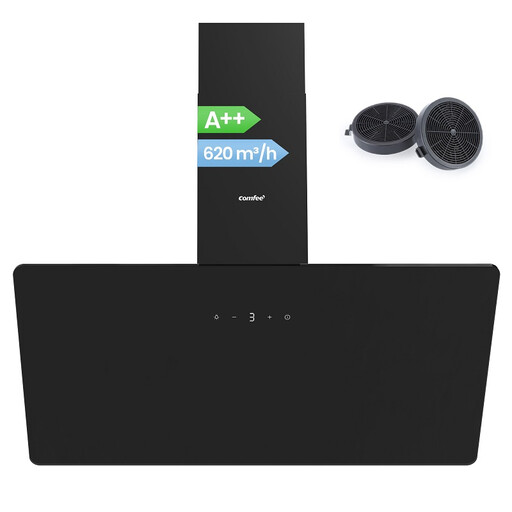 Image unavailable
Worth considering if a 90 cm angled hood suits the space above your hob.
The product information lists extraction and recirculation modes, a stated airflow rate of 620 m³/h, four speeds and a stated noise level of 59 dB. It also mentions a five-layer aluminium filter.
Before venting air outside, check that you have a dedicated duct and any necessary permissions. Do not connect the hood to a mechanical ventilation system (VMC) or chimney flue.
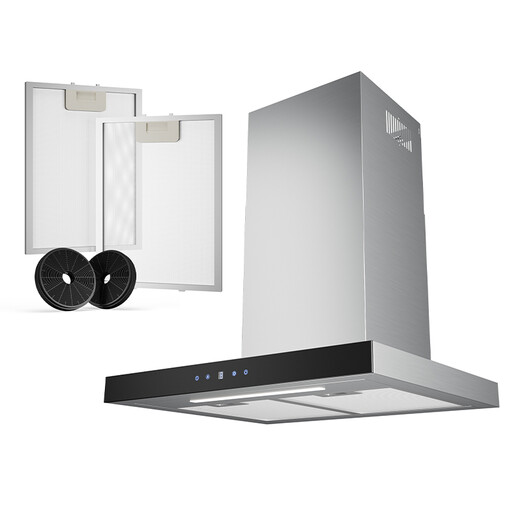 Image unavailable
Consider this model if a 60 cm wall-mounted hood will fit above your cooking area.
The product information lists extraction and recirculation modes, a stated airflow rate of 611 m³/h and an included charcoal filter. It also mentions a dishwasher-safe aluminium grease filter.
Check that you have a dedicated duct and any necessary permissions before connecting the hood to an outside outlet or drilling through a wall. Do not connect it to a mechanical ventilation system (VMC) or chimney flue.
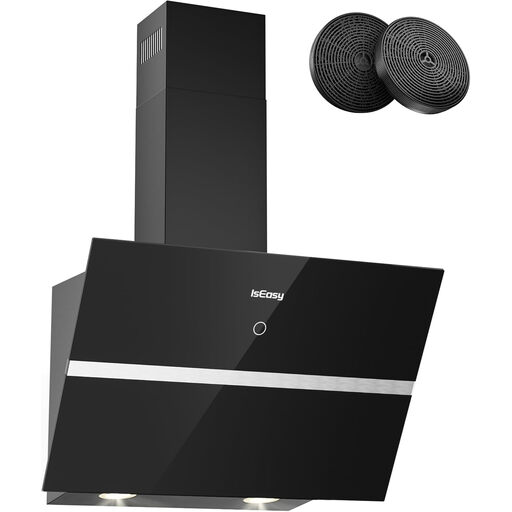 Image unavailable
Worth considering if a 60 cm hood and its available modes suit your kitchen layout.
The product information lists recirculation and extraction modes, a stated airflow rate of 578 m³/h, four speeds and a noise level of 58 dB. The description mentions included charcoal filters and a dishwasher-safe aluminium grease filter.
For extraction, check that you have a dedicated duct and any necessary permissions before connecting the hood or drilling through a wall.
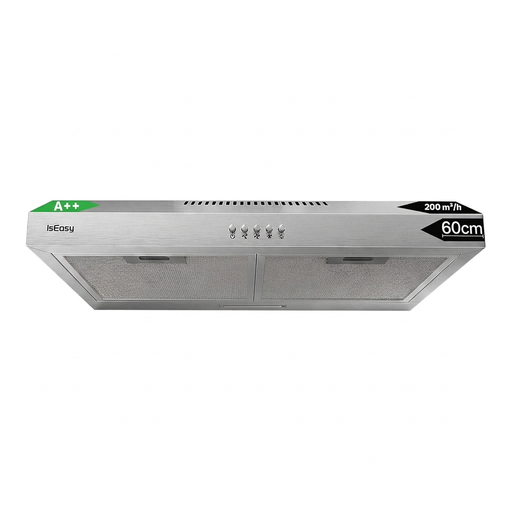 Image unavailable
Consider this model if your cabinet can accommodate a 60 cm built-in cooker hood.
The product information lists recirculation and extraction modes, three power levels and an activated carbon filter.
Measure the cabinet and check access to the filters, as well as the fitting dimensions in the instructions, before choosing this style.
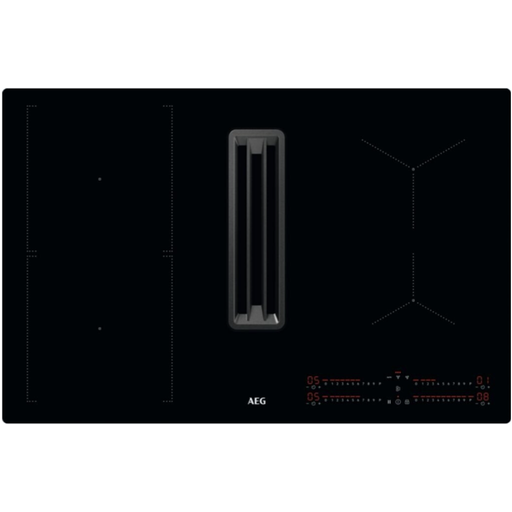 Image unavailable
Worth considering if your project also involves replacing your hob.
The description lists four zones, a Bridge function and a stated maximum extraction rate of 575 m³/h. The product information specifies a 7.6 kW two-phase power supply and professional installation.
Check the power supply and required dimensions before choosing this integrated solution.
No. It filters the air and returns it to the kitchen, including the steam, so it doesn’t replace ventilation in your home. UFC-Que Choisir distinguishes this from outside extraction.
Don’t connect the hood to either type of duct. In its advice published on 19 February 2019, UFC-Que Choisir advises against doing so. Check what the duct is intended for before planning extraction.
Follow the instructions for your chosen model and check the type of hob. For the Bosch DWB97IM50, Bosch specifies a minimum distance of 650 mm above a gas hob and 550 mm above an electric hob; these measurements apply to this model only.
Check how to maintain the grease filter and find the reference number for the odour filter. How often it needs replacing depends on the filter and how you use it. Bosch says its metal filters can be cleaned in a dishwasher; check the instructions for each model.
It depends on your home and the work involved. Service Public states that tenants may need their landlord’s permission to carry out work (information sheet dated 28 May 2025). In a block of flats, ANIL specifies that work on shared areas or building equipment requires a decision by the general meeting. Service Public also states that changes to the external appearance of a building may require prior planning permission (information sheet dated 22 October 2026). Have your specific plans assessed before drilling.
Not necessarily: accessories depend on the model and the mode you choose. For the UTDRAG model, the charcoal filter is sold separately; the duct is also sold separately for extraction. Check which accessories are compatible with your installation.