
Livraison le jour même ou le lendemain

Qualité garantie

Débloquez vos offres de bienvenue: Livraison GRATUITE | Jusqu'à -80 % | 30 jours d'essai gratuits à JoyPlus
Téléchargez l'application
A cooker hood should reduce smoke, odours and grease deposits without turning installation into a major project. A model that looks appealing on paper can become inconvenient in everyday use, with incompatible dimensions, constant noise or filters that are awkward to maintain.
Before placing your order, three common pitfalls deserve particular attention.
A cooker hood with external extraction expels air through a duct. You therefore need a compatible outlet, must be able to pass through the wall or connect to the existing network, and then follow the connection instructions provided in the manual.
A ductless cooker hood, also known as a recirculating hood, uses a grease filter and a carbon filter to clean the air before sending it back into the kitchen. This is a practical solution for flats, rented properties or homes where modifying the wall is not permitted. However, the carbon filter must be replaced in line with the manufacturer's recommendations: a washable metal filter does not perform the same function.
Some models offer both modes. This versatility can be particularly useful if you move home, but check the box contents: a carbon filter, duct, flap and fixing components are not always included.
To compare a powerful cooker hood, look at the stated extraction rate at each speed, not just the maximum figure. Several settings let you adjust extraction for gentle cooking or particularly strong-smelling food.
Noise is measured in decibels. A hood marketed as quiet will not necessarily remain so at full power, so compare the noise levels associated with each speed. In a studio flat or open-plan kitchen, a model rated between 59 and 64 dB at maximum power can offer an appealing compromise, although the result will also depend on the installation.
Choose a removable, washable grease filter wherever possible. Some models use aluminium filters that are suitable for regular cleaning, but always consult the manual for the recommended method. A cooker hood with LED lighting also improves visibility above the cooking area, although it does not replace the room's main lighting.
Also remember to check the energy label, electrical power, voltage compatibility with your installation and the presence of the CE marking. For permanent installation, follow the manual carefully and call in a professional if the electrical connection or duct presents any difficulty.
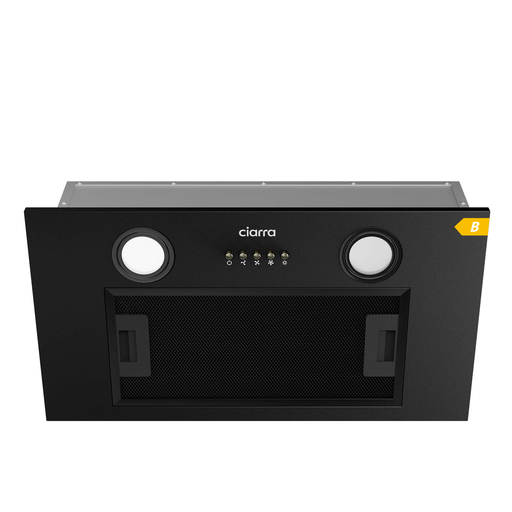
Why this choice suits this profile : With its 520 mm built-in format, it is designed for wall cabinets and smaller cooking areas. Its push-button controls are simple to use every day.
The dimensions are clearly stated and the metal filter is easy to remove. In recirculation mode, the CBCF005 carbon filter must be purchased separately.
Stated extraction rate of up to 206 m³/h, three speeds, integrated lighting and energy rating B.
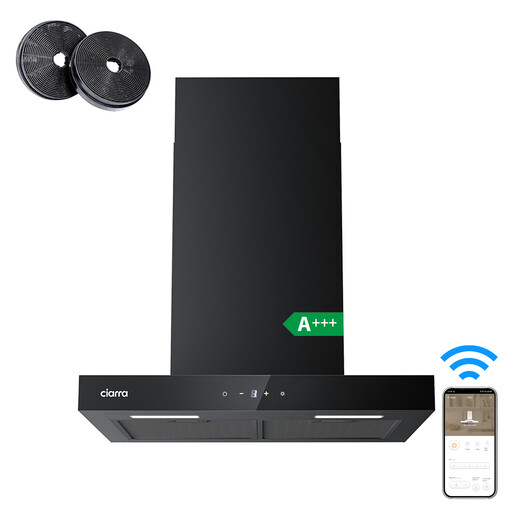
Why this choice suits this profile : This black wall-mounted hood combines touch controls, Wi-Fi connectivity and a 60 cm width to fit seamlessly into a contemporary kitchen.
The product details specify both ventilation modes and include two CBCF003 carbon filters for recirculation.
Maximum stated extraction rate of 650 m³/h, maximum noise level of 59 dB, A+++ energy rating and washable metal filters.
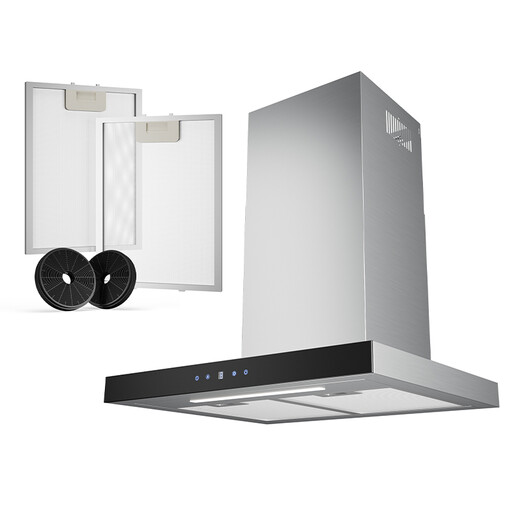
Why this choice suits this profile : With its 60 cm width and stated extraction rate of 611 m³/h, it is designed for regular cooking in a family or open-plan kitchen.
Both extraction and recirculation modes are specified, with a carbon filter included. However, you should still check duct compatibility before installation.
A++ energy rating, touch control, LED lighting and a five-layer aluminium filter stated to be dishwasher-safe.
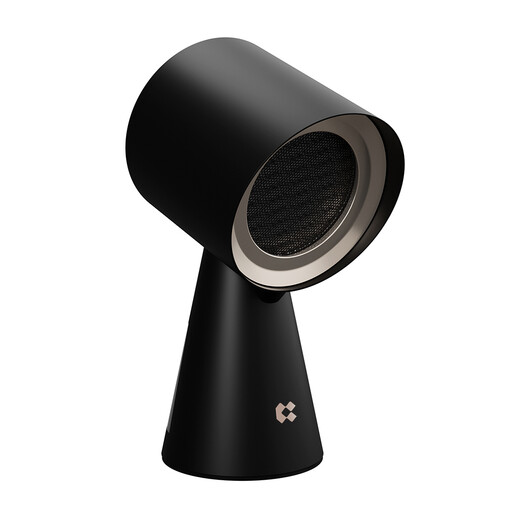
Why this choice suits this profile : This portable hood can be placed near an electric grill, plancha or temporary cooking appliance, with no drilling or wall duct required.
Its recirculation operation is clearly defined: air is filtered and then released back into the room. It should therefore not be confused with a cooker hood that vents air outside.
Two speeds, 24 W power, stated extraction rate of up to 108 m³/h and maximum noise level below 65 dB.
We have brought together a complete, real-time updated selection of products that meet these demanding criteria and European safety regulations.
Yes, when external extraction is impossible or not permitted. It must be installed with the appropriate filters, and the carbon filter must be maintained or replaced according to the instructions in the manual. You should also ventilate the room during cooking that produces a lot of steam.
A 60 cm cooker hood will generally suit a hob of the same width, subject to checking the product's exact dimensions and installation instructions. For a wider hob, a 90 cm model offers a larger capture area. In all cases, the distance between the hood and the hob must comply with the manufacturer's recommendations.
Consumption depends on the electrical power, the length of time it is used and the energy rating. To estimate it, multiply the power in kilowatts by the number of hours of use, then by your electricity price. Also remember to factor carbon filter replacement and regular cleaning into your maintenance budget.