
Livraison le jour même ou le lendemain

Qualité garantie

Débloquez vos offres de bienvenue: Livraison GRATUITE | Jusqu'à -80 % | 30 jours d'essai gratuits à JoyPlus
Téléchargez l'application
A cooker hood needs to remove smoke, steam, grease and cooking odours without turning your kitchen into an echo chamber. Yet some purchases disappoint after just a few weeks: the airflow figure only applies to boost mode, the charcoal filter wasn't factored into the budget, the dimensions don't fit your cabinet, or installation isn't possible without ducting.
Before you choose a 60 cm cooker hood, a wall-mounted hood or an integrated hood, check three things: the extraction method, the airflow that actually suits your needs, and how to maintain the filters.
A figure like 650 m³/h or 670 m³/h usually refers to the maximum airflow, often achieved in boost mode. At that level, noise increases and so does energy consumption. Instead, look at the different speed settings, the airflow for each one, and the corresponding noise level.
In a small kitchen or a studio flat, a quiet hood with a moderate airflow can be far more pleasant day to day than a powerful model running flat out all the time. Open-plan kitchens and those who regularly deep-fry, however, will want a bit more headroom.
External extraction requires a compatible duct, a suitable outlet, and permission to install it in your home. In a flat or rental property, this work may be prohibited or subject to the landlord's and freeholder's approval.
A recirculation hood returns air that has been partially cleaned back into the room. It suits homes without a duct, but requires a charcoal filter that must be replaced regularly. Recirculation reduces odours but does not remove humidity: you still need to ventilate the kitchen properly.
A 60 cm hood generally suits a hob of a similar width. For a 90 cm hob, a wider model will cover the cooking zone better. Also measure the depth, the height available under your wall cabinet, and the distance between the hob and the hood.
The clearances stated in the manual must be followed exactly. They can vary depending on the type of hob, particularly between an electric and a gas installation.
Compare the dimensions given with those of your cabinet, not just the width of your hob.
Airflow is measured in cubic metres per hour. The figures on product pages should be compared at the same speed setting. As a guide, the selection shown here includes models from 184 to 650 m³/h, plus a portable unit rated at 77.8 m³/h on low speed and 108 m³/h on high speed.
Noise level is given in decibels. A spec sheet showing 59 to 64 dB at maximum power might suit an open-plan kitchen, but how it sounds depends on the room layout and the ductwork. A long, narrow duct or one with several bends can also reduce actual airflow and increase noise.
A washable aluminium grease filter traps grease and needs cleaning regularly, typically every two to four weeks depending on use. In recirculation mode, a charcoal filter is essential: check whether it is supplied, sold separately, or linked to a specific part number.
LED lighting makes food preparation easier and can supplement your kitchen's main lighting. Look at the energy rating alongside the stated annual consumption. The spec sheets here include models rated A+, A++, A+++ and B. These ratings describe energy use under the applicable labelling scheme; they don't, on their own, let you compare airflow or noise level.
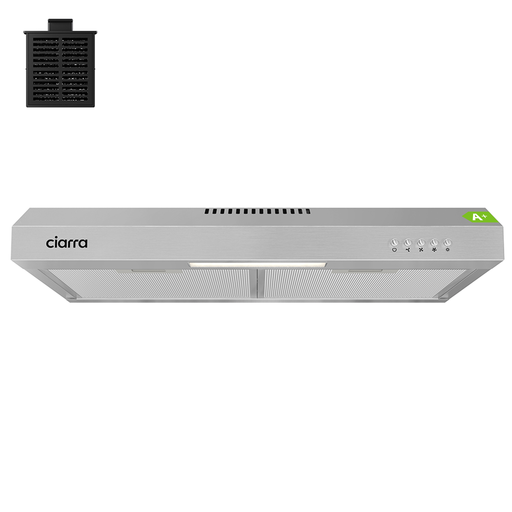
Why this suits this profile: This compact stainless steel model measures 596 mm wide and works with both external extraction and recirculation. It's ideal for narrow kitchens and anyone looking for straightforward operation.
The dual installation option stops you accidentally buying an appliance that won't work in a home without ducting. The aluminium filter is washable.
Maximum stated airflow of 184 m³/h, A+ energy rating, built-in lighting and a maximum stated noise level of 61 dB.
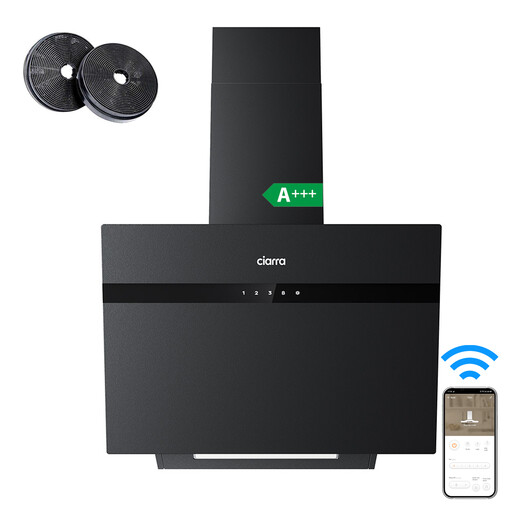
Why this suits this profile: Its matt black glass front, app controls and two-level LED lighting are designed for contemporary kitchens where aesthetics and personalisation matter.
The specifications clearly distinguish between recirculation and extraction, and the aluminium filter is washable. The maximum stated noise level is 58 dB.
Stated airflow of 650 m³/h, A+++ energy rating, Wi-Fi function and adjustable LED lighting.
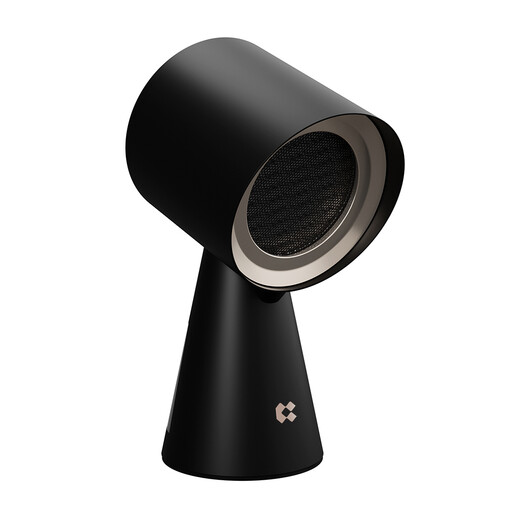
Why this suits this profile: This self-contained 1.5 kg unit sits next to an electric grill, a multi-function appliance or in a campervan, with no drilling or wall ducting required.
It doesn't claim to provide external extraction: it works by recirculating filtered air. The oil tray and filters need cleaning after each use.
Two speeds, 24 W power, stated airflow up to 108 m³/h and a maximum noise level below 65 dB.
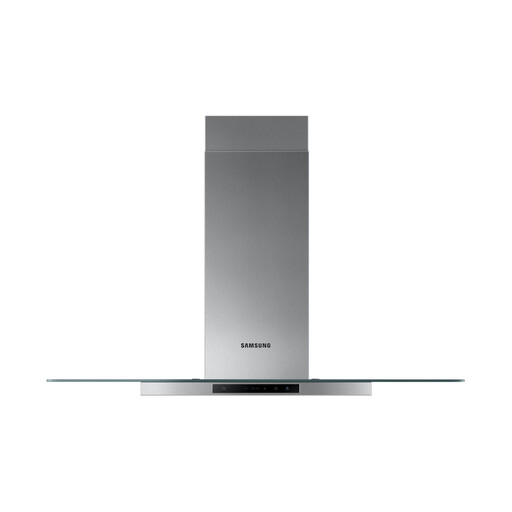
Why this suits this profile: Its 90 cm width and four speed levels, including a timed boost mode, suit large hobs and regular cooking sessions.
The maximum airflow of 670 m³/h is achieved in a five-minute boost mode. The spec sheet also states the 150 mm duct connection and the minimum clearances required during installation.
Removable aluminium filters that are dishwasher-safe, two LED lights and touch controls with a display.
We've put together a comprehensive, real-time updated selection of products that meet these strict criteria and comply with European safety regulations.
Before connecting the hood, check the voltage rating, the strength of the wall fixing or the cabinet's load capacity. For external extraction, measure the duct diameter and keep the number of bends to a minimum. In recirculation mode, fit the charcoal filter specified in the manual.
Clean the aluminium filter regularly and wipe the surfaces with a soft, non-abrasive cloth. Disconnect the appliance before any maintenance. Never leave an open flame unattended while cooking, and avoid flambéing dishes directly under the hood.
Yes, provided the model supports this mode and the correct charcoal filter is fitted. However, it does not replace room ventilation: moisture stays inside the home.
Look at the airflow available at each speed, the corresponding noise level, and the type of cooking you do. A small kitchen used infrequently can manage with a moderate airflow, while an open-plan kitchen or frequent cooking calls for more capacity.
The cost depends on the motor power, how long you use it, and the energy rating. Compare the annual consumption stated on the spec sheet, and don't forget the cost of charcoal filters when they are needed.