
Livraison le jour même ou le lendemain

Qualité garantie

Débloquez vos offres de bienvenue: Livraison GRATUITE | Jusqu'à -80 % | 30 jours d'essai gratuits à JoyPlus
Téléchargez l'application
Watching your child discover the world is one of a parent's greatest joys. The convertible tricycle is often their first adventure companion, promising wonderful strolls and a gentle introduction to independence. But be warned: the market is flooded with models making tempting promises that can quickly turn into costly disappointments.
As a product expert at Joybuy, I'm here to guide you. Together, let's break down the 3 pitfalls to avoid and the essential criteria for making a smart choice—an investment that will grow with your child for years to come.
Before falling for a flashy design or a gimmicky feature, it's crucial to spot the flaws that can make a tricycle unusable or a daily hassle after just a few months.
To ensure your 3-in-1 tricycle is a sound investment, here are the technical points where you should make no compromises.
Safety is non-negotiable. A good toddler tricycle with a push handle, which also functions as a stroller trike, should ideally be certified under the European standard EN 1888-1. This certification, normally reserved for strollers, is a guarantee of sturdiness, stability, and restraint systems (harnesses) tested under the strictest conditions. A parking brake is just as essential for securely immobilising the tricycle while you get your child in or out.
A true convertible tricycle should allow you to switch from one configuration to another simply and intuitively. Here are the points to inspect for use from 10 months to over 3 years:
For peaceful rides, opt for silent wheels (often made of EVA rubber). In addition to being puncture-proof, they absorb bumps in the road. For the child, an adjustable seat, a reclining backrest, and an adjustable UV-protection sun canopy are a major plus for their well-being. For parents, a storage bag or a small bin at the back radically simplifies the logistics of any outing.
Because every family is unique, here is our selection of models tailored to specific needs. This should help you find that perfect model.
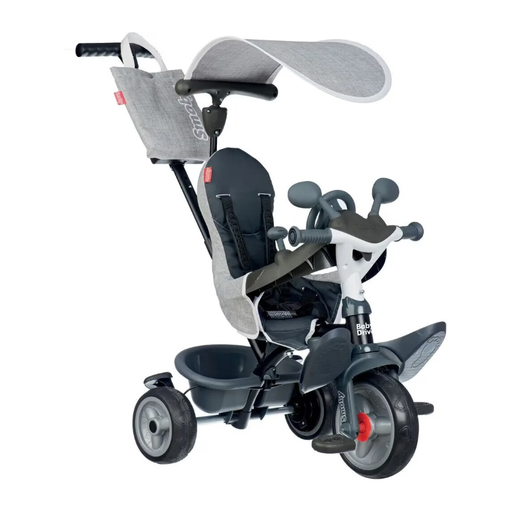
The verdict: For parents who put safety above all else, this model is a safe bet. Its Spanish manufacturing and arsenal of safety features make it a benchmark in the market.
It avoids the "stroller imposter" trap thanks to its EN 1888-1 certification, parking brake, and comprehensive harness. This guarantees complete peace of mind.
Its ultra-smooth parent steering, padded and washable seat, and fun accessories (steering wheel, horn) to entertain the child during the ride.
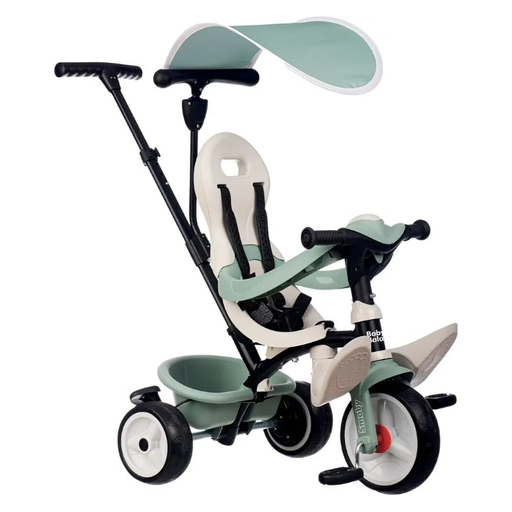
The verdict: The perfect choice for families who want to combine enjoyable rides with an ecological commitment, without compromising on quality or safety.
This model avoids the trap of rapid obsolescence. Its convertible design and EN 1888-1 certification prove that durability and sturdiness can go hand in hand, ensuring a long lifespan.
Made with 40% recycled materials (plastic and fabric). It retains all the essential features: a directional parent handle, silent wheels, and a parking brake.
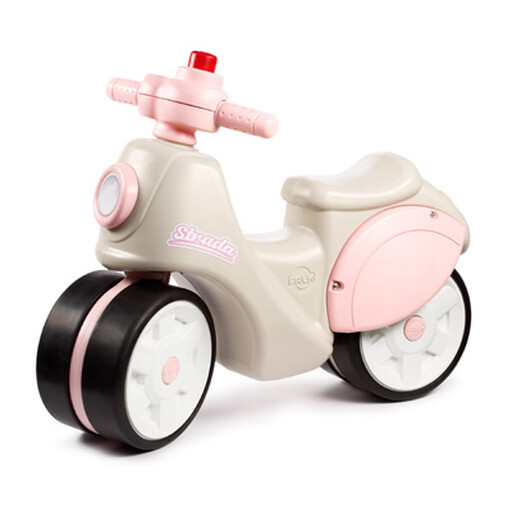
The verdict: An excellent alternative to the tricycle. This simple and clever ride-on is perfect for developing balance and motor skills in 1-3 year olds, whether in the living room or the garden.
It avoids the "lack of convenience" pitfall. Its wide, silent wheels are ideal for apartments (goodbye to noise and scratched floors!) while remaining stable for outdoor use.
Its retro design and French manufacturing. Minimalist and intuitive, it encourages the child to develop strength and coordination independently. Ultra-lightweight, it's easy to take anywhere.
Explore our full selection of products that meet our strict quality criteria and the most demanding safety standards.
Most models can be used from 10 months. At this age, the child is still a passenger: the tricycle is used in "stroller" mode, steered by the parent with the push handle, while the child is secured by the harness and uses the footrests. Children typically start to pedal and steer on their own between 24 and 36 months.
Check for a safety harness (a 5-point harness is ideal), an effective parking brake, and a removable safety bar. The EN 1888-1 certification is a real plus: it guarantees the tricycle has undergone the same stability and sturdiness tests as a stroller.
Yes, hard plastic wheels are often noisy and lack grip. For everyone's comfort, opt for silent wheels made of rubber (like EVA) or with a soft coating. They absorb vibrations much better, don't squeak on the pavement, and are puncture-proof, which ensures longevity.