
Livraison le jour même ou le lendemain

Qualité garantie

Débloquez vos offres de bienvenue: Livraison GRATUITE | Jusqu'à -80 % | 30 jours d'essai gratuits à JoyPlus
Téléchargez l'application
Mealtimes with a baby change quickly: a reclining bouncer at first, a stable seat when weaning begins, then an adjustable chair at table height. A poorly chosen convertible highchair for baby can, however, quickly become cumbersome, or even go unused after just a few months.
So it’s worth scrutinising some marketing claims before you reach for your card.
A highchair isn’t automatically suitable for a newborn just because its backrest reclines. A model marketed as a highchair from birth must include a suitable module – for example, a separate reclining seat – with a restraint system and a clearly stated weight limit.
To use the chair at the table, your child must be able to sit up independently, in line with the manufacturer’s recommendations. Several convertible models with a newborn bouncer can therefore be used from birth, but their highchair configuration is often intended from 6 months.
A two-in-one or four-in-one highchair may seem particularly versatile. However, each extra accessory means more assembly, more cleaning and more checks to make. Pay particular attention to whether the tray, footrest and harness are genuinely removable or adjustable.
A highchair with a removable tray often allows you to position your child right up to the family table. However, the tray should never be considered a restraint system: when the manufacturer provides one, the harness remains essential.
A foldable highchair makes storage easier, but you still need to measure the space it takes up when unfolded. Wheels, joints and thick fabrics can also become real crumb traps.
Before ordering, check the dimensions, the product’s weight, the type of upholstery and the washing instructions. In daily use, a surface that wipes clean with a sponge will often be far more practical than a complicated cover to remove.
The age stated on the product page isn’t enough. Always compare:
A convertible baby chair up to 70 kg can accompany your child for several years. This maximum load generally applies to the junior chair mode, not the highchair configuration intended for a baby. Each usage limit must be strictly observed.
Choose a highchair with a safety harness, a stable base and locking mechanisms that are accessible to adults. The EN 14988 standard covers the safety requirements for highchairs. For a bouncer or reclining seat intended for very young children, the EN 12790 standard may also appear on the product page.
These references don’t replace common-sense precautions. Before every meal, check that the fixings are locked, that the harness is properly adjusted and that the chair is on a flat floor. Never leave a child unattended and don’t allow them to stand up or climb on the product.
A wooden baby highchair appeals for its durability and warm look. However, it is often heavier and must be protected from prolonged moisture. Moulded plastic models are generally easier to move and clean.
For an indoor-outdoor child chair, check the resistance to ultraviolet rays, the strength of the material and the storage instructions. An anti-UV treatment can help prevent fading, but it’s still best to put the chair away in bad weather.
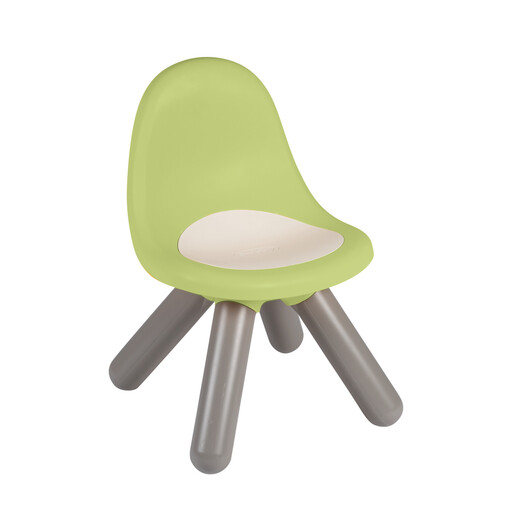
Why this choice suits this profile: this chair is suitable for children from 18 months, when they no longer need a standard highchair. It can be used both indoors and in the garden and requires no assembly.
Its use is clearly defined from 18 months: it doesn’t claim to replace a highchair for an infant. The anti-UV treatment is also consistent with outdoor use.
Recycled plastic, anti-UV treatment, made in France and a stated load capacity of up to 50 kg.
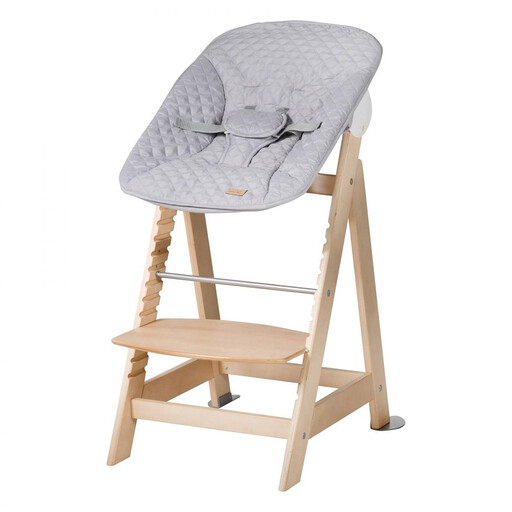
Why this choice suits this profile: this model is aimed at families who want to use a convertible highchair from birth thanks to its reclining bouncer, then keep it as a junior chair.
The limits are clearly separated: the bouncer is rated up to 9 kg, while the chair can support up to 70 kg. The transition from one configuration to the other is also detailed.
Two-position bouncer, five-point harness for the bouncer, three-point harness for the chair and seat height adjustable from 42 to 55 cm.
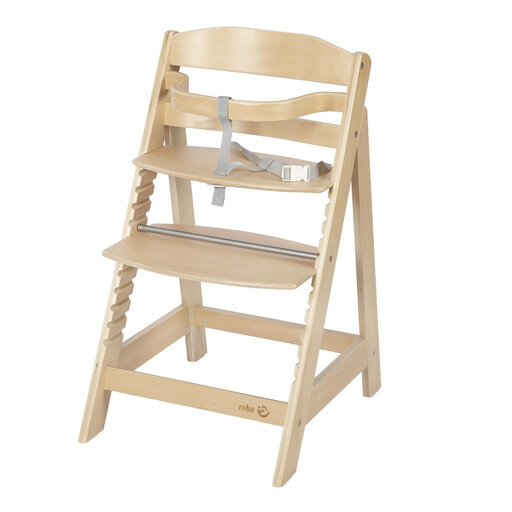
Why this choice suits this profile: its wooden design suits families looking for a durable seat for daily mealtimes, without an integrated newborn bouncer.
The seat height and depth, as well as the footrest, are adjustable. The product is intended from 6 months and supports a maximum load of 70 kg.
Removable safety bar and three-point harness, easy-to-clean surfaces, dimensions of 80 × 44.5 × 54 cm.
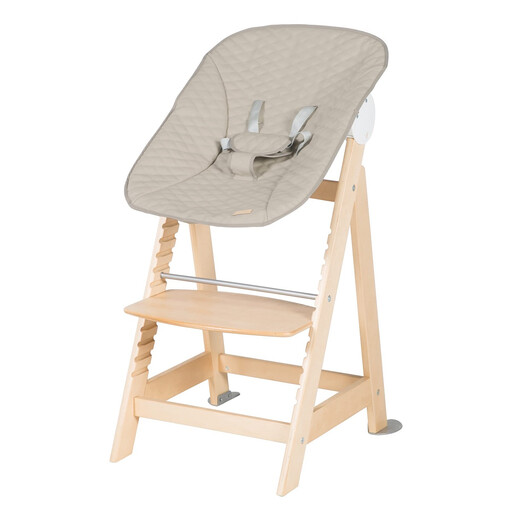
Why this choice suits this profile: its waterproof leatherette finish is ideal for parents who want to quickly wipe up spills after meals and first purées.
The bouncer and chair have separate weight limits. The manufacturer also specifies the use of the harness and the locking of the reclining module.
Two-position bouncer from birth, waterproof cover, seat and footrest adjustable from 42 to 55 cm, maximum load of 70 kg for the chair.
We’ve put together a comprehensive, regularly updated selection of products that meet these demanding criteria and European safety standards.
After buying a convertible highchair for your child, take a few minutes to get the assembly right:
A foldable highchair must be fully unfolded and locked before placing your child in it. For a wooden model, avoid immersion and prolonged exposure to moisture. With a fabric cover, check the washing temperature and drying instructions.
The “from 6 months” label generally refers to a standard highchair, usable when your child can sit up with sufficient support. The decision also depends on their development and the instructions in the manual. A separate reclining bouncer can allow use from birth, but this is not yet the highchair position.
It can accompany your child for several years if the seat, footrest and safety bar remain adjustable. However, the 70 kg load applies to the junior mode of certain models. Check the limits for each configuration and the condition of the fixings before every use.
Wood offers a warm look and a structure generally built to last. Plastic, on the other hand, is often lighter and easier to rinse. For indoor-outdoor use, choose a product whose anti-UV protection, age limits and care instructions are clearly stated.