
Livraison le jour même ou le lendemain

Qualité garantie

Débloquez vos offres de bienvenue: Livraison GRATUITE | Jusqu'à -80 % | 30 jours d'essai gratuits à JoyPlus
Téléchargez l'application
The arrival of a baby changes everything, starting with the list of essential purchases. At the heart of these preparations, choosing a crib is a major decision. The convertible crib often stands out as the ideal solution: cost-effective and sustainable, it promises to grow with your child from their first nights until they start school. But be warned, not all marketing promises are created equal. Our mission? To help you see clearly, avoid the common pitfalls, and invest in a model that will truly go the distance. Here's a breakdown of what to check before you buy.
The concept of a crib that grows with your child is appealing, but certain details can turn this great deal into a real headache.
For a confident purchase, focus on objective criteria. They are your guarantee of safety and everyday practicality.
This European standard is not just a sticker. It imposes strict rules for the safety of young children. Here's what it specifically guarantees:
Verifying the presence of the EN 716-1 or EN 716-1:2017 + AC:2019 standard is a non-negotiable prerequisite.
An adjustable mattress height is not a gimmick; it's a must-have. First, for your back: the high position saves you from straining your back when laying down your newborn. Second, for the child's safety: as they grow and learn to sit up and then stand, you'll lower the mattress support to prevent any great escape attempts. Most models offer 2 or 3 levels, which is ideal.
The standard size for a convertible baby crib is 70x140 cm. This size provides enough comfort for a baby and converts into a first toddler bed with perfect dimensions for a child up to 6-7 years old. Make sure the conversion components (rails, hardware) are included in the initial purchase. A good convertible toddler bed should offer an intuitive conversion, often by removing one or two slatted sides and replacing them with lower safety rails. The inclusion of removable slats is also a real bonus: this allows a child, around 2-3 years old, to safely and independently get in and out of bed like a big kid.
Because every family has different needs (and space), here is our selection of models that passed our tests with flying colors, each tailored to a specific use case.
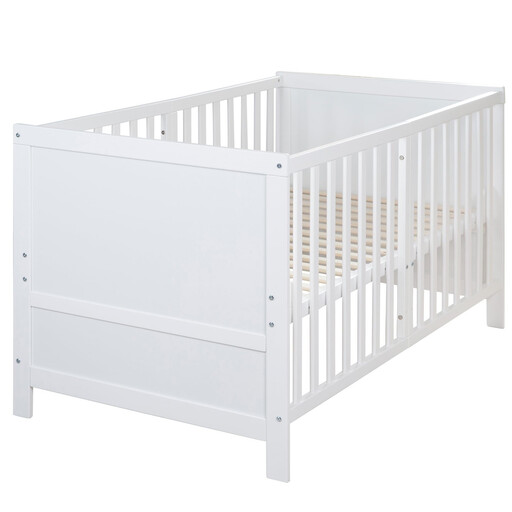
Why we chose it: Ideal for parents seeking a single, long-lasting solution, this crib covers needs from birth to around age 7. It's a true long-term investment.
The conversion rails to turn it into a junior bed and then a small daybed are included. No unpleasant surprises or hidden costs to fulfill its promise as a crib from birth to 7 years.
Compliant with the **EN 716-1:2017 + AC:2019** standard, features a 3-position adjustable mattress support and 3 removable slats for the child's gradual independence.
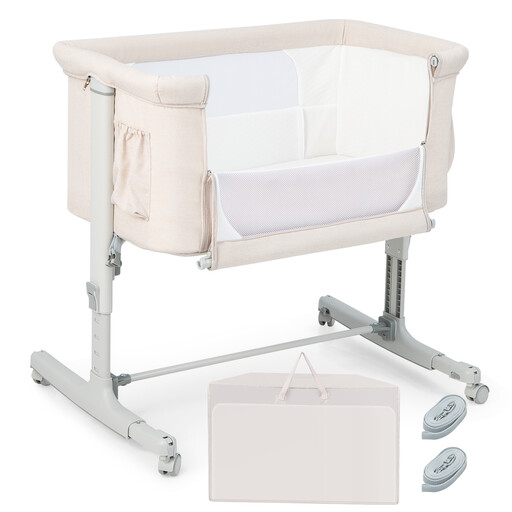
Why we chose it: Perfect for parents who prefer co-sleeping or need a mobile, compact solution for the first 5 months. This **3-in-1 bassinet** adapts to family life.
Its promise is clear and honest: a safe, portable sleeping space for the first few months (0-5 months). No overselling, no disappointment.
Adjustable to 5 heights to align perfectly with the parents' bed. It comes with a travel bag, making it ultra-practical for trips.
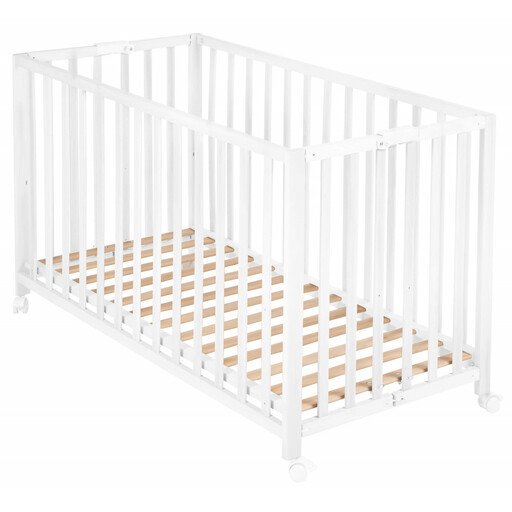
Why we chose it: For families in apartments, or as a spare bed at the grandparents' house. Its folding feature and casters make it extremely versatile and easy to store.
It excels at its main function: being an excellent crib made of solid wood that is sturdy, safe, and mobile. It doesn't promise anything more, but it does its job perfectly.
Frame made of solid beechwood from sustainably managed forests, 2-position adjustable mattress support, and 4 casters with brakes for optimal mobility and stability.
We've put together a complete selection of cribs that meet our most demanding safety and quality criteria.
It all depends on the model and, most importantly, the quality of its materials. A 70x140 cm model that converts into a toddler bed can generally be used until the child is 6 or 7 years old, or until they reach the maximum supported weight (usually around 50 kg). The sturdiness of the frame is what truly allows it to last for years without issue.
That depends on the model. The best models always include the kit, but be wary: many brands offer it as a paid option. Be sure to check the product description to avoid any nasty surprises at checkout.
Although a 70x140 cm crib might seem large for a newborn, it is perfectly suitable and safe. To create a reassuring, cocoon-like space in the first few weeks, you can use a crib insert (also known as a baby nest), always ensuring it is firm and well-secured, and scrupulously following safety guidelines to prevent any risk of suffocation.