
Livraison le jour même ou le lendemain

Qualité garantie

Débloquez vos offres de bienvenue: Livraison GRATUITE | Jusqu'à -80 % | 30 jours d'essai gratuits à JoyPlus
Téléchargez l'application
Choosing your baby's first cot is a key moment, but it can also be a real ordeal when faced with marketing jargon. Between promises of durability and tempting designs, it's easy to end up with a purchase you regret—one that's impractical and ultimately expensive. As the Head of Product Recommendations at Joybuy, my mission is to help you see things more clearly. Let's review the three most common mistakes so you can make the right choice with complete peace of mind.
1. The "Convertible" Cot Illusion: This is a classic trap: a cot is labelled "convertible" simply because its base is height-adjustable. However, a TRUE convertible cot bed must be able to transform into a junior bed to grow with your child for several years. A model that doesn't offer this conversion will force you to buy a new bed much sooner than expected.
2. Forgetting Everyday Practicality: A bulky, fixed cot might seem reassuring, but it can quickly become a daily nightmare, especially in a small city apartment or if you need to move it around. A cot on casters or a folding model offers valuable flexibility, whether for vacuuming underneath or for a weekend trip to the grandparents'.
3. Prioritising Aesthetics Over Safety: It's easy to fall for a stunning white wooden cot, but don't be fooled: compliance with European safety standards is the only non-negotiable criterion. Some manufacturers skip certifications or use paints and materials that are not guaranteed to be free of harmful substances. This is an unacceptable risk to your child's health.
To avoid these pitfalls, here are the technical points to check for a safe, durable, and truly practical purchase.
A truly transformable bed is a smart investment for both your wallet and the planet. Here are the points to check?:
cot with removable bars (often 3) is a real bonus. Around age 2 or 3, your child can safely get in and out of bed on their own, which fosters their independence.70x140 cm cot format is the standard for convertible models. It provides enough comfort for a child up to 6 or 7 years old. Cots measuring 60x120 cm, on the other hand, are rarely designed for a full conversion.Your child's safety is paramount. On this point, there can be no compromises.
Think about how you will use it day to day.
cot on casters equipped with safety brakes is an option worth seriously considering.travel cot or a folding model combines space-saving design with easy storage. It's the smart alternative to a classic fixed cot.Rather than an endless list, we've selected models that meet specific needs, strictly applying the safety and practicality criteria we've just discussed.
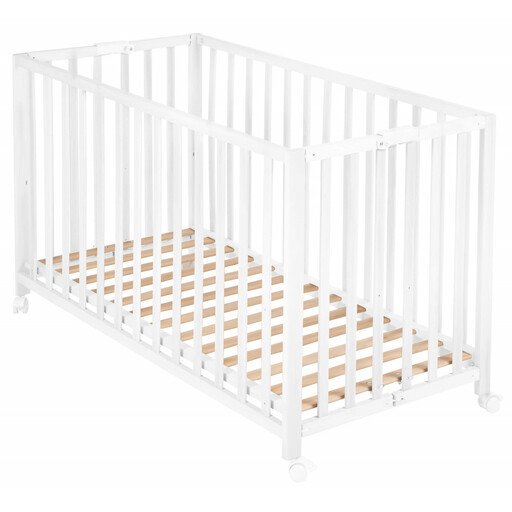
Why it stands out : Ideal for small apartments, weekends at the grandparents', or as a spare bed. Its folding design and casters make it ultra-practical for families seeking modularity without sacrificing the sturdiness of solid wood.
It directly tackles the lack of practicality. No more bulky, fixed cots! This model offers a mobile and easy-to-store solution, saving you from the regret of a purchase that's ill-suited to your home.
Its ultra-compact fold and 4 casters with brakes ensure safe mobility. The frame is made of solid beech from sustainably managed forests.
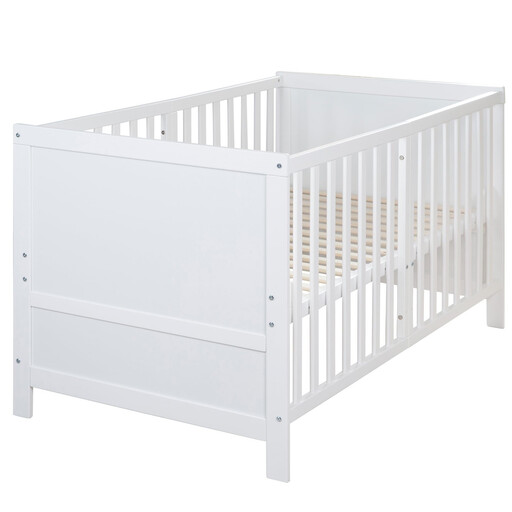
Why it stands out : This is the ultimate smart and sustainable investment. This `convertible child's bed` grows with your baby from birth to age 7, transforming into a junior bed and then a small daybed.
It avoids the "false convertible" trap. Thanks to its included conversion kit, it guarantees a real and sturdy transformation. Your purchase pays for itself over many years, saving you from having to buy a new bed after just 3 years.
A true conversion into a junior bed and then a daybed. It includes 3 removable bars for your child's independence and complies with safety standard EN 716-1:2017 + AC:2019.
To design a complete nursery or explore other styles, discover our selection of cots that all meet our criteria for safety and quality.
1. At what age should you convert a cot into a junior bed? There's no specific age, as it all depends on your child's development. The main tell-tale sign? When they start trying to climb over the bars, often between 2 and 3 years old. That's the time to remove the bars or switch to junior bed mode to ensure their safety. The 70x140 cm cot models are designed precisely for this transition.
2. Is a cot on casters really safe? Yes, as long as it complies with safety standards. The crucial point to check is the presence of brakes on at least two of the four casters. Once the cot is in position, these brakes must be engaged to ensure perfect stability. Also, check that the locking mechanism is both sturdy and easy to operate.
3. 60x120 cm vs. 70x140 cm Cot: What's the difference? The 60x120 cm is the classic size for a first cot, ideal from birth up to 2 or 3 years old. It's the typical size for folding or non-convertible cots. The 70x140 cm is the gold standard for convertible cot beds. It offers the necessary space for a child to be comfortable up to age 6 or 7 once converted, making it a much more sustainable investment.