
Livraison le jour même ou le lendemain

Qualité garantie

Débloquez vos offres de bienvenue: Livraison GRATUITE | Jusqu'à -80 % | 30 jours d'essai gratuits à JoyPlus
Téléchargez l'application
Receiving an alert on your phone when smoke is detected can be extremely useful, particularly in a multi-storey house, an unoccupied property or a small business premises. But choosing a connected Wi-Fi smoke detector is not simply a matter of looking for an app.
Some purchases disappoint for reasons that are easy to anticipate: limited compatibility with 2.4 GHz Wi-Fi, poorly documented real-world battery life, radio interconnection mistaken for an internet connection, or a device installed too close to a source of steam. Here are the key points to check before placing your order.
A wireless smoke detector can operate without cables while using several communication technologies. Wi-Fi generally connects the device to an app and allows you to receive notifications remotely. A radio link, on the other hand, is mainly used to allow several detectors in the property to communicate with one another.
An interconnectable radio model can therefore trigger several alarms when just one detector detects smoke, without necessarily sending an alert to your smartphone. Before buying, ask yourself what you really need: a connected fire alarm, local interconnection, or both.
A battery advertised to last several years reduces the need for intervention, but it is important to understand what this promise actually covers:
Models advertised with a 5- or 10-year battery must still be tested as often as recommended by the manufacturer.
Steam from the bathroom, cooking fumes and dust can trigger false alarms. A home smoke detector is generally mounted on the ceiling, in a circulation area or near bedrooms, following the instructions and rules applicable to the property. Avoid painting it, covering it or installing it directly next to a ventilation outlet.
To choose an EN 14604 smoke detector, look for a clear statement confirming compliance with this standard in the product listing and on the packaging. This reference applies to standalone smoke detectors intended for homes. It does not replace the need to follow installation instructions, carry out regular tests or take account of other safety obligations applicable in France.
The CE marking should also be checked alongside the product’s compliance information. If in doubt, choose a listing that clearly identifies the manufacturer, the responsible person in the European Union and the instructions for use.
An 85 dB smoke detector delivers, depending on the model, a sound alarm advertised at this level or above. The signal should remain audible from living areas and bedrooms with the doors closed. The test button allows you to check that the siren is working and, depending on the device, that the connection is functioning.
A mute button can be useful after identifying a false alarm. However, it should not be used to disable the protection permanently.
A smoke detector with an app often works on a 2.4 GHz Wi-Fi network rather than 5 GHz. Check compatibility with your router, the app language and the reset procedure. Products compatible with Tuya Smart or SmartLife may be worth considering if you already own devices in this ecosystem, but exact compatibility should be confirmed in the product listing.
In a large property, several radio detectors may be more practical than a standalone Wi-Fi device. For a second home, however, remote alerts can provide valuable information when nobody is there.
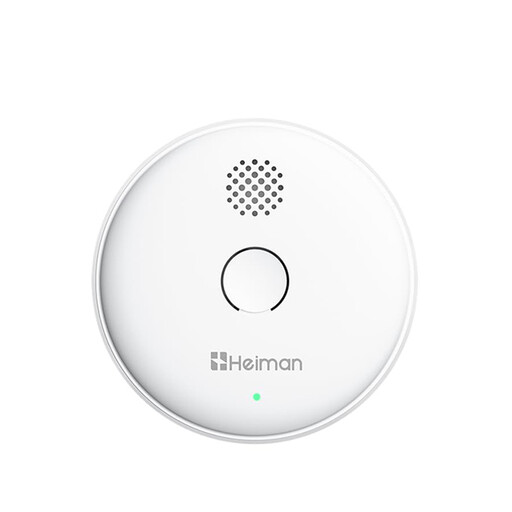
Why this choice suits this profile: This radio detector is ideal for a first installation without wiring. Its siren is rated at 85 dB and its battery is advertised to last 10 years.
The listing states that up to 40 alarms can be interconnected and mentions the EN 14604 standard, rather than making a vague promise about connectivity.
Radio interconnection, mute button, battery advertised to last 10 years and PC+ABS housing.
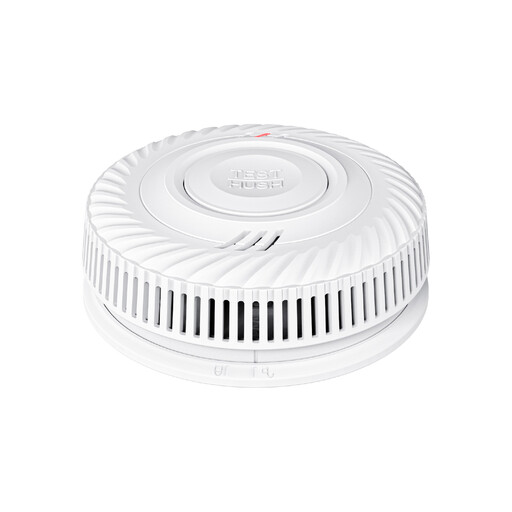
Why this choice suits this profile: This model combines 2.4 GHz Wi-Fi, TUYA/SmartLife alerts and a sealed battery advertised to last 10 years, in a compact format measuring 102 mm in diameter.
Network and app compatibility are explained in detail, making it easier to check the required configuration before buying. The sealed battery eliminates regular replacements, but means the device must be replaced once its advertised service life has ended.
In-app alerts, sound signal advertised at over 85 dB according to the listing and stated EN 14604 compliance.
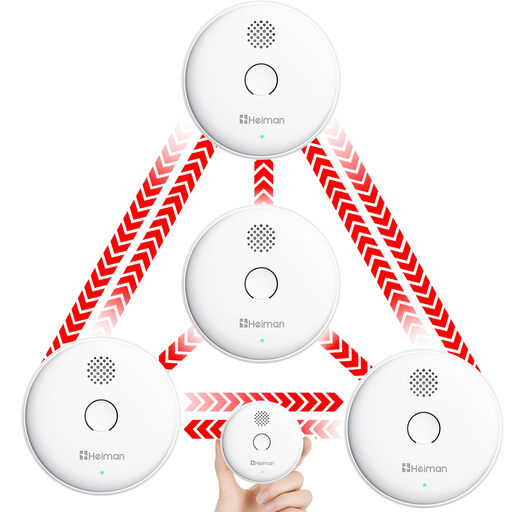
Why this choice suits this profile: This two-device pack is suitable for properties with several rooms or floors, allowing you to build a radio-based installation progressively.
The quantity is clearly stated and the radio system is presented as interconnectable. However, you will need to check its range according to the layout of your property.
Two detectors, alarm rated at 85 dB, battery indicated to last 10 years and mute button.
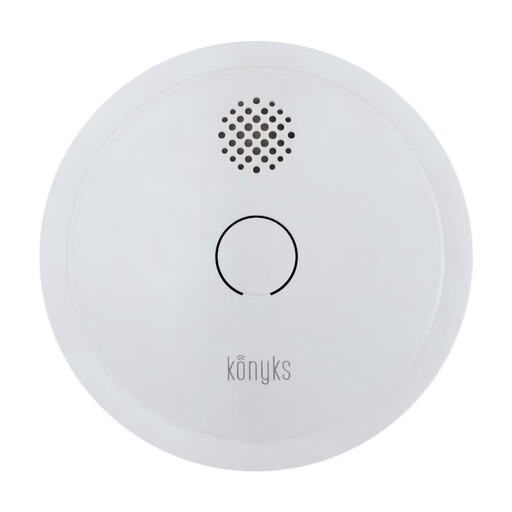
Why this choice suits this profile: Its app, instructions and French-language support can make setting up a connected Wi-Fi smoke detector easier.
Bluetooth makes pairing with 2.4 GHz Wi-Fi easier, while the listing confirms that no additional hub is required. The advertised 5-year battery life should be factored into the cost of use.
French-language app, Tuya Smart and SmartLife compatibility, CR123 battery included and stated EN 14604 compliance.
We have brought together a complete, real-time updated selection of products that meet these strict criteria and European safety regulations.
Before mounting the detector, check that the property is properly covered and follow the instructions provided. In a house or flat, several devices may be needed to monitor circulation areas and the surroundings of bedrooms. After installation:
A smoke detector does not replace heating system maintenance or the usual fire-safety precautions. To detect carbon monoxide, choose a device specifically designed for this purpose and bearing the EN 50291 reference: a smoke detector does not perform this function.
The local audible alarm can generally continue to operate even if the internet connection is interrupted, depending on the product’s design. However, smartphone notifications and remote monitoring may become unavailable without a Wi-Fi network or access to the app server. Always check this point in the manual.
The cost mainly depends on the purchase price, the cost of replacing batteries or the device at the end of its advertised service life, and whether a hub is required. Some models advertise subscription-free operation, but it is best to check the app’s terms of use and any possible changes to the service.
Wi-Fi is used to send information to an app and a phone. Radio interconnection is used to trigger several alarms throughout the property. A product may offer one of these functions or both: the technical specifications should state the type of connection, its range and the maximum number of associated devices.