
Livraison le jour même ou le lendemain

Qualité garantie

Débloquez vos offres de bienvenue: Livraison GRATUITE | Jusqu'à -80 % | 30 jours d'essai gratuits à JoyPlus
Téléchargez l'application
Forgotten watering during a heatwave, a lawn that needs mowing every week, a pool collecting debris or outdoor lighting that is a pain to programme: connected garden equipment addresses very practical needs. With an app, sensors and automated routines, you can reduce manual tasks while keeping an eye on your entire outdoor space.
Marketing promises alone are not enough to guarantee a successful purchase. Wi-Fi compatibility, weather resistance, battery life and actual coverage can make the difference between a genuinely convenient device and a disappointing product. Here are the criteria to review before placing your order.
A device that can be controlled from an app is not necessarily autonomous. Some controllers need a permanent connection to apply changes, while others continue running saved schedules even when the network goes down.
Before making your decision, check which functions are available offline, the supported Wi-Fi frequency and whether a hub is required. A Wi-Fi watering timer limited to 2.4 GHz will not connect directly to a network configured to use 5 GHz only.
An ingress protection rating does not mean that a device can be submerged. IP44, for example, protects against certain water splashes, but not against immersion. An IP65 enclosure offers better protection against dust and water jets, but is not necessarily designed for installation in an area that is constantly waterlogged.
Cables, plugs, charging stations and adapters must also be kept away from puddles. Follow the manufacturer’s instructions and comply with the applicable UK rules for outdoor electrical installations.
A robotic lawn mower designed for a small area may end up running cycle after cycle on a large plot. Similarly, an irrigation system must cover the lawn and flower beds without leaving dry patches. Look at the stated coverage area, cutting width, maximum gradient and number of programmable zones rather than focusing solely on the price.
A smart irrigation system must be compatible with your tap, hose network and available water pressure. G3/4 and G1/2 threads are common, but an adapter may be required. Zone-by-zone programming is particularly useful when the lawn, flowers, shrubs and vegetable patch have different watering requirements.
A rain sensor or weather-based delay function can pause watering when it rains. This is useful for managing water consumption more efficiently, but performance depends on the accuracy of the weather data and the quality of the installation. Figures quoted for water savings should therefore be treated as estimates linked to usage conditions, rather than a promise that applies to every garden.
A boundary-wire-free robotic lawn mower may use cameras, virtual mapping, nRTK positioning or a combination of several technologies. Check the signal quality in your garden, how it handles narrow passages and how effectively it detects obstacles.
The maximum gradient, cutting height and working width have a direct impact on the results. A removable battery makes replacement easier, while automatic return to the charging station reduces the amount of handling required. Before each cycle, however, it is still essential to remove toys, hoses and any other loose objects from the lawn.
For a robotic pool cleaner, compare the cleaning modes, battery life and the areas it actually covers: floor, walls, waterline or shallow sections. The filter mesh should also match the type of debris found in your pool. A fine filter captures more particles, but generally requires more frequent maintenance.
For connected garden lighting, check the total power, cable length, IP rating and compatibility with your voice assistant. Plugs and transformers must be installed in a dry location, while all connections must remain properly protected.
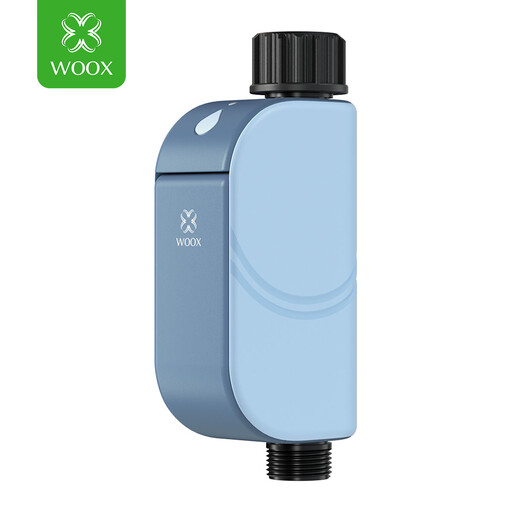
Why this choice suits this profile : This timer is ideal for getting started with connected automatic watering from an outdoor tap. It can be controlled via an app, over 2.4 GHz Wi-Fi or by voice using a compatible assistant.
The product details state that saved programmes continue to run offline and that watering can be postponed when it rains. However, check the G3/4 connection or use the supplied adapter.
IP65 rating, up to 20 independent programmes stated and powered by four AA batteries, according to the product details.
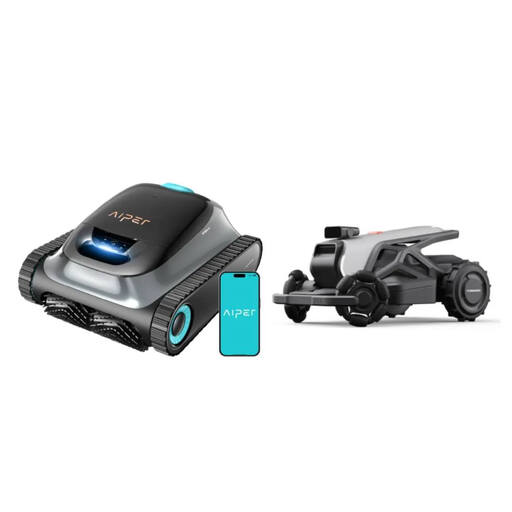
Why this choice suits this profile : This bundle is designed for owners who want to automate both lawn and pool maintenance, with control from an app.
The mower uses virtual mapping and does not require a boundary wire, while the pool robot offers several modes and weekly scheduling. Nevertheless, make sure the complete set is compatible with the layout of your garden and pool.
The TRON SE is stated to handle gradients of up to 65 %, while the Scuba S1 features, according to its product details, a replaceable ultra-fine 3 µm filter element.
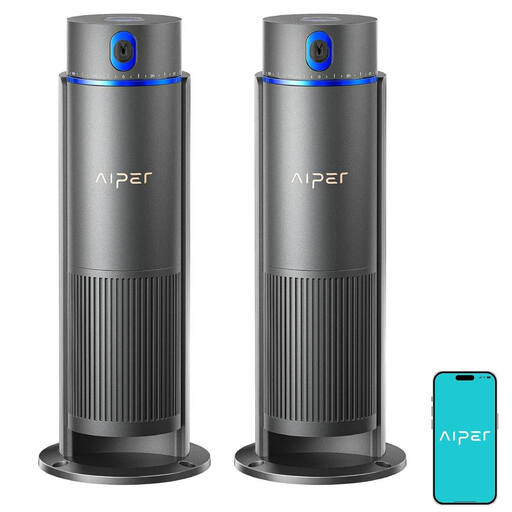
Why this choice suits this profile : It is designed for gardens made up of several areas — lawns, flower beds, shrubs or vegetable patches — that require separate watering schedules.
The product details mention up to 10 irrigation maps, a rain sensor and installation in as little as 15 minutes. Even so, measure the area to be watered and check the available water pressure.
Scheduling based on vegetation type and watering presented as even thanks to EvenRain technology. The listing refers to savings of up to 40 %, depending on usage conditions.
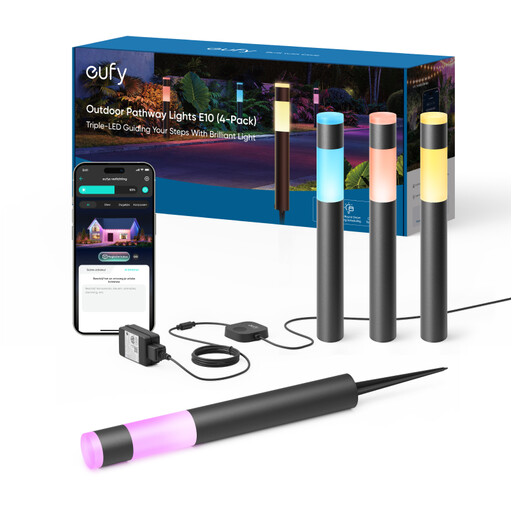
Why this choice suits this profile : This kit is for anyone who wants to add connected garden lighting, controlled via an app or by voice, without replacing their entire outdoor installation.
Its IP65 rating is suitable for exposed outdoor use and protection against splashes, but the connections and adapter must be kept dry and must never be submerged.
RGBWW technology, stated brightness of up to 350 lumens and compatibility with Alexa, Google Assistant and the eufy Life app.
We have brought together a complete, real-time updated selection of products that meet these demanding criteria as well as European safety standards.
To ensure a successful installation, start by measuring the areas to be covered and identifying any spots where the Wi-Fi signal is weak. Then position the sensors away from heat sources and direct splashes. With a connected automatic watering system, test each zone manually to identify any leaks or insufficient flow.
Clean robot filters regularly, check the mower blades and remove leaves that have accumulated around the charging stations. In the UK, also remember to protect equipment from frost when recommended in the instructions. A battery or valve exposed to unsuitable temperatures may have a shorter service life.
A Wi-Fi watering timer is often the simplest place to start if your priority is avoiding missed watering and adjusting schedules. For a large lawn, a robotic lawn mower can then reduce the need for manual mowing. The best order depends mainly on the size of the area, the gradient and whether there is an outdoor water supply.
The overall cost includes electricity, batteries or recharging, wear-and-tear parts and, sometimes, a cloud storage subscription. Check that the app, updates and essential functions remain available without recurring fees. For watering, consumption mainly depends on the flow rate, cycle duration and weather.
No. You need to check the area, gradients, routes between different zones, positioning-system coverage and the mower’s ability to detect obstacles. Virtual boundaries simplify installation, but they do not remove the need to prepare the ground or follow safety instructions.