
Livraison le jour même ou le lendemain

Qualité garantie

Débloquez vos offres de bienvenue: Livraison GRATUITE | Jusqu'à -80 % | 30 jours d'essai gratuits à JoyPlus
Téléchargez l'application
A conical burr electric coffee grinder can significantly improve the consistency of your grind. But not all models are created equal, nor do they all meet the same needs. Espresso, filter coffee, pour-over and French press each require their own specific settings. Capacity, noise level, ease of maintenance and the precision of the mechanism often matter more than the long list of features plastered on the box.
Before buying a bean grinder, it’s worth knowing the most common pitfalls and comparing genuinely verifiable specifications.
A dial with 30 positions doesn’t, on its own, guarantee a grind that suits every brewing method. You also need to look at the design of the mechanism, the stability of the settings and the range covered — from fine grounds for espresso to coarser particles for French press.
An adjustable grinder should allow adjustments that are simple to understand and easy to reproduce. With espresso, even a tiny difference between two settings can noticeably affect the flow rate. For filter coffee, a smooth progression makes it easier to find a balanced result.
A hopper that’s too small means you’ll have to refill it several times when making coffee for the whole family or in a small café. On the other hand, a large hopper can expose beans to air if they’re left sitting in it for several days.
A coffee grinder with a doser or cup selector can be really handy day to day. However, check whether the quantity is determined by the number of cups, the running time or manual dosing. None of these systems replaces a set of scales when precision is your priority.
Coffee residue will eventually build up around the chute and inside the grinding chamber. A model that’s difficult to take apart is likely to be cleaned less thoroughly, which can affect subsequent brews.
Before you buy, look out for:
The burrs are sharp. Always unplug the electric coffee grinder before removing any part or working near the mechanism.
Conical burrs crush the beans between two toothed, cone-shaped surfaces. They’re commonly found in domestic coffee grinders and some machines designed for espresso. Their main advantage is the ability to adjust the fineness gradually, provided the mechanical assembly is well designed.
Simply seeing ‘with burrs’ isn’t enough. Some models use flat burrs, others use conical burrs. So check the spec sheet rather than relying solely on the grinder’s appearance.
For versatile use, a grinder suitable for filter, espresso and French press needs to cover several grind levels. Stepped settings are easy to use every day. A stepless system, sometimes called infinite adjustment, allows finer tuning but requires more personal reference points.
The Starseeker E55 Pro claims stepless adjustment with a precision of 0.01 mm. This figure relates to the adjustment system; it doesn’t automatically guarantee a particular result in the cup. However, it may appeal to enthusiasts who want to fine-tune their grind precisely for espresso.
For a household, a capacity that covers a few cups is usually enough. Small cafés and heavy users should also check the duty cycle and the recommended rest periods from the manufacturer. The Starseeker E55 Pro mentions a 72 W motor and recommends not exceeding two minutes of continuous operation before a short break.
The Cuisinart DBM8V2E has a stated capacity of 225 g, with a selector for 4 to 18 cups. This setup can work well when a grinder is used several times a day. It doesn’t mean you should leave beans in the hopper for long periods, though.
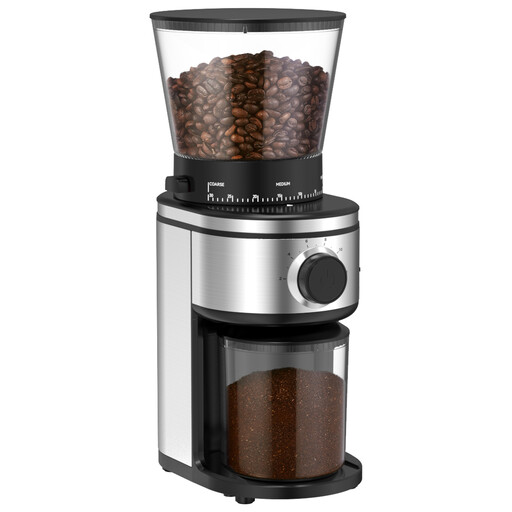
Why this suits this profile: its 30 settings and stated dosing from 2 to 12 cups offer an accessible way to switch between espresso, filter and French press at home.
The spec sheet mentions a conical burr mechanism and distinct positions, rather than a simple blade grinder with no adjustment.
30 grind settings, a stated capacity of 2 to 12 cups and a compact size that’s easy to place on the worktop.

Why this suits this profile: this grinder, designed for espresso and pour-over, is aimed at users who want to fine-tune their brew and prefer a metal construction.
The stepless adjustment stops you being limited to a few fixed clicks when you’re trying to dial in an espresso grind.
Stated 55 mm titanium alloy conical burrs, stepless adjustment and a removable magnetic catch cup for the grounds.
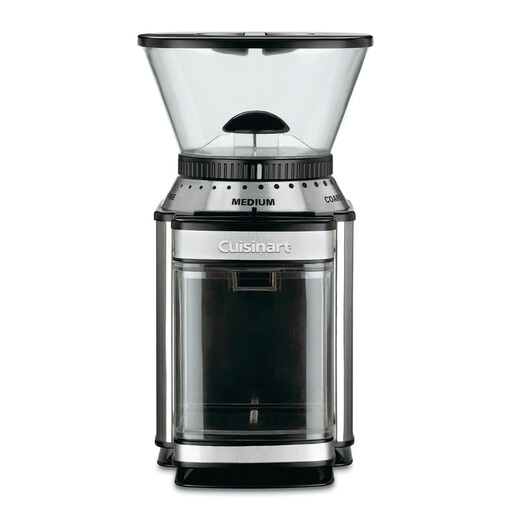
Why this suits this profile: its 225 g hopper and selector for 4 to 18 cups suit larger families and repeated brewing sessions.
The selector with auto-stop avoids unnecessary cycles, while the removable parts make everyday cleaning easier.
18 settings, 225 g hopper, selection from 4 to 18 cups and removable parts stated as dishwasher-safe.
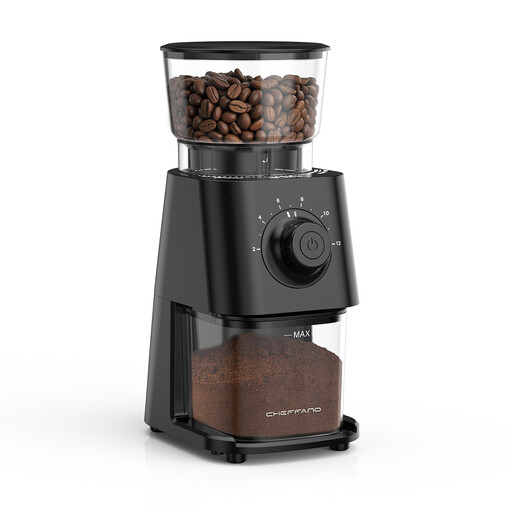
Why this suits this profile: its 30 settings and pulse control will appeal to those who switch between several brewing methods.
The stated range covers both espresso and French press, so you avoid choosing a grinder limited to just one brew method.
Stated conical burr mechanism, 30 settings and pulse operation for manual control over the amount ground.
We’ve put together a comprehensive, real-time updated selection of products that meet these demanding criteria and European safety regulations.
To keep your bean grinder performing at its best, a few simple habits are all you need:
The running cost mainly depends on electricity consumption, how often you replace wear parts and the price of the beans. Grinding coffee just before brewing also avoids storing pre-ground coffee unnecessarily.
There’s no magic number. To switch between espresso, filter coffee and French press, a range of around 18 to 30 positions can offer good versatility. A stepless adjustment will suit users who want to refine their method, although it takes longer to get used to.
It depends on how often you use it, how well you clean it, whether you respect the duty cycles and whether spare parts are available. Check the warranty terms and the manufacturer’s recommendations. A grinder used every day for multiple batches should be chosen based on its stated duty cycle, not just its power.
For daily use, it’s possible and convenient. However, a large hopper isn’t necessarily a long-term storage solution. Keep your beans in a suitable container, away from heat, moisture and light, then fill the grinder as and when you need it.