Without an outside opening or a suitable vent, rule out a vented tumble dryer: UFC-Que Choisir says it needs one of these connections, unlike a condenser model. Choose a condenser dryer, with or without a heat pump, based on the instructions for the specific model, the space available, its stated energy consumption and programme times. An indoor airer is another option if you have a sufficiently well-ventilated room to manage the moisture released by drying laundry.
Who are these solutions for?
People without a suitable external vent
If the room has neither a usable opening to the outside nor access to a vent, start by distinguishing vented dryers from condenser models. For the latter, the instructions for the specific model will still set out the conditions that need to be met in your home.
Households that dry laundry regularly
If you dry laundry several times a week, stated energy consumption and programme times become practical considerations. Compare them for a capacity and programmes that suit your laundry, rather than choosing based on the technology name alone.
People living in a small home
An indoor airer needs a well-ventilated room; a tumble dryer needs enough space for installation and use. If the appliance will be near living areas or neighbours, also check its stated noise level and where it will be positioned.
What should you check before choosing?
First rule out options that aren’t suitable for the room, then compare the space they take up, drying times and any usage requirements.
| Factor | What to check | Based on my needs |
|---|
| Type of appliance |
UFC-Que Choisir distinguishes between vented tumble dryers, which need an opening to the outside or a vent, and condenser models. Check the technology specified for the model you’re considering. |
Without a suitable external vent, I’m looking for an appliance that doesn’t need one. |
| Installation and water |
Check the instructions for the dimensions, clearances, connections and placement requirements. Find out how condensed water is collected and whether direct drainage is available for this model. |
I need an appliance that fits in the room, has the required clearance and lets me manage the collected water. |
| Energy use and programme times |
Compare energy-label consumption figures and the durations of the relevant programmes on a like-for-like basis. UFC-Que Choisir includes electricity consumption and drying time in its testing process. |
If I run cycles often, I’ll check the stated energy consumption. If I need laundry ready quickly, I’ll also check the time taken by the programme I use. |
| Airer and moisture |
For indoor drying, ADEME recommends a large, well-ventilated room or one with mechanical ventilation extraction. ANSES recommends drying laundry outdoors where possible, or otherwise in a well-ventilated room. |
I can use an airer if I have a suitable room and enough time to let the laundry dry, rather than regularly placing it in a small, enclosed space. |
| Capacity and noise |
Match the stated capacity to the amount of laundry you need to dry. Measure access routes and available space, then compare the stated noise levels and installation instructions for the appliances you’re considering. |
I need to dry my usual loads without blocking access; if the appliance is near occupied rooms, its noise level matters too. |
What mistakes should you avoid?
-
Confusing vented and condenser dryers
A vented tumble dryer needs an opening to the outside or a vent, as UFC-Que Choisir points out. If you don’t have this connection, you’ll need to consider a different type of appliance.
Check the technology before comparing programmes and capacity. If you don’t have a suitable external vent, look for a condenser model.
-
Assuming “no vent” means “no installation requirements”
A condenser model still needs to be installed in line with its instructions, particularly when it comes to positioning, connections and water management.
Measure the available space and check the clearance, any stacking instructions and how water is collected for the exact model you’re considering.
-
Comparing programmes that aren’t suited to the same use
A standalone cycle time or energy consumption figure is of limited use if the loads and programmes being compared differ. Getting the balance right matters especially if you dry laundry often or need it ready quickly.
Check the energy label and compare the durations of programmes that suit your laundry, taking their measurement conditions into account.
-
Always putting the airer in a small, enclosed room
Drying laundry releases moisture into your home. ANSES says that moisture encourages mould to develop.
Dry laundry outdoors when possible. Indoors, follow ADEME’s advice to use a large, well-ventilated room or one with mechanical ventilation extraction.
A guide to some manufacturers
These manufacturers provide examples of the documents to check. Features and instructions vary from one model to another.
Bosch
Bosch offers a range of heat pump tumble dryers and publishes installation instructions.
- The instructions for a specific model let you check its positioning and connection requirements.
- Range specifications are no substitute for checking the energy label and instructions for the model you’re considering.
Electrolux
Electrolux publishes specifications for heat pump condenser dryers, with details that vary by model.
- The French specification sheet for the EW6HI6284BN states an operating range of 5 to 35 °C, a water collection tank and an optional direct drainage kit.
- These conditions apply to the EW6HI6284BN and should not be assumed to apply to another Electrolux model.
Beko
Beko offers a range of heat pump tumble dryers in France.
- The models in the range let you compare the capacities and features on offer.
- To choose between two appliances, check the energy-label figures, dimensions, noise level and instructions for each model.
Tumble dryers available on Joybuy
These condenser and heat pump models are options to consider if you’re looking for a tumble dryer without an external vent. Their inclusion here doesn’t replace the need to check the instructions and make sure each appliance is suitable for your room.
 Image unavailable
Hotpoint CHD84MWBSEE, heat pump, 8 kg
A heat pump option for households looking into machine drying without an external vent. The product name states a capacity of 8 kg and a C rating. Check the instructions for the space required and installation conditions.
View on Joybuy
 Image unavailable
Comfee CD08EHP05W-HR, heat pump, 8 kg
A heat pump model with a stated capacity of 8 kg, worth considering if that suits your laundry loads. The product name states a D rating. Check the instructions to confirm where it can be installed, and compare the figures for the programmes you’re interested in.
View on Joybuy
 Image unavailable
Electrolux EDH1018CD GentleCare, condenser, 8 kg
An 8 kg condenser tumble dryer to consider if you’re looking for an appliance without an external vent. The product name mentions OptiSense and propane refrigerant. Check the instructions for this model’s installation requirements, and compare its energy consumption and programme times for the cycles you use.
View on Joybuy
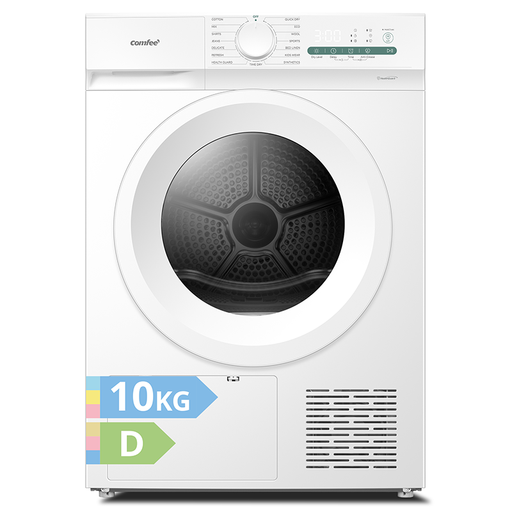 Image unavailable
Comfee CD10EHP05W-HR, heat pump
Another heat pump model to consider for drying laundry without an external vent. The product name states a D rating, but the capacity differs between the 10 kg in the title and the 8 kg in the detailed description. Confirm the capacity before choosing, and check the installation requirements in the instructions.
View on Joybuy
Frequently asked questions
Can you install a tumble dryer without an external vent?
Yes, you can consider a condenser model without an external vent, provided it’s installed in line with the instructions for that specific model. UFC-Que Choisir explains that a vented tumble dryer needs an opening to the outside or access to a ventilation duct.
Does a condenser tumble dryer need to be connected to a drain?
Not necessarily: the water can be collected in a tank. If you want direct drainage, check that it’s available for the model you’ve chosen and consult its documentation for the connection and any accessories required.
How do you choose between a standard condenser dryer and a heat pump model?
Compare the models that suit your room, taking into account how often you’ll use them, their stated energy consumption and the programme times that work for your laundry. The technology name alone won’t tell you which appliance best meets your energy or time requirements.
Is an airer suitable for a small, enclosed room?
For regular indoor drying, it’s better to use a well-ventilated room. ADEME recommends a large, well-ventilated room or one with mechanical ventilation extraction; ANSES recommends drying laundry outdoors where possible, or otherwise in a well-ventilated room.


