Homes without an external vent
A condenser tumble dryer, whether conventional or heat pump, does not need to be vented outside, according to UFC-Que Choisir. However, check the model’s ventilation requirements for the room where you plan to use it.


Without a vent to the outside, a condenser tumble dryer, whether conventional or heat pump, can dry your laundry without an external connection, according to UFC-Que Choisir. If you have room for two appliances, compare the capacity, cycle times and energy consumption of the models you’re considering. If you only have space for one, a washer-dryer avoids the need to install a separate appliance. However, its drying capacity is lower than its washing capacity, and its drying cycles take longer than those of a separate tumble dryer, UFC-Que Choisir points out.
A condenser tumble dryer, whether conventional or heat pump, does not need to be vented outside, according to UFC-Que Choisir. However, check the model’s ventilation requirements for the room where you plan to use it.
If you have room for a separate tumble dryer, choose a capacity that suits your usual loads, then compare the programme times and energy consumption of the models you’re considering.
A washer-dryer combines both functions in one appliance. However, UFC-Que Choisir points out that its drying capacity is lower than its washing capacity, so a large load may not fit in a single drying cycle.
Start by checking the space available and the size of the loads you need to dry. Then compare the programmes and maintenance requirements of the models that fit.
| Criteria | What to check | Your needs |
|---|---|---|
| Installation | Choose a technology that doesn’t need an external connection. Measure the space and check the manual for the required clearances, temperature and ventilation. Electrolux advises against installing its condenser or heat-pump tumble dryers in a room without ventilation. | I don’t have an external vent, but the appliance must also be suitable for the room where I plan to install it. |
| Capacity | Compare the stated drying capacity in kilograms with the size of your usual loads. With a washer-dryer, distinguish this from the washing capacity: UFC-Que Choisir notes that the two figures differ. | To wash and dry without taking out any laundry, I need to keep the load within the drying capacity, including when washing sheets or towels. |
| Cycle time and energy consumption | Look at the duration and energy consumption of the programme you’ll use. Compare energy information for appliances in the same category: EUR-Lex sets out separate labelling rules for tumble dryers and washer-dryers. | If I dry several loads one after another, cycle times matter just as much as the stated energy consumption of the models I’m considering. |
| Water management | Check whether condensed water is collected in a tank and whether the model you’re considering can be connected to a drain. For a washer-dryer, also look at how much water it uses during drying; UFC-Que Choisir highlights water consumption as a consideration for this category. | I’d rather know in advance whether I’ll need to empty a tank and how the appliance will use water during its cycles. |
| Maintenance and stacking | Check that the filters are easy to access and read the cleaning instructions. If you plan to stack two appliances, check which stacking kit and models are compatible: Bosch, for example, specifies that one of its kits requires a washing machine with a depth of more than 55 cm. | If floor space is limited, stacking the appliances needs to work for both models without making routine maintenance more difficult. |
A washer-dryer may be able to wash more laundry than it can dry in one cycle. You may therefore need to take some laundry out before drying a full wash load, as UFC-Que Choisir explains.
If you plan to run a wash-and-dry cycle without interruption, base the load size on the model’s stated drying capacity.
Not needing an external connection doesn’t mean you can ignore the installation requirements. Electrolux recommends a sufficiently spacious, well-ventilated room for its condenser and heat-pump tumble dryers.
Measure the space and check the model’s manual for the required clearances, temperature and ventilation.
A stacking kit won’t automatically fit every washing machine and tumble dryer. For one of its kits, Bosch specifies that you need to check compatibility and have a washing machine with a depth of more than 55 cm.
Note down the exact model numbers of both appliances before choosing a kit, and follow the manufacturer’s installation instructions.
An energy label doesn’t tell you the programme duration, drying capacity or how water is managed. UFC-Que Choisir notes, in particular, that washer-dryers have longer drying cycles and use water during drying.
Compare the programmes that suit your laundry, then check each appliance’s capacity, water use and maintenance requirements.
These examples of product ranges and accessories can help you know what to check. Compatibility always depends on the specific models you choose.
Bosch provides information about stacking kits and condensed-water drainage accessories for selected appliances.
Electrolux’s installation advice is useful when checking the room intended for a condenser or heat-pump tumble dryer.
LG’s French washer-dryer range lists washing and drying capacities separately.
Miele’s French range includes tumble dryers with maximum capacities of 7, 8 and 9 kg.
These are separate condenser tumble dryers, either conventional or heat pump, for homes without an external vent. If you only have space for one appliance, compare the dimensions and drying capacity of a washer-dryer instead.
 Image unavailable
This separate heat-pump tumble dryer is suitable for an installation without an external vent, provided the room meets the specified requirements. It has a stated capacity of 8 kg, and its title lists a C energy rating. Check the dimensions, ventilation and condensate drainage options for your installation.
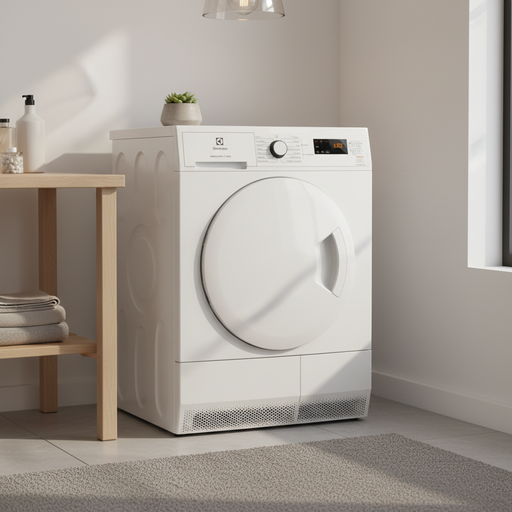 Image unavailable
This condenser model is an option that doesn’t need an external connection, provided the room meets its installation requirements. It has a stated capacity of 8 kg and its name mentions OptiSense. Check the available space and ventilation before installing it.
 Image unavailable
This separate heat-pump tumble dryer meets the need for an appliance without an external vent, as long as you follow the installation instructions. Its title states an 8 kg capacity and a D energy rating. Check its dimensions, ventilation requirements and how condensed water is collected or drained.
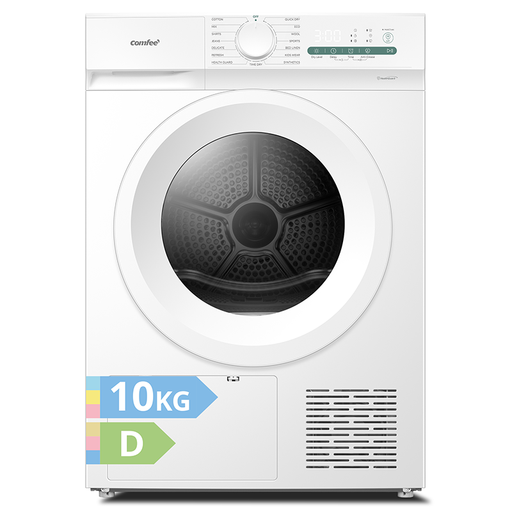 Image unavailable
The heat-pump technology means this separate tumble dryer can be considered for a home without an external vent, subject to the instructions in the manual. The title lists a D energy rating, but the stated capacity varies between 8 and 10 kg. Confirm the capacity of the version you choose before planning your loads. Also check the dimensions, ventilation and condensate management.
Yes. According to UFC-Que Choisir, condenser tumble dryers, including heat-pump models, don’t need an external connection. However, check the ventilation, space and other requirements in the model’s manual; not needing a vent doesn’t make an enclosed space suitable.
It depends on the appliance and how it’s installed. Some tumble dryers can drain condensed water directly through a compatible connection; Bosch describes this option for selected models. Check the manual and make sure the kit is compatible before planning to drain water directly.
Yes, but only if the two models and the stacking kit are compatible. For one of its kits, for example, Bosch specifies a standard-sized washing machine with a depth of more than 55 cm and says you must check compatibility. The requirements may differ for other kits.
No. On a model listed at 9/6 kg, the stated capacity is 9 kg for washing and 6 kg for drying. To run both functions without taking out any laundry, limit the initial load to the model’s drying capacity.
First, compare information for appliances in the same category and look at the programme that suits your needs. EUR-Lex sets out separate labelling rules for tumble dryers and washer-dryers, so the displayed energy rating alone isn’t enough to decide between the two options.