Before buying a dehumidifier to tackle recurring condensation, check the air inlets, ventilation and for any leaks or water ingress. Removing water from the air doesn’t refresh it. For a specific room, a model with a tank may be suitable if it’s easy to empty. If you’ll use it frequently, consider continuous drainage only if it can be installed in your home.
Who is this advice for?
The best place to start depends both on the possible cause of the damp and on which room you want to use an appliance in.
People dealing with condensation in one area
If your windows regularly mist up or a room stays damp, start by checking the air inlets and extractor vents. The French Environment and Energy Management Agency (ADEME) also recommends airing the bathroom after a shower and the kitchen after cooking that produces steam. You can then use a portable appliance in the affected room, but it won’t replace ventilation.
People using a utility room or damp cellar
If the appliance will be running frequently, managing the water becomes a key consideration. Compare a tank you’ll need to empty with hose drainage, then check that a suitable drain is accessible. A pump is only useful if its setup works for the room.
Renters dealing with persistent damp
A dehumidifier may offer temporary comfort, but it shouldn’t mask water ingress or poorly functioning ventilation. Check any accessible equipment and report persistent problems so that their cause can be investigated.
What should you check before choosing?
First, check how damp air is removed from your home. Then consider the room you want to treat and how you’ll drain the collected water.
| Priority | What to check | What I need |
|---|
| Ventilation and cause |
Check the air inlets and extractor vents; if the damp persists, look for a leak or water ingress. According to ADEME, ventilation continuously removes moisture, unlike an appliance that collects water from the air in a room. |
Condensation keeps coming back despite airing the room: I want to find out where the damp is coming from before relying on an appliance. |
| Room and capacity |
Compare the stated room size and capacity in L/day, and check the conditions under which it was measured. Consider the temperature and any laundry drying in the room. A stated capacity won’t guarantee the same results in every home. |
I want to treat one specific room, without assuming that a model designed for it will also cover the rest of my home. |
| Water management |
Compare the tank capacity with how often you’ll use the appliance. For a hose, check the connection, its route and the drain. Make sure there’s a pump if the water needs to be moved to a higher point. |
If the appliance runs regularly in my utility room or cellar, I’d like to know whether I can avoid emptying the tank by hand. |
| Noise levels |
Check the model’s noise level and which setting it applies to, along with the available controls and possible locations. A stated figure alone won’t tell you how noisy it will seem in a bedroom. |
For an occupied room or overnight use, I want to know how noisy the setting I’ll actually use is. |
What mistakes should you avoid?
-
Using an appliance to mask persistent damp
Collecting water from the air won’t fix water ingress or faulty ventilation. If condensation keeps coming back, your home should be checked, even if a dehumidifier offers temporary comfort.
Check the air inlets and extractor vents, air rooms after activities that produce steam, and have any persistent cause investigated.
-
Choosing based only on litres per day
The stated capacity is a feature of the model, not a promise of results in a particular room.
Compare it with the room you want to treat, its temperature and humidity, and the stated measurement conditions for the exact model.
-
Underestimating water management
A tank needs emptying; a hose requires a suitable connection and drain. The pump on the Wood’s MDX20P, as described by Wood’s, isn’t a standard feature on every model with continuous drainage.
Check what drainage is available and read the instructions to confirm the installation requirements before choosing between a tank, hose and pump.
Also allow time for emptying the tank or installing the hose.
-
Planning to use it overnight without checking the noise
A sleep mode and a stated noise level don’t tell you how noisy every setting will be in a bedroom.
Check the noise level for the setting you want, as well as where you could position the appliance.
Which brands should you compare?
These examples show different configurations. Their features apply to the models named, not to every appliance from each brand.
Wood’s
The MDX20P is worth considering if your installation requires water to be pumped to a higher point.
- Wood’s says its pump can remove water up to 15 m vertically.
- Check that the room and drainage route meet this model’s installation requirements.
Duux
The Bora offers a choice of tank or continuous drainage, provided you have a suitable place to install it.
- Duux specifies a 4 L tank and the option to connect a hose.
- Drainage doesn’t remove the need to check your ventilation or for possible water ingress.
COMFEE’
COMFEE’ describes the Aqua Dry 12 as suitable for a room of 20 to 35 m².
- The product details state up to 12 L/day and a 2.5 L tank.
- Confirm which version is being sold and the conditions for the stated capacity before deciding if it’s right for your room.
De’Longhi
The Tasciugo AriaDry Multi DEXD216RF is worth comparing if you’d like to use continuous drainage.
- De’Longhi says a hose is included for continuous water drainage.
- Check that the connection and drain are suitable for the room you have in mind.
Dehumidifiers available on Joybuy
These portable models may be suitable for a specific room once you’ve checked the ventilation and the cause of any persistent damp. If you’ll use one frequently, pay particular attention to tank capacity and whether you can install a hose.
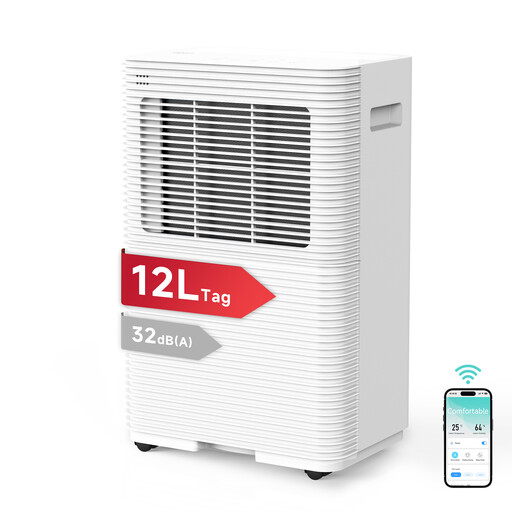 Image unavailable
VINO 12L Smart WiFi, 1.8 L tank
For a specific room, check that its size and the appliance’s position suit your needs. The title states 12 L/day, for a room of up to 24 m², with a 1.8 L tank and Auto, Dry and Sleep modes. If you plan to use a drainage hose, confirm how it connects. Also check the noise level of the setting you’ll use.
View on Joybuy
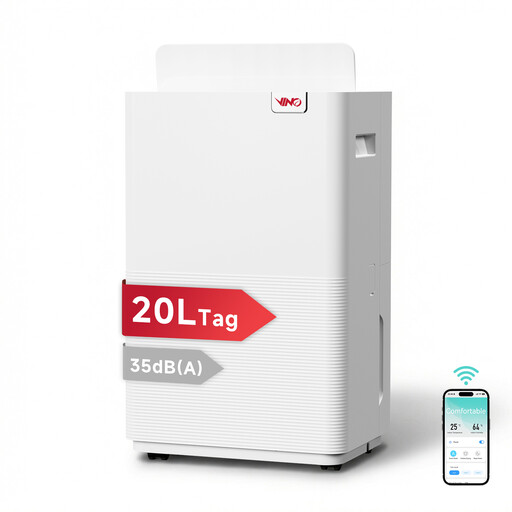 Image unavailable
VINO 20L Smart WiFi, 2.5 L tank
If you’ll be treating a room regularly, consider how much space you have for the appliance and how often you’re happy to empty the tank. The title states 20 L/day, for a room of up to 40 m², with a 2.5 L tank and Auto, Dry and Sleep modes. Before buying, confirm how to connect a hose, if needed, and check the noise level of the setting you plan to use.
View on Joybuy
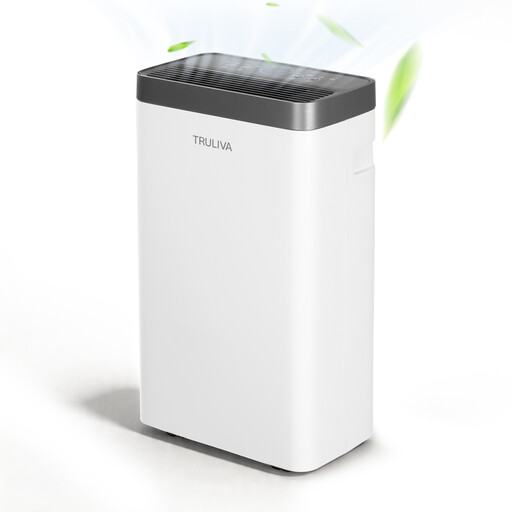 Image unavailable
TRULIVA AP10-2012EE, continuous drainage
This model is worth considering if emptying a tank every time you use it would be inconvenient and there’s a drain nearby. The title mentions an approximate coverage area of 32 m², a 24-hour timer and continuous drainage. Check how the hose connects and the noise level if you plan to use it in a bedroom.
View on Joybuy
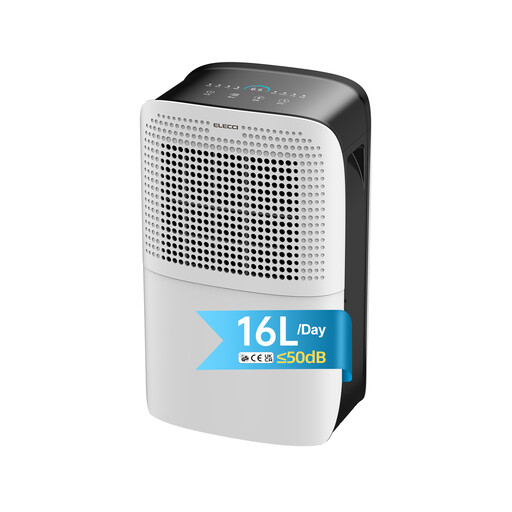 Image unavailable
ELECCI 16 L/day, 3.1 L tank and hose
Being able to choose between a tank and a hose can be useful if how often you use the appliance varies, as long as you have a suitable drain. The title states 16 L/day, for a 32 m² room, with a 3.1 L tank, four modes and a 24-hour timer. Check the conditions under which the capacity was measured and the noise level of your preferred setting.
View on Joybuy
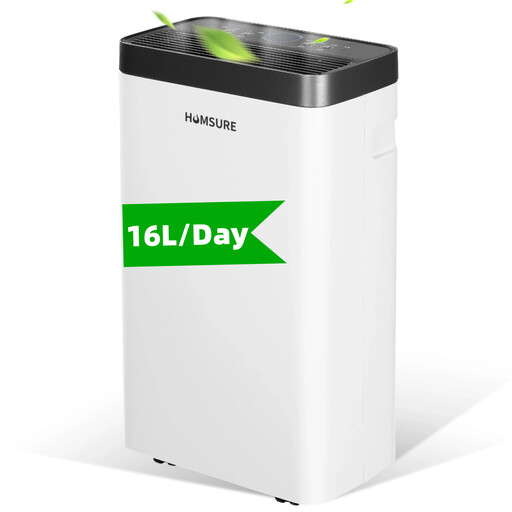 Image unavailable
HUMSURE 16 L/day, 1.4 L tank
For regular use in one room, bear in mind how often you’ll need to empty the 1.4 L tank. The title states 16 L/day, for a 25 m² room, with three modes and a 24-hour timer. If you’d like to use a hose, confirm how it connects and where it can run. Check the noise level of your chosen setting.
View on Joybuy
Frequently asked questions
Can a dehumidifier replace ventilation?
No. It collects water from the air in a room but doesn’t refresh the air. ADEME points out that mechanical ventilation continuously removes moisture and pollutants from the home. Check that it’s working properly even if you use a dehumidifier.
What should I check if condensation keeps coming back?
Start by checking the air inlets and extractor vents, then look for any signs of damp or a possible leak or water ingress. If the problem persists, have the cause investigated rather than relying on a portable appliance alone.
When should I choose continuous drainage instead of a tank?
Consider it if the appliance will be used often, emptying the tank would be inconvenient and there’s a suitable drain available. Check the exact model and installation requirements: Duux says a hose can be used with the Bora, De’Longhi says a hose is included with the DEXD216RF, while Wood’s says the MDX20P has a pump to move water to a higher point.


