Who is this advice for?

Households that notice condensation after showering or cooking

If condensation tends to appear after these activities, start by airing the room and checking that moist air can be extracted. Anses advises clearing steam after a shower and using an extractor hood or a lid while cooking.

People who dry their laundry indoors

Drying laundry adds moisture to indoor air, as ADEME points out. Keep the room ventilated and, if a spike in humidity persists, compare backup appliances, taking noise and water drainage into account.

Tenants dealing with persistent damp

If damp patches remain visible outside showering, cooking or drying laundry, make a note of where and when they appear. Faulty ventilation or moisture coming in from outside calls for an investigation into the cause, not just the purchase of an appliance.

What should you check before choosing?

Monitor and observe

Worth considering: condensation seems to be linked to everyday activities, but you’re not yet sure how often it appears or how widespread it is.

Limitation: a hygrometer tracks relative humidity; it does not remove water or identify its source by itself.

Use a dehumidifier as a backup

Worth considering: humidity rises temporarily during household activities and the ventilation is working.

Limitation: the appliance uses electricity and you’ll need to manage the collected water. Its stated capacity does not guarantee the same extraction rate in every room.

Get the cause investigated

Best option: damp patches persist, the ventilation isn’t working or you suspect a leak.

Consideration: the property needs to be inspected before the right course of action can be determined. An appliance is no substitute for this step.

Priority What to check What I need
Source of the moisture Note when and where damp patches appear. Check the air inlets, extractor vents and ventilation system; get persistent damp or a suspected leak investigated. Does the condensation appear after a shower or cooking, or does the wall stay damp even when these activities have stopped? I want to understand the difference before choosing an appliance.
Monitoring the room A hygrometer lets you record relative humidity at different times, but it won’t diagnose the cause. ADEME gives 40 to 60 % relative humidity as a comfort guide, not as a test of the building. Before buying a dehumidifier, I’d like to see how humidity changes throughout the day.
Stated extraction rate Compare capacities in L/24 h alongside the temperature and relative humidity at which they were measured. Also check which room the model is designed for: the extraction figure alone isn’t enough to determine the right size. When I dry laundry indoors, I need to assess whether a backup appliance would help in that room, without assuming the stated capacity guarantees the same results in my home.
Noise and collected water Compare the dB(A) rating for the mode you plan to use. Check the tank capacity, whether the appliance switches off when the tank is full, and whether it can drain continuously to a suitable outlet. Noise matters to me near a bedroom. If the appliance will be running for a long time, I’d also like to know how often I’ll need to empty the tank.
Power and settings Check the power rating in W, how long you plan to use the appliance and which settings are available, including a humidistat. The power rating alone doesn’t tell you how much electricity it will use over a period of use. I want to be able to adjust the appliance to suit the situation, rather than leave it running without taking measured humidity into account.

What pitfalls should you avoid?

  • Relying on an appliance to fix a leak or faulty ventilation

    Temporarily drying the air won’t stop a leak or fix a ventilation problem. ADEME points out that ventilation continuously removes moisture from the home.

    Make a note of where and when damp patches appear, check the air inlets and outlets, then get the cause investigated if they persist.

    Running the appliance while the underlying problem remains means more operating time and more tank emptying, without addressing the cause.

  • Choosing based only on litres per day

    An appliance’s extraction capacity depends on the conditions under which it was measured. For example, De’Longhi states 10 L/24 h for its DEX210SF at 30 °C and 80 % relative humidity. This figure may not reflect performance in a colder or less humid room.

    Compare the test conditions, then also consider the room, noise, power and water management.

  • Forgetting about noise and emptying the tank

    Noise levels and whether the appliance switches off when the tank is full can affect how well a dehumidifier suits a bedroom or extended use.

    Check which mode the dB(A) rating applies to, the tank size and, if you want continuous drainage, whether there’s a suitable outlet where you plan to place it.

  • Drying laundry in a closed room and relying on the appliance alone

    ADEME notes that air-drying laundry releases a lot of moisture into indoor air. A dedicated mode on a dehumidifier is no substitute for extracting this moist air.

    If you dry laundry indoors, choose a well-ventilated room. Consider a dehumidifier as a backup if it would help with this occasional need.

Which branded models should you compare?

These specifications declared by the manufacturers offer points of comparison between specific models. They don’t constitute a ranking or imply that the models are available at Joybuy.

Rowenta

According to Rowenta, the Extrême Dry Compact+ DH5260F0 has a water tank and the option of continuous drainage.

  • Rowenta states a capacity of 16 L/day, coverage of up to 40 m² or 100 m³, a 3 L tank with a full-tank alert, and a continuous-drainage hose.
  • The stated capacity and noise level of under 40.5 dB(A) are manufacturer specifications, not measurements taken in your room.

De’Longhi

The Tasciugo AriaDry DEX210SF specifications let you assess extraction, noise, power and drainage together.

  • De’Longhi states 10 L/24 h at 30 °C and 80 % relative humidity, 36 dB(A), an input power of 250 W and the option of continuous drainage.
  • The 10 L/24 h figure applies to the stated measurement conditions; it can’t be directly applied to another home.

Meaco

The MeacoDry ABC 10L is another model to consider when comparing noise levels and the size of the room you have in mind.

  • Meaco states a noise level of 35 dB and says this model is suitable for spaces of up to 42 m².
  • These manufacturer specifications aren’t enough to determine how loud it will seem or whether it’s right for your room. Check the drainage options and operating conditions before buying, too.

Joybuy options for monitoring humidity or dehumidifying

This selection includes a hygrometer to monitor humidity before you decide, as well as electric dehumidifiers to consider as a backup for spikes linked to household activities. None of these appliances can replace investigating a leak or getting faulty ventilation working again.
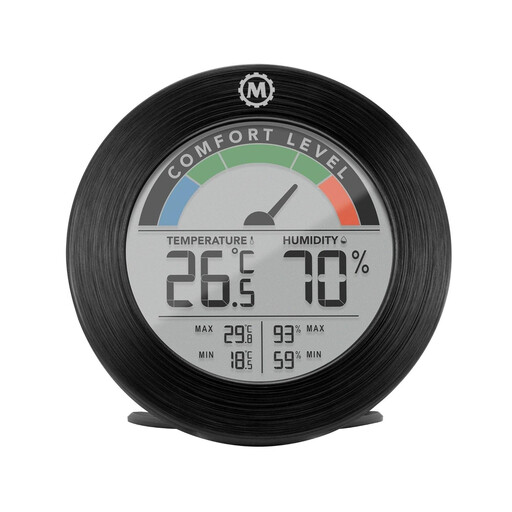
Marathon Austin indoor thermometer and hygrometer

Marathon Austin indoor thermometer and hygrometer

Monitor changes in humidity before choosing a backup appliance. The product name indicates that it measures temperature and humidity, includes a comfort indicator, and records daily minimum and maximum readings. These readings alone can’t identify the cause of persistent damp patches.

View on Joybuy

TRULIVA dehumidifier, 25 L/day, with laundry mode

TRULIVA dehumidifier, 25 L/day, with laundry mode

Consider this as a backup if drying laundry causes a spike in humidity in a ventilated room. The product name states a capacity of 25 L/day, a 2.8 L tank and a continuous-drainage hose. Check the conditions under which the capacity was measured and whether the appliance is suitable for your room.

View on Joybuy
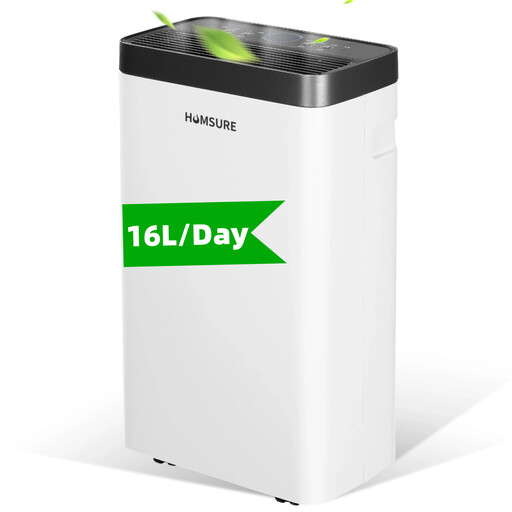
HUMSURE dehumidifier, 16 L/day

HUMSURE dehumidifier, 16 L/day, 1.4 L tank

An option to consider as a backup for a room of up to 25 m², according to the product name. It states a capacity of 16 L/day, a 1.4 L tank, a 24-hour timer and automatic shut-off. Check the conditions under which extraction was measured and the available modes before deciding.

View on Joybuy
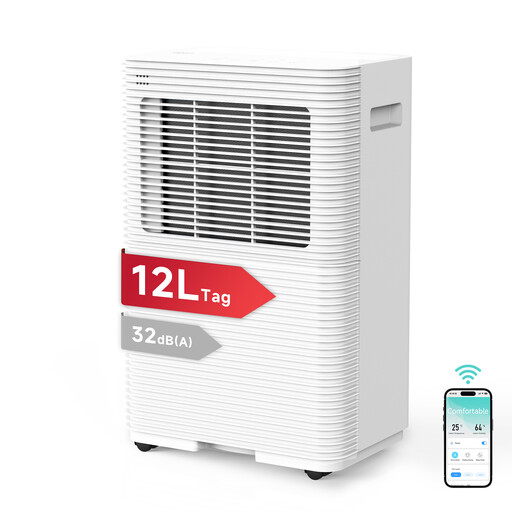
VINO dehumidifier, 12 L/day, with Wi-Fi control

VINO dehumidifier, 12 L/day, with Wi-Fi

Consider this if Wi-Fi control is important for your use of a backup appliance. The product name states a capacity of 12 L/day, a 1.8 L tank and suitability for a room of up to 24 m². If you plan to use it near a bedroom, check the noise level and which mode it applies to before buying.

View on Joybuy
Comfee’ MDDN-10DEN7 dehumidifier, 10 L/24 h

Comfee’ MDDN-10DEN7 dehumidifier, 10 L/24 h

An option to consider as a backup, with an LED display and automatic dehumidification listed in the product name. Before choosing it for a particular room, check the suitable room size and the conditions under which the stated capacity of 10 L/24 h was measured.

View on Joybuy

Frequently asked questions

Will a dehumidifier be enough if the water seems to be coming from a wall or ceiling?

No, not as a long-term solution to a leak. If you suspect a leak or water ingress, get the source investigated. A dehumidifier can only provide temporary support while the cause is being examined and dealt with.

What should I check if condensation appears after a shower or cooking?

Start by clearing the steam and checking that the air inlets and extractor vents aren’t blocked. Anses recommends airing the room after a shower and using an extractor hood or a lid while cooking. ADEME also highlights the role of ventilation in continuously removing moisture.

What humidity level should I use as a guide?

ADEME gives a comfort range of 40 to 60 % relative humidity. This can help you monitor hygrometer readings or set an appliance, but it won’t tell you what’s causing a damp patch on a surface.

How should I compare two dehumidifiers?

Compare the capacity in L/24 h and the conditions under which it was measured, then check the noise level in the mode you plan to use, the power, tank capacity and drainage options. For example, De’Longhi gives the DEX210SF’s capacity at 30 °C and 80 % relative humidity, so the litres-per-day figure alone isn’t enough to predict how much it will extract in your home.

What should I do as a tenant if damp persists outside everyday household activities?

Keep a record of the damp patches, including dates and locations, then write to your landlord to explain the problem and ask them to investigate its cause. The Institut national de la consommation distinguishes between issues linked to the characteristics of the property, such as faulty ventilation or moisture coming in from outside, and those linked to how it is used. The cause must be established before drawing conclusions about responsibility.