
Livraison le jour même ou le lendemain

Qualité garantie

Débloquez vos offres de bienvenue: Livraison GRATUITE | Jusqu'à -80 % | 30 jours d'essai gratuits à JoyPlus
Téléchargez l'application
Remote work, studying, gaming… Having a great workspace at home has become essential. Choosing the right computer desk is no longer about finding a simple plank on four legs. It's about discovering the centerpiece that combines ergonomics, practicality, and style, without sacrificing quality. But with an overwhelming number of options, how do you find your way?
This guide is here to shed some light with practical advice and a selection of models that caught our eye. Our goal: to help you find THE perfect desk for you, based on clear criteria like dimensions, storage, and materials.
Before you take the plunge, let's review a few key points to ensure you make the right long-term choice.
First, and most importantly: get out the measuring tape! Measure the available space. A desk that's too bulky will overwhelm a small room, while one that's too small will quickly become frustrating to use. Think about the depth needed for your monitor and keyboard, while maintaining a comfortable distance for your eyes.
For rooms with complex layouts or to maximize the use of a corner, a corner desk often proves to be an ideal solution. It offers an expansive work surface without taking up too much living space.
A tidy desk leads to a clear mind. To achieve this, storage is your best friend. Assess your needs: do you need to file documents, store books, or hide away supplies? A desk with built-in shelves or drawers is then essential to keep your work surface clean and clear. Don't overlook cable management either: it's the secret to a clean and safe setup.
For an intensive remote work desk, ergonomics are paramount. Height-adjustable desks allow you to alternate between sitting and standing, a practice highly recommended for daily well-being.
Your office table sets the tone for the room. The materials play a key role in its appearance and durability.
To put theory into practice, we've selected three models with very distinct profiles. There's something for every taste and need.
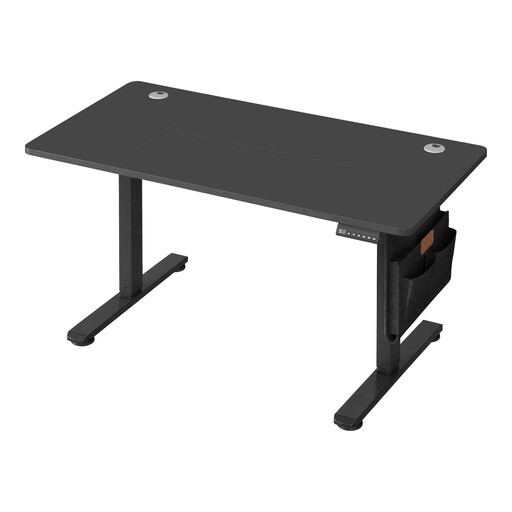
Why we love it: This desk checks all the boxes for modern ergonomics. Its motorized height adjustment allows you to change positions effortlessly. Add to that thoughtful details like the integrated USB-C port and neat cable management, and you get a turnkey workstation.
Key features:
Who is it for? The perfect companion for remote workers who spend long hours in front of their screen and want to take care of their back by easily alternating between sitting and standing positions.

Why we love it: This corner desk is the ultimate all-in-one solution. It offers an extra-large work surface and impressive storage capacity. Its key feature? It's reversible, allowing it to adapt to any room configuration hassle-free.
Key features:
Who is it for? Essential for those who juggle multiple screens and need a vast workspace: creatives, developers, gamers... It's also the smart choice to finally make use of that unused corner of a room.
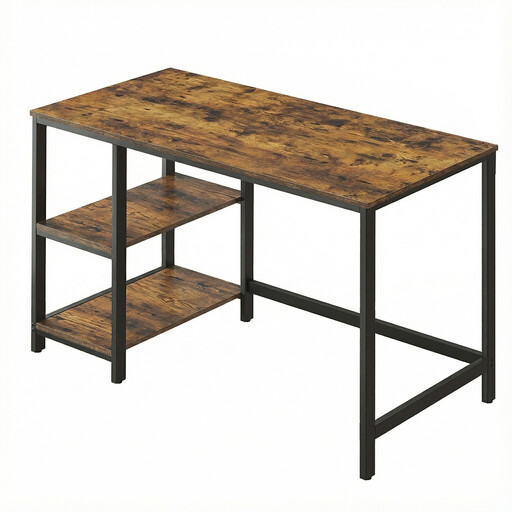
Why we love it: Simple, effective, and stylish. This desk gets straight to the point. With its standard dimensions and clean design, it fits in anywhere, while offering a comfortable work surface and clever storage.
Key features:
Who is it for? The ultimate versatile desk. Ideal for students, small spaces, or simply for those looking for a functional, attractive, and budget-friendly office table.
Our selection is just a taste of the possibilities for setting up your workspace. If you have size constraints, a different budget, or another idea in mind, don't worry: dozens of other options are available. Feel free to explore our full range to find that hidden gem.
Discover Our Full Desk Collection
The standard height for a fixed desk is typically between 72 and 75 cm. However, the ideal height depends on your body size. For an ergonomic posture, your elbows should form a 90-degree angle when your forearms are resting on the desk. This is why height-adjustable desks are so appealing: they allow for precise, personalized adjustment.
For a well-organised desk, start by decluttering the surface. Use integrated storage solutions like drawers and shelves for your supplies and documents. Consider organisers for small items and use cable grommets or sleeves to tame the cable jungle. The goal: a place for everything, and everything in its place.
The durability of a desk depends on the quality of its materials. A steel frame is a guarantee of strength and stability. For the top, thick particle board (MDF) offers excellent resistance for daily use. They are often covered with a laminate (melamine) finish that protects them from scratches and moisture, while also offering a wide range of finishes.