
Livraison le jour même ou le lendemain

Qualité garantie

Débloquez vos offres de bienvenue: Livraison GRATUITE | Jusqu'à -80 % | 30 jours d'essai gratuits à JoyPlus
Téléchargez l'application
A complete tool kit can save you from buying tools one at a time—provided it genuinely includes what you need. For homeowners, occasional DIYers, and anyone who maintains their own car, the number of pieces printed on the box is not everything. What matters most is the range of sizes, material quality, storage design, and whether the accessories are truly useful.
Here are the main pitfalls to avoid, the technical criteria to review, and a selection of kits worth considering in 2026.
A 400-piece kit may simply contain duplicate bits, rarely used sizes, and accessories that are incompatible with the supplied ratchets. Conversely, a more compact socket and ratchet set may cover the essentials for household tasks, bicycle maintenance, or routine car repairs.
Before comparing two kits, check their contents carefully:
Claims such as “heavy-duty” or “professional quality” are no substitute for a detailed specification sheet. For mechanical work, prioritize kits that identify the materials used—particularly chrome vanadium steel (Cr-V) for sockets and S2 steel for bits. These details provide useful information about the composition, but they cannot, on their own, guarantee a specific service life.
A chrome finish helps protect tools against oxidation. It does not eliminate the need to wipe them down after use and store them in a dry place, especially in an unheated garage.
A poorly organized case can quickly turn every repair into a treasure hunt. Tools may also come loose during transport, increasing the risk of loss. Look for molded compartments, easy-to-read markings, sturdy latches, and a handle capable of supporting the weight of the full kit.
If the case will stay in your car, consider its overall footprint as well. A comprehensive kit can quickly take up considerable space in an already full trunk.
In France, metric sizes are generally the most suitable for routine maintenance. Imperial sockets can be useful for certain equipment, but they do not replace a well-rounded metric assortment.
For automotive work, multiple drive sizes help cover a wider range of tasks:
The ratchet’s tooth count also matters. With 72 teeth, the mechanism requires a smaller swing arc to reset, making it easier to work in a cramped engine bay. However, avoid using a small ratchet with an excessively long extension to loosen a severely seized nut.
A professional tool kit or multifunction tool set should be selected according to the jobs you plan to undertake. For assembling furniture, mounting shelves, or carrying out minor household repairs, screwdrivers and bits are the priority. In a mechanics’ tool case, deep sockets, extensions, universal joints, and spark-plug sockets are considerably more valuable.
An electric screwdriver makes repetitive fastening easier, but its torque is generally lower than that of a manual tool. Its limitations must therefore be respected. The EasyWox model featured here specifies 0.3 N·m of electric torque and 3.5 N·m of manual torque: it is suitable for precision work and light DIY, not for loosening seized automotive nuts.
When choosing automotive repair tools, check compatibility before placing your order. An oil filter wrench must match the filter diameter. The WORKPRO model featured here accepts filters from 70 to 110 mm, but measuring the filter beforehand is still essential.
Impact sockets designed for wheels must also match the size of the lug nuts. An internal protective sleeve can help prevent scratches on nuts and wheels. Above all, remember to follow the vehicle manufacturer’s recommended tightening torque.
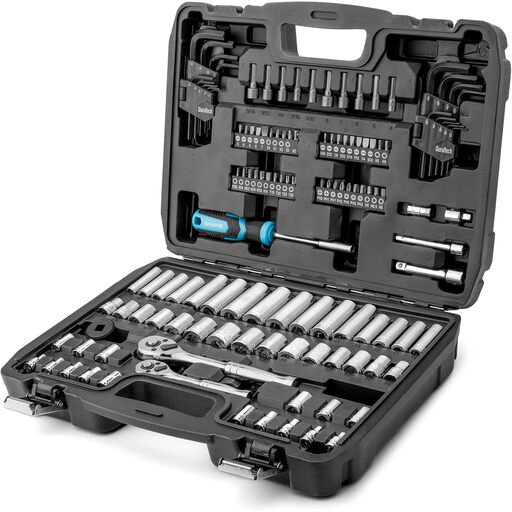
Why it fits this profile: A versatile assortment for minor household repairs, bicycle maintenance, and straightforward work on a car.
The contents are clearly detailed: 121 pieces, metric and SAE sockets, 1/4- and 3/8-inch ratchets, bits, and Allen keys.
Treated Cr-V steel, clear socket markings, and a storage case included.
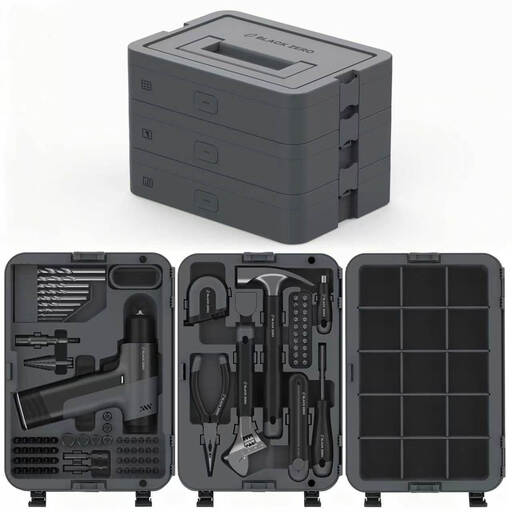
Why it fits this profile: This kit is designed for those who want to keep a drill and a selection of hand tools together in one organized case.
The drill has its own compartment, while dividers keep the remaining accessories securely in place.
16 V drill, 1,600 mAh battery, claimed no-load speed of 0–1,000 rpm, and a 329.5 × 236.5 × 75 mm case.
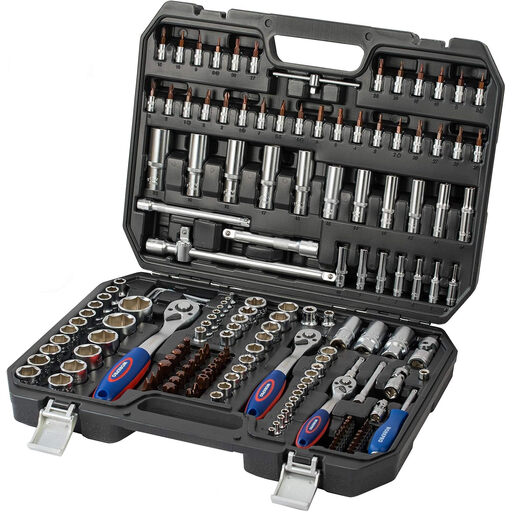
Why it fits this profile: A comprehensive assortment for automotive, motorcycle, and bicycle repairs, as well as a wide range of maintenance tasks.
The specification clearly separates the 1/4-, 3/8-, and 1/2-inch sockets, S2 bits, and accessories instead of simply advertising a single overall piece count.
Three 72-tooth ratchets, metric sockets, spark-plug sockets, extensions, and a rigid case with size markings.
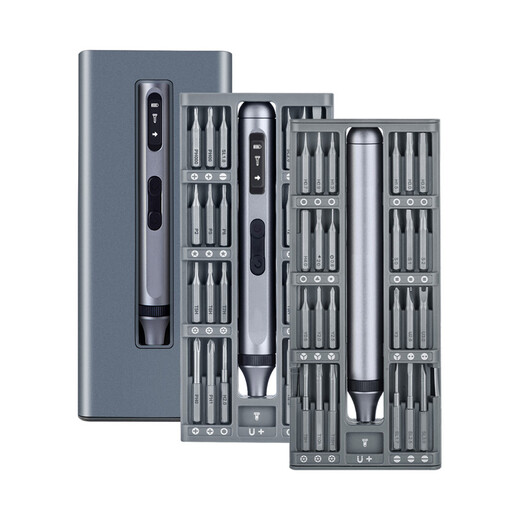
Why it fits this profile: A compact format suited to electronics, furniture assembly, small devices, and tasks requiring precise fastening.
The stated electric torque is clearly specified, helping prevent the tool from being used on overly resistant fasteners.
48 bits, 350 mAh rechargeable battery, claimed 90-minute charging time, pliers, and a pry tool included.
We have brought together an updated selection of products that meet these criteria for DIY, maintenance, and automotive care in France.
It can cover routine jobs such as replacing a battery, removing protective panels, or working on certain wheel components. For an oil change, you will also need an oil filter wrench, a drain pan, and accessories suited to your vehicle. Always check filter and nut dimensions before buying.
For DIY and home improvement tools, a 100- to 125-piece kit can be more than sufficient if it includes metric sockets, several screwdrivers, bits, pliers, Allen keys, and at least one ratchet. From 172 pieces upward, the assortment becomes more worthwhile if you regularly work on vehicles or machinery.
After each use, wipe away oil and moisture, return every piece to its designated place, and avoid improvised extensions on small ratchets. With power tools, follow the charging requirements, keep them away from water, and never exceed the torque recommended by the manufacturer.