
Livraison le jour même ou le lendemain

Qualité garantie

Débloquez vos offres de bienvenue: Livraison GRATUITE | Jusqu'à -80 % | 30 jours d'essai gratuits à JoyPlus
Téléchargez l'application
Whether you're a new homeowner about to assemble flat-pack furniture, a weekend mechanic who loves working on your car, or simply searching for the perfect gift for the DIY enthusiast, buying a complete tool kit can quickly become a headache. DIY store aisles are overflowing with sets promising hundreds of pieces at rock-bottom prices. But how can you tell a lasting investment from a purchase you'll regret in six months?
As a product expert at Joybuy, I'm here to help you make sense of it all. Let's cut through the marketing jargon and focus on the real-world pitfalls to avoid to make the right choice.
Before you're tempted by a shiny new case, watch out for these three common mistakes that cost novice DIYers dearly.
To avoid these traps, focus on a few key technical specifications that never lie. These are the true indicators of a quality mechanic's tool kit or a versatile toolbox.
This is the gold standard for quality tools. Cr-V steel is a heat-treated alloy that offers far superior resistance to torque and wear than standard carbon steel. Its chrome finish also provides effective protection against rust. This is a non-negotiable feature for tools designed to last.
The ratchet is the heart of your complete socket set. Its internal mechanism is made up of teeth that determine the swing arc—the minimum movement required to engage the next tooth and tighten a nut. A 72-tooth ratchet offers a tight 5-degree swing arc, compared to 10 or even 15 degrees for low-end models. This precision is essential for working in the tight spaces of an engine or behind an appliance.
Check that the kit contains the essentials for your projects. For a car tool kit and general DIY in Europe, make sure it includes the most common metric sockets (e.g., 8, 10, 13, 17, 19 mm), Allen keys, and various types of screwdrivers and pliers. A well-designed kit offers a balanced selection rather than an accumulation of filler pieces.
To illustrate these criteria in action, here are a few models designed for different profiles.
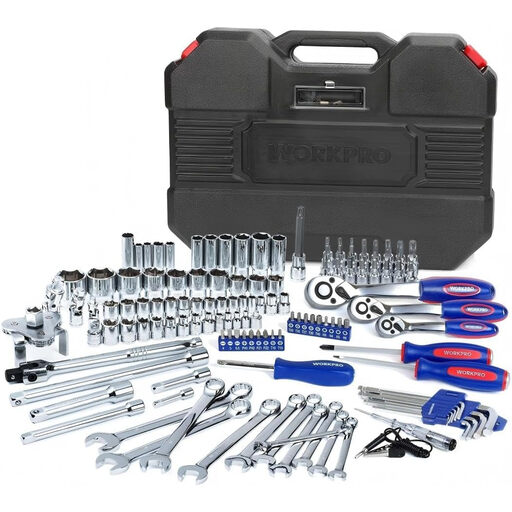
Why we chose it: This is the quintessential balanced option. It's perfect as a first tool kit for everyday small repairs and basic car maintenance, or as a practical gift that's sure to be a hit.
Made from Cr-V steel with a chrome finish, this kit resists rust and wear. Its well-organised, moulded case is a world away from the chaos of "catch-all" kits.
Its excellent versatility, with 3 ratchet sizes (1/4", 3/8", 1/2") and a relevant assortment of tools (sockets, wrenches, screwdrivers), covers the majority of common needs.
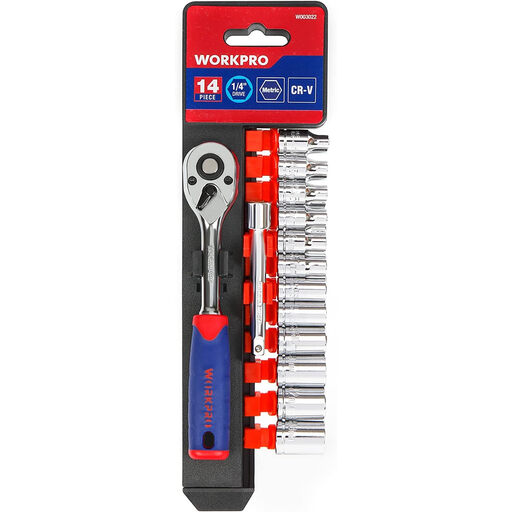
Why we chose it: Perfect for jobs in very tight spaces, like modern engine bays, where every degree of movement counts. An excellent addition to a basic tool kit.
There's no inflated piece count here. The kit focuses on the essentials: functionality, with a 72-tooth ratchet and metric sockets, prioritising quality over quantity.
The 72-tooth reversible ratchet provides a 5-degree swing arc, which makes working in areas with almost no clearance much easier.
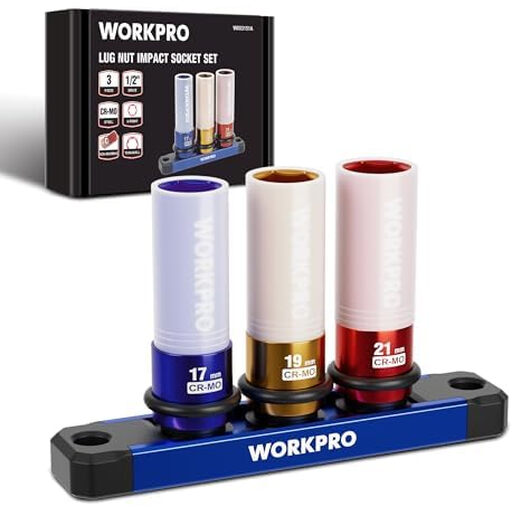
Why we chose it: An indispensable tool for any enthusiast who changes their own wheels and cares about their alloy rims. A small investment to protect wheels that cost much more.
While standard sockets in cheap kits can scratch or mar rims, this specialised set includes a protective layer to prevent any damage.
Each socket has a protective outer sleeve and a plastic insert to prevent metal-on-metal contact with the wheel and lug nut.
We've put together a complete selection of products that meet our quality criteria and current safety standards.
For home or hobbyist use, well-maintained Chrome-Vanadium steel tools can last a lifetime. The secret is proper care: wipe them down after use, especially if they've been exposed to moisture, and store them in their case in a dry place to prevent corrosion.
For 95% of needs in Europe (DIY, work on European vehicles), a metric set is sufficient. SAE (inch) sizes are only really useful for American vehicles or some very specific equipment. A mixed kit like the WORKPRO 123-piece set can offer welcome versatility, provided the metric socket selection is comprehensive and meets your primary needs.
Proper storage is key. Always keep your tools in their closed case, in a dry area like a garage or workshop. A quick wipe with a dry cloth after each use is usually enough. For extra protection, a light spray of a water-displacing lubricant on the metal parts once or twice a year works wonders.