
Livraison le jour même ou le lendemain

Qualité garantie

Débloquez vos offres de bienvenue: Livraison GRATUITE | Jusqu'à -80 % | 30 jours d'essai gratuits à JoyPlus
Téléchargez l'application
Whether you're a weekend warrior, a passionate mechanic, or a seasoned professional, finding the ideal complete tool case can often feel like an uphill battle. The market is flooded with tempting promises, but be warned: not all deals are created equal. Make the wrong choice, and you're guaranteed disappointment: tools that rust, wrenches that bend on the first stubborn bolt, and a healthy dose of frustration.
As the head of product selection at Joybuy, my job is to separate the wheat from the chaff. Let's cut through the marketing noise and focus on what really matters. Together, let's break down the common pitfalls to avoid and the key criteria that will make your purchase a worthwhile long-term investment.
Before you fall for a deal that seems too good to be true, learn to spot the warning signs of low-quality equipment.
To ensure you make the right choice, examine these three key points. They are the foundation of your mechanical hand tools' performance and longevity.
The first thing to do? Look for the Chrome Vanadium (Cr-V) Steel label. It's the standard for serious tools. This heat-treated alloy offers hardness and torsional strength that are leagues beyond carbon steel. Ideally, it's finished with a polished chrome coating, the best defence against rust and corrosion.
In a DIY tool set, the ratchet is the workhorse—the part that endures the most stress. Keep two numbers in mind:
A good case isn't just a container. Look for a robust design (ideally metal), with drawers on ball-bearing slides for smooth, jerk-free opening. The details that make all the difference? Protective liners in the compartments and sturdy metal latches that inspire confidence. This ensures your tools will stay organised and protected, both in the workshop and on the go.
Instead of an all-in-one kit that inevitably involves compromises, here are components selected for their excellence in a specific area. Use them to build or complete a truly high-performance workshop setup.
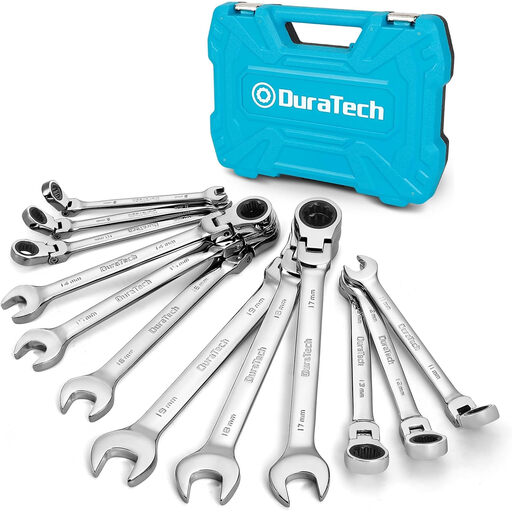
Our take: Perfect for engine work or jobs where every centimetre counts. This set is all about raw performance for tough fastening jobs.
No compromises here. It gets straight to the point: every wrench is made of Cr-V steel, featuring the renowned 72-tooth mechanism and a 180° flex-head. It's the antithesis of kits filled with useless gadgets.
The combination of a flex-head and a 5° swing arc provides access to work areas that are simply unreachable with conventional tools.
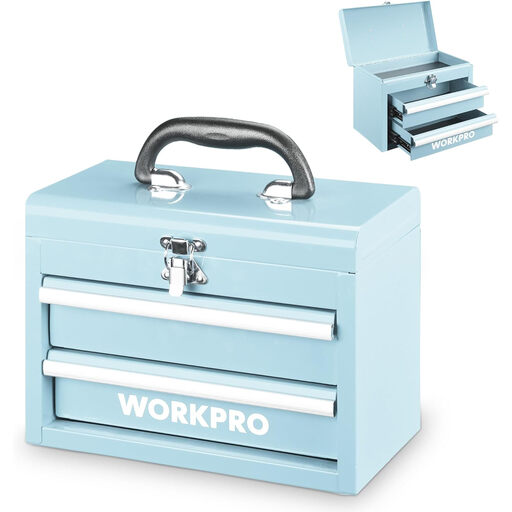
Our take: The ideal solution for those who already own good tools but are struggling with a low-quality plastic case. This is the foundation for an organised, durable, and mobile workshop.
This product directly addresses pitfall #3: the flimsy case. With its all-metal construction, ball-bearing drawers, and solid latches, it's in a different league than plastic toolboxes.
The protective liners and sturdy handle make it an excellent tool organiser that protects your equipment and is easy to transport.
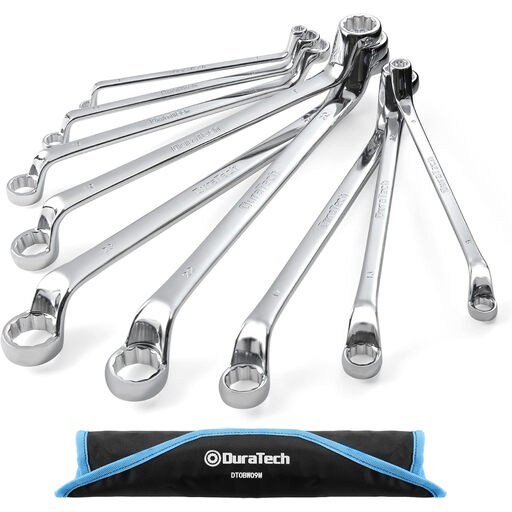
Our take: The essential addition for mechanics, for when nuts are hidden deep in an engine bay or surrounded by obstacles.
This isn't a jack-of-all-trades tool; it's a specialist. Its 75° deep offset shape is designed for one thing: reaching the unreachable. It addresses a need completely ignored by general-purpose kits. The Cr-V steel construction ensures you can apply force without risk.
Allows you to apply significant torque where a standard wrench or ratchet won't fit, all while keeping your hands clear of obstructions.
Explore our full selection of products that meet our quality criteria and safety standards.
Chrome Vanadium (Cr-V) steel is a much harder and more resilient alloy than standard carbon steel. In practice, a Cr-V tool won't bend, deform, or break, even under high pressure. Its other major advantage is its far superior resistance to corrosion, especially with a chrome finish.
For very occasional use, a 48-tooth model might suffice. But a 72-tooth (or higher) ratchet is a real game-changer. Its 5° swing arc allows you to work in inaccessible spots (engine bays, plumbing under a sink...) where a standard tool would be blocked. The time and frustration you'll save are significant.
It's simple, but crucial. After each use, wipe them down with a cloth to remove grease and dust. Always store them in a dry place to avoid rust. Finally, a drop of oil on any mechanisms (ratchets, hinges) from time to time will ensure they operate smoothly and prevent wear.