
Livraison le jour même ou le lendemain

Qualité garantie

Débloquez vos offres de bienvenue: Livraison GRATUITE | Jusqu'à -80 % | 30 jours d'essai gratuits à JoyPlus
Téléchargez l'application
With the rise of remote work, setting up a home office has become a priority. However, faced with an overwhelming number of options, it's easy to fall into common traps that turn a good investment into a daily regret. An appealing design can hide poor ergonomics, and what seems like a bargain can prove uncomfortable after just a few weeks of use. As the Head of Product Recommendations at Joybuy, my mission is to help you avoid these pitfalls and create a complete desk setup that genuinely supports your well-being and productivity.
Before you choose, beware of these three common mistakes:
To make an informed choice, it's essential to break down your future remote work equipment by analysing a few key parameters. Far from being mere details, these technical aspects are the key to a truly functional workspace.
Any good home office setup starts with the chair. An ergonomic office chair isn't a luxury; it's an investment in your health. Here are the points you should never overlook:
The desk itself must suit your work and the available space.
Instead of an endless list, here are product-profile pairings designed for specific uses, based on the objective criteria we've just covered.
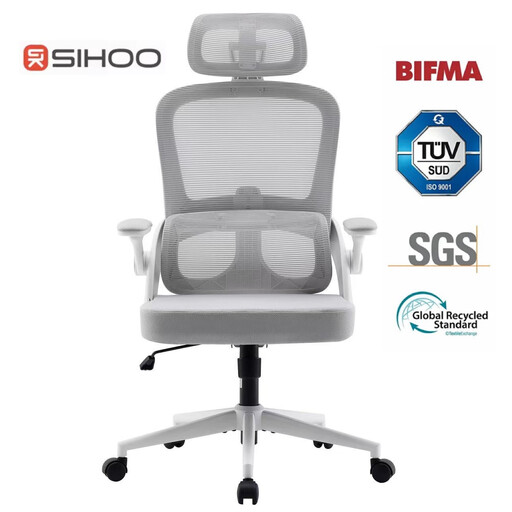
Why this choice: Ideal for those who spend over 6 hours a day seated. It offers complete, customisable support to prevent fatigue and postural pain.
This chair tackles the trap of sacrificed ergonomics head-on. Its 6 cm adjustable lumbar support and 3D armrests allow for precise adjustments, whereas entry-level models offer only a single, often ineffective, setting.
Its breathable mesh backrest and lumbar support ensure excellent ventilation, an undeniable comfort asset during long workdays, especially in the summer.
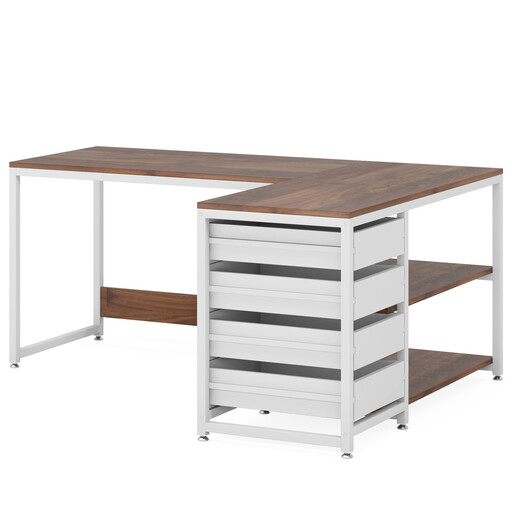
Why this choice: Perfect for integrating a complete, functional workstation into a living room or bedroom. It makes the most of an often-unused corner while offering ample storage capacity.
This desk is the direct answer to the lack of storage. Its 4 drawers and 2 shelves prevent the desktop from being overrun with documents and supplies, unlike minimalist desks that are impractical for daily use.
Its L-shaped design is reversible: you can assemble the storage unit on the left or right, depending on your room's layout. This is decisive flexibility for a customised setup.
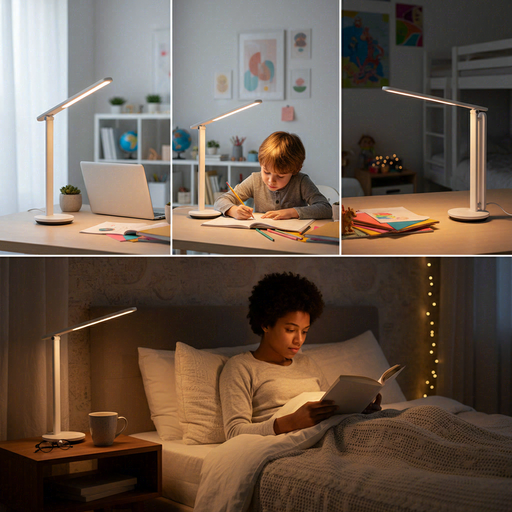
Why this choice: Lighting is the often-forgotten element of the perfect office. This lamp is the ally of students, creatives, and anyone performing precision tasks, day or night.
It prevents eye strain caused by insufficient or poorly directed ambient lighting. Unlike a simple task lamp, it provides high-quality, flicker-free light with an adjustable colour temperature.
Its built-in battery provides excellent autonomy, allowing you to use it wirelessly and move it as needed. When folded, its ultra-compact design allows for clutter-free storage.
Explore our full selection of products that meet our quality criteria and current safety standards.
The standard height for a desk is between 72 and 75 cm. However, the ideal is to be able to sit with your elbows at a right angle (90°) and your forearms parallel to the floor. If your desk is not height-adjustable, adjust your chair's height and use a footrest if necessary to keep your feet flat on the ground.
In most cases, yes. A corner desk with storage optimises a frequently wasted space while offering a larger, better-segmented work surface. You can dedicate one part to your computer and the other to writing or reviewing documents. It's a particularly smart solution for a home office setup in a modestly sized room.
Expect a short adjustment period, from a few days to a week, for your body to get used to a correct posture, especially if you were previously using an unsuitable chair. Take the time to fine-tune the settings (height, lumbar support, armrests) to find the configuration that suits you best. The medium-term gain in comfort and reduction in pain will quickly confirm you made the right choice.