
Livraison le jour même ou le lendemain

Qualité garantie

Débloquez vos offres de bienvenue: Livraison GRATUITE | Jusqu'à -80 % | 30 jours d'essai gratuits à JoyPlus
Téléchargez l'application
Replacing a pair of front windscreen wipers sounds simple enough… until the new blade refuses to clip on, leaves an unwiped patch, or starts juddering across the glass. In the UK, the difficulty largely comes down to the variety of fittings, lengths and vehicle generations.
Before you buy compatible front windscreen wipers for your car, there are three pitfalls worth paying close attention to.
A Peugeot, Renault, Volkswagen, Toyota or BMW model can use several different dimensions depending on its body style, generation and which side the blade is on. Two cars with the same model name don't necessarily need the same pair.
Checking the model, year, body type and steering side is essential. The references shown here are intended for left-hand drive vehicles and are not suitable for right-hand drive vehicles.
A 600 mm blade is not automatically interchangeable with another 600 mm blade. The fitting can be different: U-Hook clip, push-button, side-lock or a proprietary system. A blade that's the right length but has the wrong connector can cause play, poor contact with the windscreen, or even detachment.
Terms like "OE Fit", "frameless" or "extended life" should be read with a healthy dose of scepticism. They generally describe the blade's design or the compatibility claimed, but they don't replace checking the actual list of compatible vehicles.
On a product page, a claim like "up to 1 million wipes" is a figure provided by the manufacturer. It doesn't guarantee the same lifespan in real-world conditions: frost, dust, high heat, parking outdoors and how often you use the washer fluid can all accelerate wear.
A pair of front windscreen wipers usually includes one blade for the driver's side and another for the passenger side. Their lengths can differ, for example:
Don't just measure the longer blade. Note down both dimensions separately, then compare them with the reference you're considering.
Wipers with a U-Hook fitting attach to a metal hook found on many vehicles. Other references are designed without a visible adapter, using a connector that directly matches the shape of the original fitting.
Frameless wipers use a flexible blade and an integrated structure. This design can help reduce the build-up of snow or ice on exposed metal parts. However, it doesn't remove the need to check that the connector shape matches your vehicle.
The product pages for the models below mention natural rubber, an aerodynamic structure and an announced temperature range of –40 °C to +70 °C. This information is useful for comparing references, but the actual condition of the rubber also depends on your climate, how well you maintain them and exposure to UV light.
Even pressure across the full length of the blade can help ensure more consistent contact with the windscreen. To protect the blade, remove ice with a scraper rather than letting the motor force a frozen wiper to move.
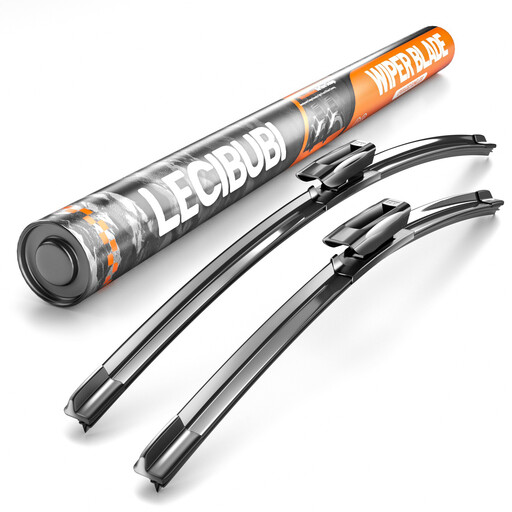
Why this choice suits this profile: A pair offered in the right dimensions for several Renault city cars and hatchbacks, with assembly described as quick.
Both lengths are stated in the reference, which reduces the risk of accidentally ordering two identical blades.
Two blades of 650 mm + 350 mm, in natural rubber, with compatibility stated for Clio IV and Captur I.
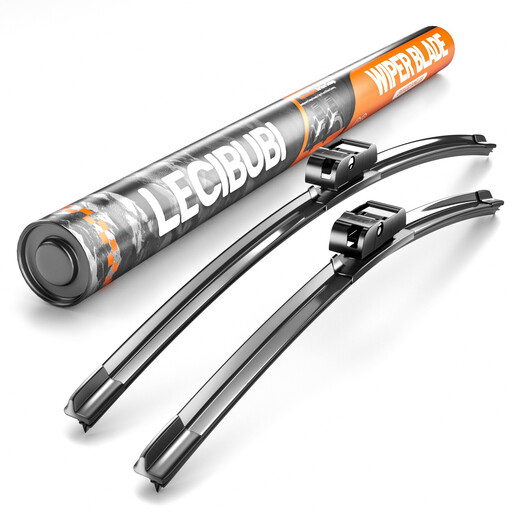
Why this choice suits this profile: A reference intended for several Mercedes-Benz models, where the generation and fitting type need to be checked carefully.
The list distinguishes between classes and body codes, rather than just relying on the vehicle brand.
Two blades of 600 mm + 475 mm, a frameless design and assembly described as requiring no bulky adapter.
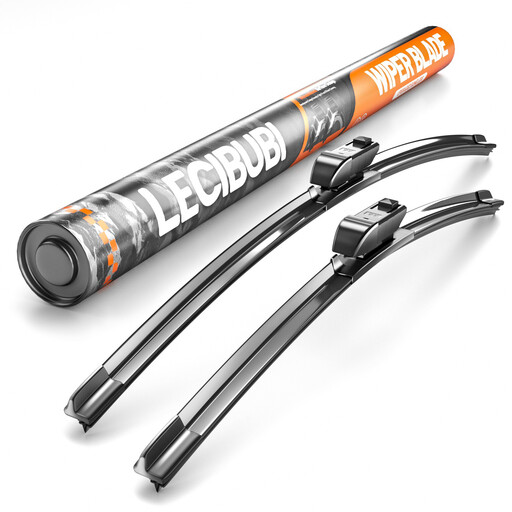
Why this choice suits this profile: Drivers of vans and larger vehicles may need a long pair, suited to a large windscreen area.
The reference distinguishes the 650 mm and 550 mm dimensions and specifies the vehicles covered, including several vans.
A pair of 650 mm + 550 mm, in natural rubber, with a structure described as suitable for varied weather conditions.
We've put together a comprehensive selection, updated in real time, of products that meet these strict criteria and European safety requirements.
Note down the make, model, generation, body type and steering side. Then check both lengths and the type of fitting. Your vehicle's handbook or the reference of the blade currently fitted can help complete this check.
There's no universal interval. Wear depends on your climate and parking conditions. Check them as soon as you notice streaks, unwiped patches, chattering or vibrations, especially before rainy and frosty periods.
No. The brand of the blade alone isn't enough to establish compatibility. You need to compare the dimensions, the connector and the list of compatible vehicles. The same caution applies to blades marked "OE Fit": this must correspond to a reference that is precisely suited to your vehicle.