
Same-day & Next-day Delivery

Quality Guaranteed

Unlock Your Welcome Offers: FREE Delivery | Up to 80% OFF | Free 30-day JoyPlus trial
Download the APP
A compartmentalised lunch box makes taking meals on the go much simpler… provided you choose a model that suits your needs. Whether it’s for school, the office or preparing several portions in advance, the capacity, closure system and material make a real difference in everyday use.
A model that looks great in photos can still spring a few unpleasant surprises. Here are the points to check before buying a bento box, a children’s lunch box or a leakproof lunch container.
Internal dividers stop food from mixing together, but they don’t necessarily guarantee that nothing will leak from one compartment to another. A compartmentalised food container can be perfect for dry foods, yet show its limits with a sauce, a dressed salad or a very liquid dish.
Check for a seal, the type of closure and the manufacturer’s instructions. Several clips may hold the lid firmly in place, but that isn’t always enough to make the box leakproof against liquids.
A box that boasts a large volume isn’t necessarily practical in a school bag or rucksack. Conversely, a small snack box may struggle to fit a full meal.
To give you an idea:
Shape matters too. A rectangular model often slides more easily into a bag pocket than a tall, narrow box.
The phrase “dishwasher safe” doesn’t necessarily mean that all parts can withstand the same conditions. Some lids, seals or printed designs need to be hand-washed. Many stainless steel or glass boxes cannot be used in the microwave.
Before buying, check the instructions regarding the dishwasher, freezer, microwave and drying. A poorly dried lid can retain odours and encourage moisture build-up.
A stainless steel lunch box generally stands up well to repeated use. Because it contains metal, it must not be placed in the microwave. Stainless steel intended for food contact should be used according to the manufacturer’s instructions and cleaned without abrasive products or tools.
Plastic and polypropylene are often lighter, which is a real advantage for a child. However, check for a food-contact indication and respect the temperature limits. Borosilicate glass is better suited to home storage and reheating when the manufacturer allows it, but its weight and fragility need to be taken into account.
For a leakproof lunch box, look for:
For a child, a clip that is too stiff can make independent use difficult. For an adult, a more secure closure will prevent nasty surprises when the box travels in a bag with documents or a laptop.
Two or three compartments are enough for simple meals: main dish, side and fruit. Five or six spaces can be useful for controlling portions, varying snacks or organising your meal prep. They save you from having lots of small containers, but can sometimes make cleaning take longer.
Also ask yourself whether the dividers are fixed or removable. Removable parts make cleaning easier, while a fixed structure reduces the risk of losing a piece.
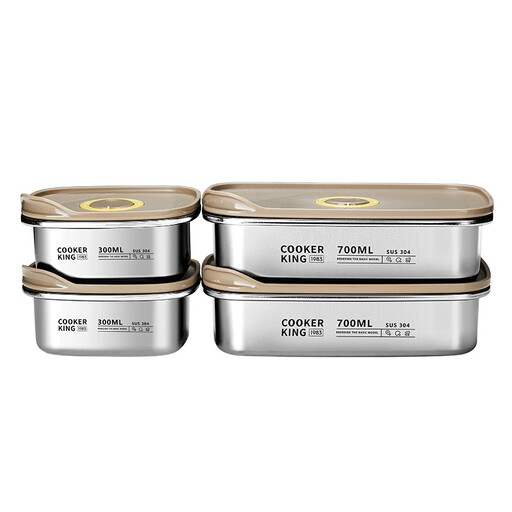
Why this choice suits this profile: This set of four stainless steel boxes is ideal for anyone who wants to portion out leftovers, snacks and meals without buying several different formats separately. They are stackable, so they store easily in the fridge or a cupboard.
The set saves you from having to buy containers of different sizes that may not be compatible with each other. Stainless steel also retains fewer odours than some plastics. These boxes must not be used in the microwave or oven.
Food-grade stainless steel, four pieces, stackable design and cleaning stated as dishwasher safe.

Why this choice suits this profile: The five compartments are ideal for adults who like to organise several elements of a lunch or prepare separate portions. The 316L stainless steel and four fastenings suggest a design built for regular, long-lasting use.
The product page states that the lid is made of PP, that the box has four fastenings and that hand washing is recommended. So there’s no need to assume that all parts are dishwasher safe.
316L stainless steel, five separate spaces, polypropylene lid and removable fastenings for easier cleaning.
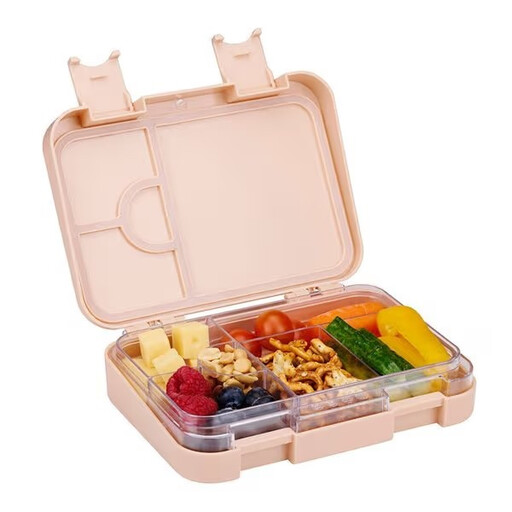
Why this choice suits this profile: With its six compartments and dimensions of 21 × 15 × 4.5 cm, this model is designed for anyone who needs to transport several different foods separately, whether at school, work or on the go.
The removable compartments make cleaning easy and allow you to control each section. The product page does state, however, that the box should not go in the microwave and that it’s best to avoid very liquid foods.
Six compartments, removable inner sections, dishwasher-safe cleaning and a compact size.
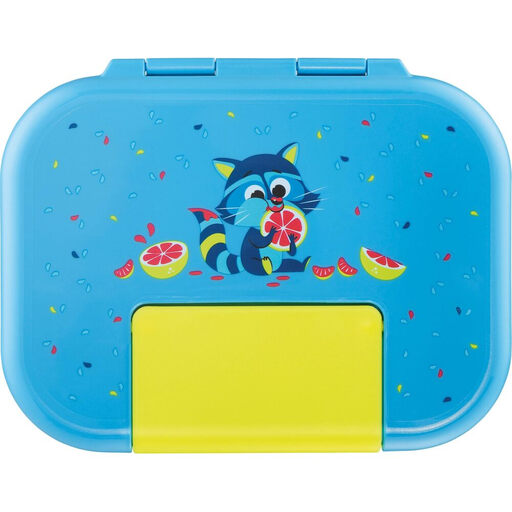
Why this choice suits this profile: Its 900 ml capacity, attached lid and fluorescent clip are well suited to meals at school or on trips. The attached lid reduces the risk of losing a piece at the bottom of the bag.
The manufacturer states that it has a silicone seal, a leakproof closure and is dishwasher safe. It also specifies that the box is not suitable for the microwave or hot liquids.
18/8 stainless steel base, 900 ml capacity, attached lid and a clip designed to open easily.
We’ve put together a complete, real-time selection of products that meet these demanding criteria and European safety standards.
To extend the life of a reusable lunch box:
For a lunch box intended for school or a picnic, consider an insulated bag if the meal needs to stay out for several hours. The box alone does not guarantee temperature retention.
A capacity of 600 to 900 ml can work for a child’s lunch, depending on their age and the amount you plan to pack. For a simple snack, a 300 to 500 ml snack box will generally be more suitable. Also check that the child can open and close the clips on their own.
Not necessarily. The compartments separate the foods, but leakproofness depends on the seal, the lid and the overall design of the box. To transport a sauce or a liquid food, choose a model whose product page clearly mentions a leakproof or anti-leak closure.
Yes. A stainless steel box can be perfectly good for storing and transporting prepared meals, as long as you follow the manufacturer’s instructions. It should generally not be placed in the microwave. To reheat a dish, transfer it to a microwave-safe container.