
Livraison le jour même ou le lendemain

Qualité garantie

Débloquez vos offres de bienvenue: Livraison GRATUITE | Jusqu'à -80 % | 30 jours d'essai gratuits à JoyPlus
Téléchargez l'application
A compartment lunch box can make meals eaten away from home much easier, provided you look beyond its appearance or the promises made on the product page. For a child, it should be easy to open without spilling its contents inside their schoolbag. For an adult, it should keep food properly separated, be easy to clean and stand up to everyday use.
Joybuy’s product recommendations editor bases their selection on very practical criteria: size, closure system, materials, care and intended use.
Internal dividers stop food from mixing, but they are not enough to contain sauce or liquid. A compartment lunch box may have open sections, individual lids or a perimeter seal. These configurations do not all offer the same protection against leaks.
Before choosing a leak-proof lunch box, check whether it has a seal, the type of closure and the manufacturer’s recommendations. For liquid foods, a separate small airtight container is often the safest solution.
A reusable lunch box that is difficult to take apart can trap residue in the corners or around the clips. Conversely, some models described as easy to clean are not dishwasher-safe.
Read the instructions carefully: hand washing, dishwasher compatibility, whether the lid is removable, cleaning products to avoid… This check is just as important as the design.
A larger capacity does not necessarily mean greater convenience. An oversized lunch box takes up space in a bag and may be heavy for a child. On the other hand, a compact model may not have enough room for a complete meal.
Measure the space available in the schoolbag, work bag or cool bag. To compare two models, look at their capacity in millilitres, external dimensions and the shape of their compartments.
Food-grade plastic is lightweight and often available in colourful designs. Polypropylene, commonly used for lids, is well suited to compartment lunch boxes. Stainless steel generally stands up well to everyday use and retains few odours, but it is not suitable for microwave use.
A stainless steel lunch box can be a good choice for regularly carrying meals. However, check what the lid is made from, whether the seals are removable and whether it is dishwasher-safe. In all cases, look for information about food contact and follow the uses specified by the manufacturer.
A lunch box with a secure closure should stay firmly shut when a child handles it or when the bag is placed on its side. Side clips are easy to check, while a system with several fasteners may take a little longer to open.
For school, choose a closure that your child can operate independently without forcing it. For an adult carrying a wider variety of dishes, several fasteners may hold the lid more securely in place, at the cost of a few extra parts to clean.
Two to five compartments are generally enough to separate a sandwich, fruit, side dish and snack. A bento box with separate portions works equally well for a school meal or a lunch prepared for the office.
However, bear in mind that the number of compartments says nothing about their depth. A narrow section may hold a few nuts or chopped fruit, but not a generous portion. For a lunch box intended for school, compare the dimensions with the foods you usually prepare.
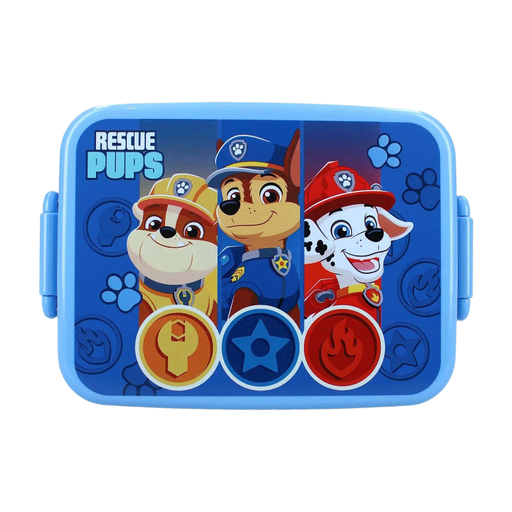
Why this choice suits this profile: Measuring 16 × 13 × 5 cm and described as lightweight, it is suitable for a child’s first packed meals for school or days out.
The snap closure helps reduce the risk of accidental opening. The recommended hand washing also prevents it from being placed in the dishwasher by mistake.
A smooth plastic finish, a PAW Patrol design and a size suited to sandwiches, snacks and small pieces of fruit.
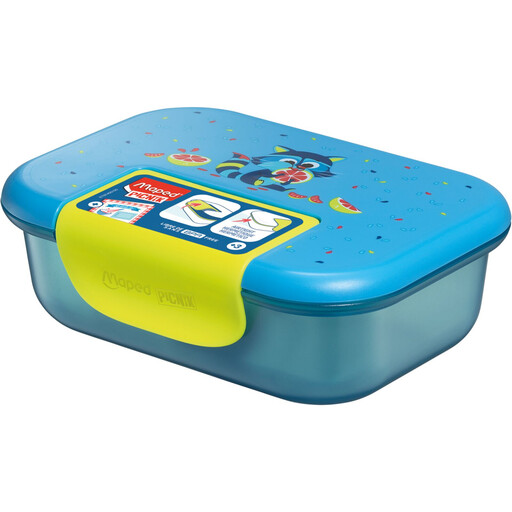
Why this choice suits this profile: Its 900 ml capacity and stainless steel construction make it suitable for carrying a complete meal, whether to school or on a picnic.
The product description states that it has a leak-proof design and reminds you to close the lid properly before carrying it. It also specifies that the lunch box is not microwave-safe.
A fluorescent clip, an attached lid, a rectangular shape and dishwasher compatibility stated by the manufacturer.
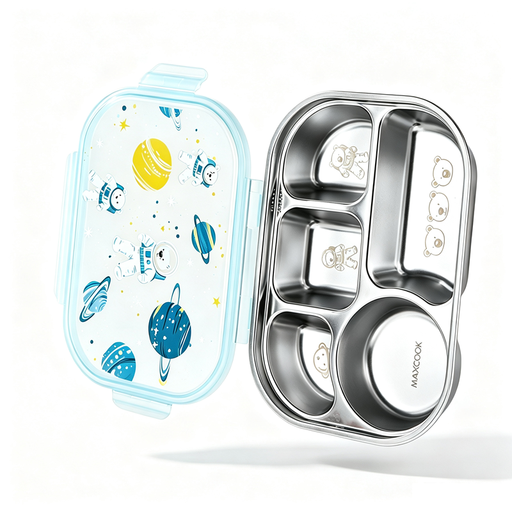
Why this choice suits this profile: Its five compartments and four clasps are designed for preparing separate meals, managing portions and frequent travel.
The four clasps keep the lid closed, but you must follow the recommended hand-washing instructions. The metal components mean it cannot be used in the microwave or oven.
316L stainless steel, a divided tray, a polypropylene lid and an astronaut design.
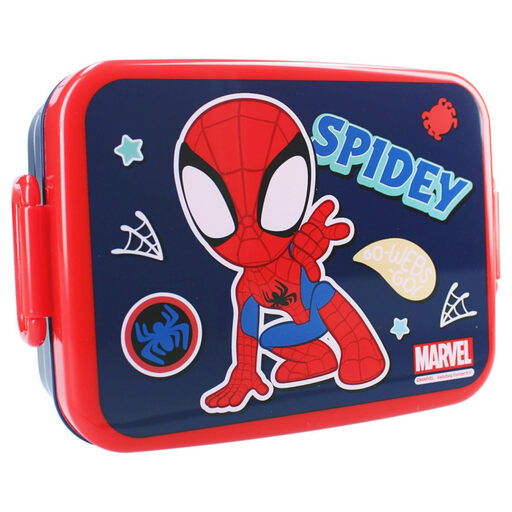
Why this choice suits this profile: Its Spidey design, compact size and two snap closures make it suitable for school journeys and days out.
The two clips make it easy to check at a glance that the box is properly closed. The product description specifies that it is not dishwasher- or microwave-safe.
Dimensions of 16 × 13 × 5 cm, a plastic and polypropylene construction, plus two side fasteners.
We have selected a comprehensive, real-time updated range of products that meet these demanding criteria and European safety regulations.
A small 300 to 500 ml model may be enough for a snack or light meal. For a more substantial lunch, a capacity of around 900 ml provides more room, but also takes up more space in the bag. The right choice depends on the child’s age, appetite and schoolbag size.
No. Compartments are primarily designed to keep foods separate. A leak-proof lunch box must have a system clearly described as such, generally consisting of a seal and a suitable closure. For soup or sauce, always check the instructions before transporting it.
Follow the stated washing instructions, avoid abrasive sponges and dry each component before storing it. Check the condition of the clips and seals regularly. A lunch box used every day will last longer if it is not overfilled and its lid is never forced.