
Livraison le jour même ou le lendemain

Qualité garantie

Débloquez vos offres de bienvenue: Livraison GRATUITE | Jusqu'à -80 % | 30 jours d'essai gratuits à JoyPlus
Téléchargez l'application
A compartment lunch box makes lunches at school, in the office or on a picnic easier. It lets you keep foods separate, manage portions more effectively and reduce reliance on disposable packaging. However, the claims highlighted in product listings do not always guarantee that a model will suit your habits.
Here are the main criteria to consider before choosing a children’s lunchbox, lunch box or bento box for everyday use.
A press-fit lid can keep a sandwich or fruit in place without necessarily stopping a sauce or liquid food from leaking. For a leak-proof lunch box, look for an explicit statement about the seal, airtight compartments or leak resistance.
Even with several internal dividers, liquids can sometimes pass from one compartment to another. For salad dressing, purée or sauce, it is therefore best to use a small separate container.
A compartment food box may seem practical, but too many dividers reduce the space available for each food. For a child, small portions may be perfectly suitable. At work, a model with four or five compartments will be more useful if you carry several side dishes.
Check the external dimensions, as well as the internal layout. A 16 × 13 × 5 cm box is better suited to a light meal or snack than a full lunch.
Some boxes are not dishwasher-, oven- or microwave-safe. Plastic, polypropylene lids and metal components do not all withstand heat in the same way.
Before ordering, check the manufacturer's instructions. Hand washing with a soft sponge may be necessary to protect the seals, designs and closure system. Also remember to inspect the lid regularly and replace the box at the first sign of cracking or warping.
A stainless steel lunch box is well suited to meals prepared in advance and intensive use. Some models use 316L stainless steel, described as particularly resistant to corrosion. This does not mean you can ignore the cleaning instructions or leave very salty or acidic foods in the box for long periods.
Plastic models are generally lighter and often better suited to children. However, check the stated composition, recommended age, safety warnings and any restrictions relating to microwave use. A fun design does not replace this essential information.
For an easy-to-carry food container, examine the following carefully:
Several buckles can hold the lid securely, but they may also be difficult for a young child to operate. For a school lunch box, a child's independence is therefore just as important as the strength of the closure.
For school, a compact children’s snack box can hold cut fruit, a small sandwich and a few biscuits. For work or meal preparation, choose a capacity and layout suited to your usual portions.
Metal models are generally heavier than plastic boxes. In return, they may appeal to anyone looking for a sturdy structure for regular travel. In all cases, check that the total weight remains suitable for the bag you use.
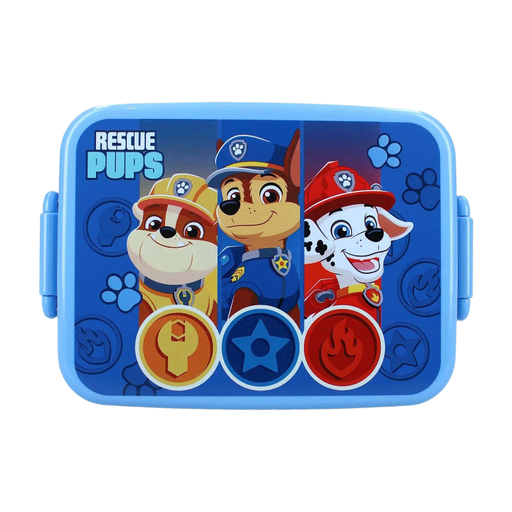
Why this choice suits this profile : This 16 × 13 × 5 cm plastic box is suitable for children aged 3 and over, for school, days out or snack time. Its lightweight format and PAW Patrol design can help younger children settle easily into a mealtime routine.
The listing mentions a press-fit closure and clearly sets out its usage limits : hand washing recommended, not dishwasher- or microwave-safe.
Durable plastic construction, a press-fit closure, low weight and dimensions suited to a small meal.
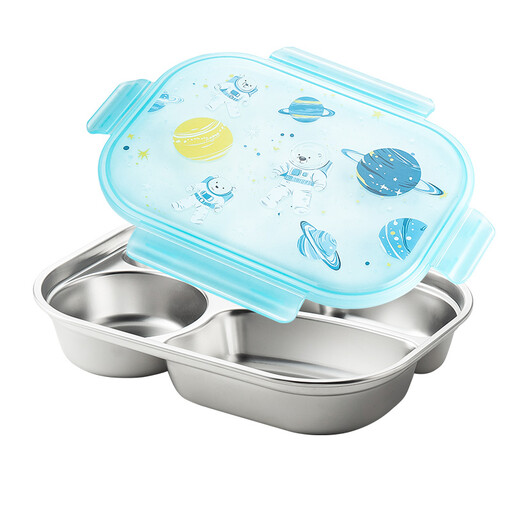
Why this choice suits this profile : This 316 stainless steel model keeps four types of food separate. Its lid, decorated with a space-themed design, gives it a look suited to children and adults who like to organise their lunch.
The four compartments help limit contact between foods. Nevertheless, check the closure before carrying it and follow the care instructions given in the product listing.
316 stainless steel, four compartments and a lid decorated with an astronaut design.
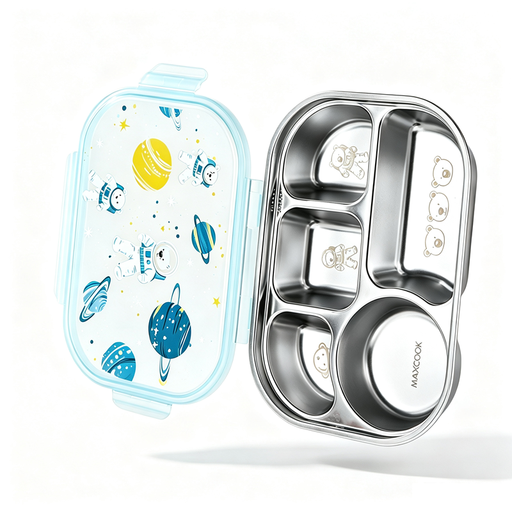
Why this choice suits this profile : With its five compartments, this model is suitable for meal preparation, separated portions and picnics. It is particularly useful for adults who regularly carry several side dishes.
The removable lids and four securing buckles make organisation easier. However, the listing states that the box is not microwave-safe and recommends hand washing.
316L stainless steel, five stated compartments, a PP lid and clear separation between foods.
We have brought together a complete, real-time updated selection of products that meet these demanding criteria and European safety requirements.
Yes, provided you choose a lightweight model, a closure the child can operate and a format suited to their age. For children under 3, always follow the warnings shown on the packaging or product listing. Also check for cracks and small detachable parts.
Place liquid foods in a compartment designed for this purpose or in a container with a suitable lid. Fasten all buckles and clips before putting the box into the bag. A compartment lunch box is not automatically leak-proof : this feature must be clearly stated.
Its lifespan depends on how often it is washed, knocks and whether the permitted temperatures are observed. To make it last longer, clean it soon after the meal, dry the components separately and avoid abrasive products. Replace it if the lid no longer closes properly, the seal is damaged or the plastic has cracked.