People with a specific fat-intake target
If you’re following a personal target, compare the nutritional values per 100 g, then work out the figures for the amount you’ll actually eat. A premium presentation doesn’t replace this calculation.


If you’re choosing a frozen pizza as part of a plan to reduce your fat intake, compare the figures per 100 g, then calculate how much you’ll get from the portion you plan to eat. The ‘premium’ label doesn’t tell you about its nutritional content. Carrefour’s product information lists 9.3 g of fat per 100 g for its Bio Margherita and 15 g per 100 g for its Extra four-cheese pizza. This difference applies to these two products only, not to all pizzas in these categories. Also check the ingredients, allergens and storage instructions for the pizza you choose.
If you’re following a personal target, compare the nutritional values per 100 g, then work out the figures for the amount you’ll actually eat. A premium presentation doesn’t replace this calculation.
An organic recipe or one presented as more carefully crafted may appeal to you, but the label is still what matters. Carrefour’s product information lists 9.3 g of fat per 100 g for its Bio Margherita and 15 g per 100 g for its Extra four-cheese pizza.
Whether you choose an individual pizza or a large one to share, check how much each person will be served. Also read the allergens and storage instructions on the packaging of the product you buy.
If you’re choosing a frozen pizza to help reduce your fat intake, start with the figure per 100 g, then look at the portion, ingredients and cooking instructions.
| Criteria | What to check | Who is it for? |
|---|---|---|
| Fat | Compare the ‘fat’ figure per 100 g for the exact variants, then take the amount you’ll eat into account. | If I want to limit my fat intake, a recipe that looks premium isn’t enough to guide my choice. Around 36% of consumers put fat content first. |
| Portion size | Check the net weight and calculate the fat in the amount served using the figure per 100 g. | When I share a pizza or eat an entire individual one, I want to know what my portion contains. Around 29% of consumers prioritise keeping track of this amount. |
| Ingredients and allergens | Read the ingredients list, any listed allergens and any ‘may contain’ warnings on the packaging of the exact recipe. | If there are ingredients I can’t eat, I need to check them before comparing pizzas by their fat content. Around 21% of consumers prioritise ingredients. |
| Size and preparation | Check the available size, cooking method and storage instructions for the product you’ve chosen. | When planning a meal, I need a size I can prepare and store according to the instructions on the pack. Around 14% of consumers put convenience first. |
These labels don’t tell you how much fat a pizza contains. Carrefour’s Bio Margherita product information lists 9.3 g per 100 g.
Check the ‘fat’ line in the nutrition table before comparing product-range or cooking claims.
Carrefour Extra and Auchan product information shows that two four-cheese pizzas can differ too: the former lists 15 g of fat per 100 g, while the 200 g Auchan pizza contains 20 g in the whole product.
Compare products on the same basis, then calculate the amount in the portion you plan to eat.
This figure makes it easier to compare products, but the amount you eat depends on the portion size. Auchan’s four-cheese pizza product information lists 20 g of fat for the whole 200 g pizza.
To estimate the amount in your portion, multiply the figure per 100 g by the weight you’ll eat, then divide by 100.
Keeping frozen pizza at the right temperature matters too. Anses advises against refreezing food once it has thawed.
Pick up frozen food at the end of your shop and follow the transport, storage and preparation instructions on the packaging.
These two ranges have product information that lets you compare specific recipes, without assuming the results apply to all Carrefour pizzas.
The range includes frozen pizzas in different sizes; the exact product is key when comparing nutritional values.
E.Leclerc’s range includes several recipes and sizes, which you’ll need to compare individually.
The Ristorante and Suprema ranges feature in Auchan’s selection of frozen pizzas.
Piccolinis are among the Buitoni formats featured in Auchan’s range.
This selection includes Margherita, vegetable, pesto and salami recipes, available as whole pizzas or mini pizzas. To compare their fat content, check the nutritional information for each variant and the weight of the portion you plan to eat.
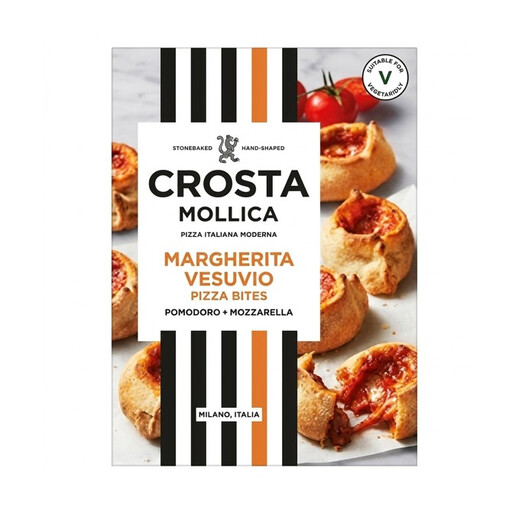 Image unavailable
The mini size lets you choose how many pieces to serve. To check the fat content of your portion, look at the nutritional values and the corresponding weight on the packaging.
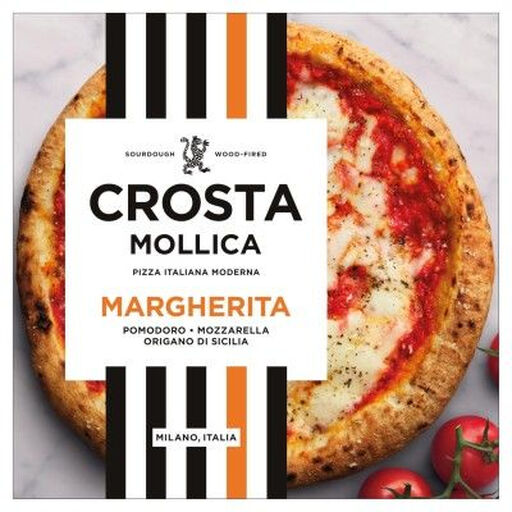 Image unavailable
This 403 g pizza makes it easy to compare a portion with the whole product. Use the nutritional value per 100 g to work out the amount for the portion you plan to eat.
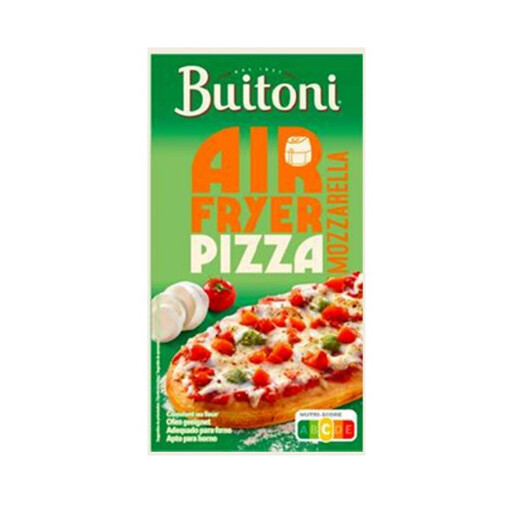 Image unavailable
At 195 g, it’s easy to calculate the amount if you eat the whole pizza. Check the fat content for this recipe and follow the product-specific cooking instructions.
 Image unavailable
If you’re considering a vegetable recipe, compare its fat content per 100 g with that of other pizzas: the topping alone won’t tell you how much fat it contains. Then work out the amount for your share of the 385 g pizza.
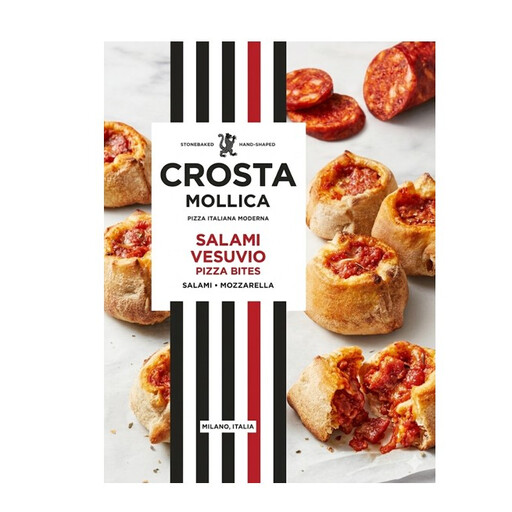 Image unavailable
These mini salami pizzas offer another topping choice in a 270 g pack. Check the fat content for this variant, then calculate the amount in the number of pieces you plan to serve.
No. ‘Premium’, ‘organic’ and cooking methods don’t determine a product’s nutritional content. Carrefour’s product information lists 9.3 g of fat per 100 g for its Bio Margherita and 15 g per 100 g for its Extra four-cheese pizza. Always check the exact product.
First compare the fat content per 100 g, then calculate the amount for the portion you’ll eat. A small pizza and a large one may have similar figures per 100 g, but that doesn’t mean you’ll eat the same amount.
For solid food, European Regulation (EC) No 1924/2006 governs this claim and similar wording: the product must contain no more than 3 g of fat per 100 g. This threshold applies to the use of a nutrition claim; it doesn’t, by itself, determine whether a pizza fits an individual’s dietary goals.
No. Anses advises against refreezing food once it has thawed. Keep the cold chain intact after purchase and follow the storage and preparation instructions on the packaging.
Yes. A fat content that fits your target won’t tell you whether a product contains allergens. Read the ingredients list and allergen information for the variant you buy, including any ‘may contain’ warnings.