If you grate, slice and chop ingredients as well as making dough, start by comparing food processors based on the attachments actually included. A stand mixer is a better fit if you often knead dough or make large batches, but check whether it comes with blending or chopping attachments. If you mainly make drinks and blended mixtures, a blender paired with a few smaller appliances may be enough, but a blender alone won’t replace a grater or a dough mixer.
What are these appliances designed for?
Households that switch between vegetables, sauces and dough
If you grate or slice vegetables, chop herbs, blend sauces and knead dough, compare the exact contents of each package: discs, blade, dough tool and, where applicable, a blender. In its testing programme, Que Choisir only tests smoothies using appliances that come with a blender.
People who often bake bread or cakes
If kneading and making large batches matter more to you than chopping, consider a stand mixer with a bowl and stated dough capacity that suit your recipes. Que Choisir treats frequent bread-making and baking as a distinct use; check separately whether attachments for grating or blending are included.
Small kitchens and modest portions
A compact appliance is worth considering if space is limited or you prepare small quantities. Que Choisir recommends matching the bowl size to your household’s needs and making sure you have somewhere to store the attachments. If you knead dough, check the maximum quantity too.
What should you check before choosing?
Start with the recipes you make regularly, then check that each configuration can handle the tasks and quantities you need.
Food processor
Worth considering: if you want one appliance for chopping vegetables, mincing, cold preparations and dough.
Bear in mind: what it can do depends on the attachments supplied, which also need space to be stored.
Stand mixer with attachments
Worth considering: if you often make bread, brioche or cakes, or prepare them in large quantities, as Que Choisir points out.
The trade-off: chopping and blending require the relevant attachments, and these vary by model.
Blender and separate appliances
Worth considering: if drinks and blended recipes are your priority and you’d rather use separate tools for other tasks.
The trade-off: you’ll need another tool for grating, slicing or kneading, as well as space for each appliance and time to clean them.
| Criteria | What to check | Your needs |
|---|
| Tasks covered |
Check the exact package for grating and slicing discs, a blade and a dough tool. If you want to make smoothies, check whether a blender is included: Que Choisir only tests them on appliances supplied with this attachment. |
I regularly switch between vegetables and herbs, sauces and dough: which tools will I actually use? |
| Quantities |
Compare the bowl capacity and stated maximum dough quantity, not just the power. Bosch lists a 2.3 L bowl and up to 0.8 kg of dough for the MCM3100W, compared with 3.9 L and up to 1.5 kg for the MC812M844. These are manufacturer specifications, not comparative test results. |
My usual batch needs to fit in the appliance, without needing a large bowl for just a few ingredients. |
| Storage |
Measure the space available for the appliance and its attachments. Que Choisir recommends checking that the attachments will be useful and choosing a solution that lets you store them away. |
In a small kitchen, I want to be able to get the appliance out and find its discs without leaving them cluttering the worktop. |
| Cleaning and noise |
Check the cleaning instructions for each part. If noise matters to you, look for a measurement for the exact model. Que Choisir assesses noise levels and cleaning separately in its tests. |
If it’s difficult to clean, I might hesitate to use it for a small task; noise could also affect my choice. |
What mistakes should you avoid?
-
Confusing compatible attachments with included attachments
A range may offer a blender, discs or a citrus press without including each one with every model. Magimix notes, for example, that some of its attachments depend on the model; Que Choisir only runs certain tests on appliances that have the relevant attachment.
Check what comes with the exact model you’re considering, and distinguish between items included and attachments that are merely compatible.
If an attachment you need isn’t included, you’ll have to buy it separately to add that function.
-
Judging kneading performance by wattage alone
The stated power tells you neither the bowl capacity nor the maximum quantity of dough the appliance can handle. For example, Bosch lists a maximum of 0.8 kg of dough for the MCM3100W and 1.5 kg for the MC812M844, two models with different stated capacities.
Compare your usual largest batch with the limit for the model. If bread and brioche are a priority, consider stand mixers too.
-
Underestimating how much space the parts take up
The food processor isn’t the only thing you need to store: discs, bowls and other tools take up cupboard space too. Que Choisir recommends choosing a bowl that suits your household and factoring in storage for the attachments.
Measure the space available, then check how the parts can be stored and how to clean the ones you’ll use often.
A few ranges to compare
These ranges illustrate different configurations. Check the attachments and capacities for the specific model you’re considering.
Magimix
Magimix food processors are designed for food preparation without cooking.
- Magimix’s range includes dough tools, whisk attachments, discs and BlenderMix accessories.
- The brand notes that some attachments are only available with certain models, so check the list of items supplied with the one you choose.
Bosch
Bosch’s documented MultiTalent models let you compare stated bowl capacities and maximum dough quantities.
- Bosch lists a 2.3 L bowl and up to 0.8 kg of dough for the MCM3100W, compared with 3.9 L and up to 1.5 kg for the MC812M844.
- These are manufacturer specifications, so compare them with the portions you make and check which attachments come with each model.
Moulinex
The Masterchef range includes stand mixers, some configurations of which come with extra food preparation tools.
- Moulinex describes a Masterchef Gourmet Rouge configuration with a 4.6 L bowl, a 1.5 L blender and an attachment for grating and slicing.
- These details apply to this specific configuration, not every Masterchef mixer.
A food preparation option on Joybuy
This food processor is mainly suited to chopping vegetables, mincing and blending cold preparations. If you also plan to knead regularly, check which tools are included and the maximum dough quantity for this model before choosing.
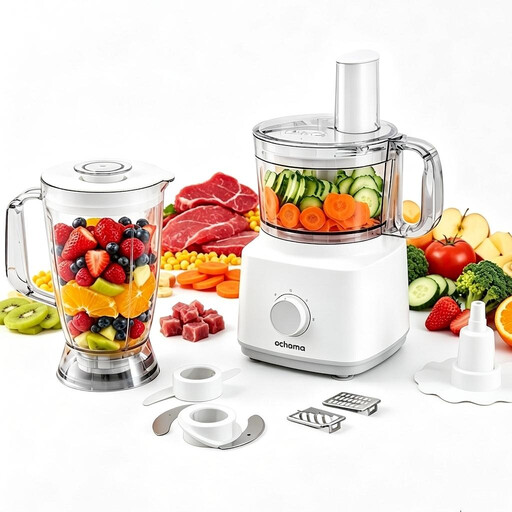 Image unavailable
ochama food processor, 750 W, 1.8 L, with blender and discs
For mincing, slicing or grating ingredients and blending cold preparations, this configuration includes a blender, a vegetable chopper and slicing discs. The bowl has a stated capacity of 1.8 L, and the parts are detachable. If you plan to knead, check that it includes a suitable tool and confirm the maximum dough quantity. Also check the cleaning instructions for each attachment.
View on Joybuy
Frequently asked questions
Can a food processor replace a stand mixer?
Not for every task. A food processor can combine chopping, blending and kneading if it comes with the right tools and has enough capacity for your dough. If you often make bread, brioche or cakes, or prepare them in large quantities, Que Choisir suggests considering a stand mixer. Check its attachments if you also want to grate or blend.
Does a food processor always come with a blender?
No: check what comes with the exact model. In its testing programme, Que Choisir only tests smoothies and crushed ice on appliances with a blender. A list of compatible attachments doesn’t tell you what’s included in the box.
What capacity should I choose for making dough?
Start with the largest batch you usually make and compare it with the maximum quantity stated for each model. Bosch lists up to 0.8 kg of dough for the MCM3100W and up to 1.5 kg for the MC812M844. These specifications alone don’t tell you which appliance will suit every recipe.
Should you replace a broken food processor?
Not necessarily: a diagnosis can help you decide whether to repair or replace it. In France, ADEME lists food processors and stand mixers among the appliances covered by the Repair Bonus. Ask a certified repairer whether your appliance and the repair work are eligible.


