What should you compare?
Standard 60 cm model
Consider this if: there’s room for this width and the washing-up you accumulate calls for a larger tub. UFC-Que Choisir’s comparison puts the capacity of these models at between 12 and 15 place settings.
Bear in mind: it takes up more width than a 45 cm model; its size alone doesn’t tell you how much energy it uses per cycle.
Compact 45 cm model
Consider this if: space is limited and the amount of washing-up you produce is suited to a smaller tub. UFC-Que Choisir suggests that 9-place-setting models may be an option for a small family.
Bear in mind: depending on how much washing-up you produce, the space saving may mean running the dishwasher more often.
If you use your kitchen several times a week, start by choosing a capacity that suits the washing-up you produce between cycles. You can then use the energy label to compare appliances: according to ADEME and the European Commission, it shows figures including energy use per 100 cycles, water use per cycle, Eco programme duration and noise.
| Criteria |
What to check |
Consumers concerned |
| Capacity and cycle frequency |
Place-setting capacity, dimensions and the space available in the baskets for dishes and pans. |
If washing-up builds up between meals, I want a suitable tub so I don’t have to run the appliance frequently. Around 33% of consumers concerned would make capacity their priority. |
| Water and electricity |
For models with similar capacities, compare the energy rating, kWh per 100 Eco cycles and litres per cycle. |
For regular use, I want to compare water and electricity on a like-for-like basis without using the figures to estimate my bill. This would be a priority for around 27% of consumers. |
| Noise |
Noise emissions in dB(A) and the noise class shown on the label. |
In an open-plan kitchen, I want to minimise disruption when a cycle is running while I’m at home. Around 20% of consumers would put noise first. |
| Duration and programmes |
The Eco programme duration on the label and whether the model’s product details list the other programmes you want. |
If I sometimes need the washing-up to be ready sooner, I want to know the Eco programme duration and what other programmes are available. For around 20% of consumers, this flexibility would come before the other criteria. |
Brands to know
These example models offer points of comparison for width, installation type and the information provided by manufacturers. They don’t represent each brand’s entire range.
Bosch
The SMS4ECI28F is an example of a freestanding 60 cm Bosch dishwasher.
- Bosch lists an A energy rating and 9.0 l of water on the Eco cycle for this model.
- Check the capacity and Eco programme duration of the model you’re considering before comparing it with another appliance.
Whirlpool
The WSFO3T223P is an example of Whirlpool’s freestanding 45 cm range.
- Whirlpool describes this model as a 10-place-setting appliance with a noise level of 43 dB.
- Its capacity and features shouldn’t be assumed to apply to other models from the brand.
Electrolux
The EES42210L is a fully integrated 45 cm Electrolux model.
- Electrolux’s product details list 9 place settings, an E energy rating and 44 dB for this model.
- It’s supplied without a furniture door, so check it’s compatible with your kitchen plans.
Miele
The G 5790 SCVi SL is an example of a fully integrated 45 cm Miele dishwasher.
- Miele lists 9 place settings and an Eco programme duration of 210 minutes for this model.
- Bear this duration and the integrated installation type in mind if you’re comparing it with an appliance that has different requirements.
60 cm dishwashers on Joybuy
These 60 cm appliances are options to consider if you need a standard-sized tub for washing-up produced regularly. Choose between freestanding and integrated installation to suit the space available, then compare the capacity and Eco programme figures for the models you’re interested in.
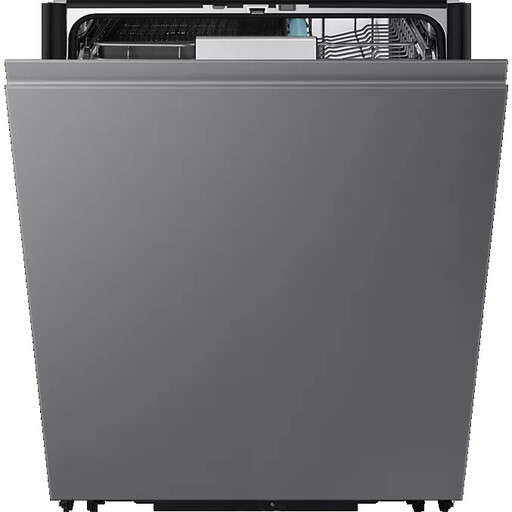 Image unavailable
Samsung DW90H79JAI0U1 Bespoke AI, integrated, 60 cm, 14 place settings
Consider this if you regularly have enough washing-up to fill a 14-place-setting tub and your kitchen is suitable for an integrated appliance.
The A rating appears in the name of this variant. Before choosing, check the dimensions required for installation, the compatible furniture door and the model’s Eco programme duration.
View on Joybuy
 Image unavailable
Samsung DW60M6050FS, freestanding, 14 place settings, grey
This freestanding model is worth considering if you’re looking for a 14-place-setting capacity for regular loads.
Its name mentions seven cycles. Check their duration, the Eco programme figures and the dimensions before comparing it with other appliances.
View on Joybuy
 Image unavailable
Indesit D2F HK26 S, freestanding, 60 cm, 14 place settings, grey
Its 14-place-setting capacity may suit regular loads if you have space for a freestanding 60 cm appliance.
The product name lists an E energy rating. To compare energy use, also check the model’s kWh per 100 Eco cycles and litres per cycle.
View on Joybuy
 Image unavailable
Samsung DW70H72WCB0U1, built-in, 60 cm, 13 place settings
This 13-place-setting model is worth considering if your kitchen can accommodate a 60 cm built-in appliance.
The C rating appears in its name. Check that it’s compatible with your cabinet space and furniture door, and compare the water, energy and Eco programme duration figures you need.
View on Joybuy
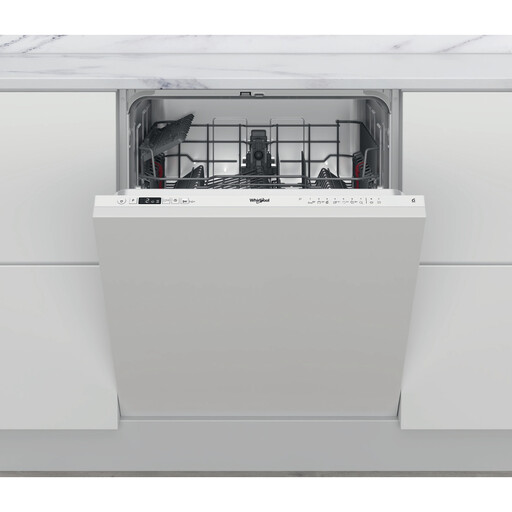 Image unavailable
Whirlpool W2I HD526 A, integrated, 60 cm, 14 place settings, white
Consider this for regular 14-place-setting loads if your kitchen is designed for a 60 cm integrated appliance.
The product name lists an E energy rating. Check that it’s compatible with your cabinet space and furniture door, then compare its energy use and Eco programme duration before choosing.
View on Joybuy
Frequently asked questions
Which figures on the energy label should I compare?
Compare the energy rating, kWh per 100 Eco cycles, litres per cycle, capacity, Eco programme duration and noise information. ADEME and the European Commission present these figures as useful points of comparison; they aren’t enough to predict your household’s annual energy use.
Does a 45 cm dishwasher always use less energy than a 60 cm one?
No, width alone doesn’t tell you. Compare the labels for the specific models and take capacity into account: according to UFC-Que Choisir, a 9-place-setting appliance may suit a small family, but it might need to be run every day.
Can a quick programme replace the Eco programme when comparing appliances?
No. The standardised energy figures on the label refer to the Eco programme, and its duration is also shown there. If you sometimes need a different washing schedule, check the programmes available on each model separately rather than assuming the Eco cycle figures apply to them.
What should you do with an old dishwasher in France?
In France, old dishwashers are collected through the national waste electrical and electronic equipment scheme, as outlined by the ministry responsible for ecological transition. Before ordering, ask the seller what collection or take-back options are available for your purchase and location.


