
Livraison le jour même ou le lendemain

Qualité garantie

Débloquez vos offres de bienvenue: Livraison GRATUITE | Jusqu'à -80 % | 30 jours d'essai gratuits à JoyPlus
Téléchargez l'application
A compact fridge can be incredibly handy in a studio flat, bedroom, office or leisure vehicle. But not all appliances sold under the mini fridge label meet the same needs. Between the small compressor fridge, the thermoelectric cooler and the compact wine cellar, the differences in capacity, temperature and energy consumption can be considerable.
Before you buy, three common mistakes keep cropping up:
A compressor model generally offers more stable temperatures and is better suited to everyday use. The Heinrich’s Drinks Cooler 115 L boasts an adjustable temperature down to 1 °C, while the Hisense RW3N122GALF uses a compressor system offering a range of 5 to 20 °C, split between two independent zones.
On the other hand, a portable mini fridge like the AstroAI 6 L uses thermoelectric technology. It can lower the temperature by 18 to 22 °C below ambient temperature, with a stated limit of 0 °C, but it doesn't freeze. Its performance therefore depends heavily on the room or cabin temperature.
For storing wine, a compact wine cooler with electronic temperature control will be more suitable than a simple drinks cooler. For filtered water, it's better to go for an appliance designed for that purpose, such as a compact reverse osmosis water dispenser: its function is completely different from that of a fridge.
Carefully measure the available space, allowing for the door opening, access to the power socket and adequate airflow. A freestanding appliance must not be built in unless the manufacturer permits it.
The supplied manuals recommend leaving about 10 cm of clearance around the Heinrich’s Drinks Cooler. The exact distance may vary between models, but the principle remains the same: insufficient ventilation puts more strain on the compressor and can affect user comfort.
Also remember to check:
In an office fridge or a bedroom fridge, the noise level matters far more than in a kitchen. The Heinrich’s Drinks Cooler is rated at 41 dB, compared to 37 dB(A) for the Hisense RW3N122GALF. These figures allow you to compare appliances, but the perceived noise also depends on the room, the floor and how often the cooling cycles run.
Annual energy consumption is another useful indicator. The Heinrich model claims 66 kWh per year. However, only compare appliances of similar capacity and technology: a larger wine cooler can't be judged solely on its kilowatt-hour figure.
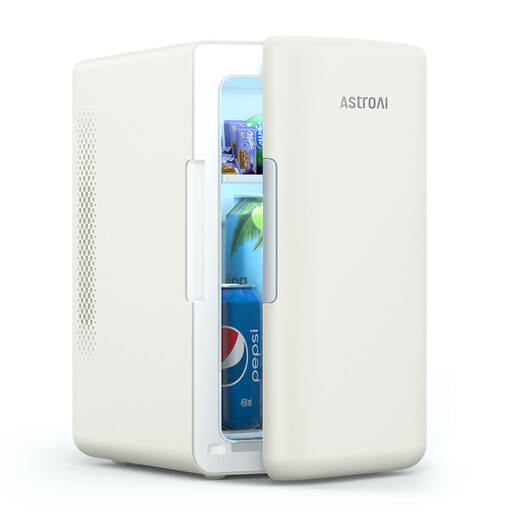
Why this choice suits this profile: With dimensions of 25 × 31 × 18.5 cm, it slips easily under a desk, in a bedroom or in a car.
The product page clearly states it is a thermoelectric cooler-warmer, not a compressor fridge or freezer.
Stated capacity of 8 cans, 220–240 V and 12 V power supply, with both cool and warm modes.
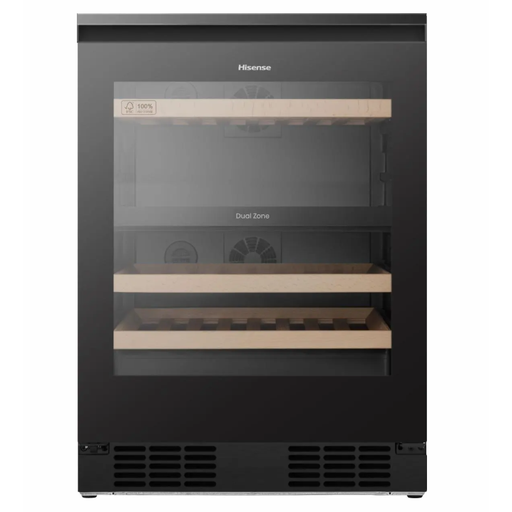
Why this choice suits this profile: Its 128 L capacity and two zones will appeal to enthusiasts who want to separate and organise different types of bottles.
The 5 to 20 °C range, two zones and digital display let you control the settings, rather than relying on a vague promise.
Holds up to 46 bottles, LED lighting, UV-treated glass door and stated noise level of 37 dB(A).
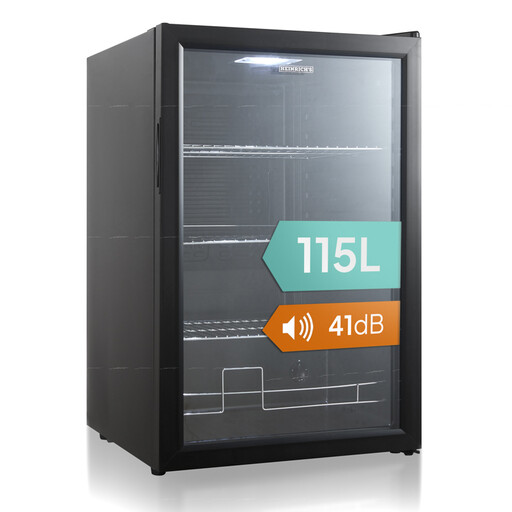
Why this choice suits this profile: Its glass door and volume make it an appealing option for a shared office, games room, covered outdoor space or home entertaining.
The product page states it is a freestanding appliance and recommends leaving about 10 cm of clearance to ensure ventilation.
115 L, temperature stated down to 1 °C, indicative capacity of 178 cans of 330 ml and stated consumption of 66 kWh per year.
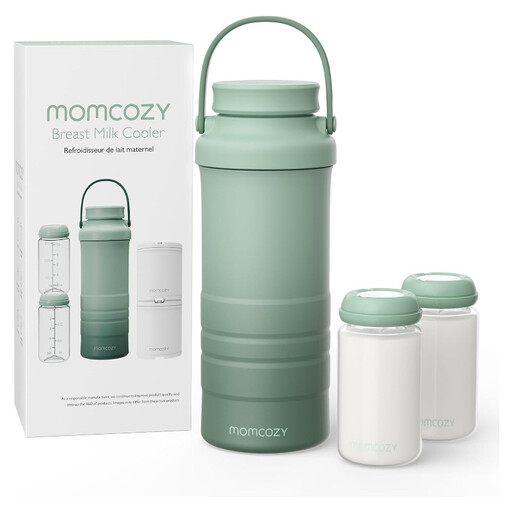
Why this choice suits this profile: This portable cooler is designed for transporting expressed breast milk during outings or travel.
The product page states it works with a pre-frozen cooling tube: so it shouldn't be confused with an electric fridge.
Two 22 oz bottles, BPA-free materials according to the product page and cooling tube that needs to be frozen before use.
We've put together a comprehensive, real-time updated selection of products that meet these strict criteria as well as European safety requirements.
Place the fridge on a stable surface, away from radiators, direct sunlight and damp areas. After plugging it in, some manufacturers recommend waiting two to three hours before filling the appliance.
For maintenance:
For storing breast milk, a cooler or insulated bag does not replace the need to follow food storage rules. The Medela kit, for example, includes bottles, bags and an insulated bag, but it's still essential to follow the storage instructions and check the condition of each component.
It all depends on its volume, technology, the selected temperature and the ambient temperature. Check the energy label and the stated annual consumption. Expressed in kWh/year, this allows you to estimate the running cost based on your electricity tariff.
Yes, provided the model is designed for freestanding use and there is adequate ventilation. In a bedroom, compare the noise level in dB(A), place the appliance on a stable floor and avoid pushing it right up against a wall.
A compact wine cooler typically has shelves and temperature settings suited to bottles. A drinks fridge is more geared towards cans and bottles of various sizes. The right choice therefore depends on what you plan to store, the temperature you need and how often you'll open it.