
Livraison le jour même ou le lendemain

Qualité garantie

Débloquez vos offres de bienvenue: Livraison GRATUITE | Jusqu'à -80 % | 30 jours d'essai gratuits à JoyPlus
Téléchargez l'application
A compact fridge can be incredibly handy in a studio flat, student room, office or guest bedroom. But whether you opt for a mini-fridge of 4, 45 or 92 litres, the uses are quite different. An approximate measurement, a misunderstood noise level or a freezer compartment that's too small can quickly turn a good idea into a disappointing purchase.
Before you place your order, it's worth keeping three pitfalls in mind:
Measure the available width, depth and height, then allow for the clearance recommended in the manual. For an under-counter fridge or a model intended for a kitchen, also check the ventilation of the niche and the fixing system.
An appliance of 4 to 6 litres is mainly suitable for drinks, cosmetics and a few snacks. With 45 to 50 litres, you have a decent supplementary option for one person. If you plan to store proper weekly groceries, a small fridge of 80 to 100 litres will be far more versatile, thanks to its shelves, salad crisper and door balconies.
Built-in models require particularly careful checking: the niche dimensions, door opening direction and hinge type must all be compatible with your existing kitchen.
The noise level, expressed in decibels, is usually measured during normal operation. A quiet mini-fridge won't necessarily be silent, but a low noise level limits disturbance in a calm room.
For an office fridge, 40 or 41 dB can be acceptable depending on the layout and ambient noise. In a bedroom, home office or open-plan studio, models rated at 34 or 35 dB are more appealing. Adjustable feet can also help reduce vibrations if the floor isn't perfectly level.
The European energy label now uses a scale from A to G. An E energy rating fridge falls within this new classification: to compare models, look mainly at their annual consumption in kWh, not just the letter displayed.
To estimate running costs, multiply this annual consumption by the price per kilowatt-hour on your electricity contract. However, actual consumption can vary depending on room temperature, how often the door is opened and the amount of food stored.
Also think about defrosting. A manual defrost appliance will require regular maintenance. As for a freezer compartment of just a few litres, it can't replace a standalone freezer: check its capacity, temperature range and the manufacturer's storage recommendations.
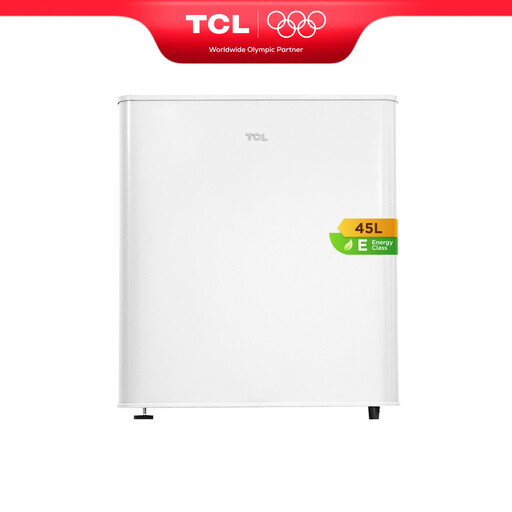
Why this choice suits this profile: With its 45-litre total capacity and dimensions of 44.9 × 48.5 × 51.2 cm, this mini-fridge easily fits into a studio, office or bedroom that's short on storage space.
The product page clearly separates the 42 L fridge from the 3 L freezer. Adjustable feet improve stability, while the tempered glass shelf is easy to clean.
Energy rating E, stated noise level of 40 dB, door balcony that can hold a large bottle and mechanical control.
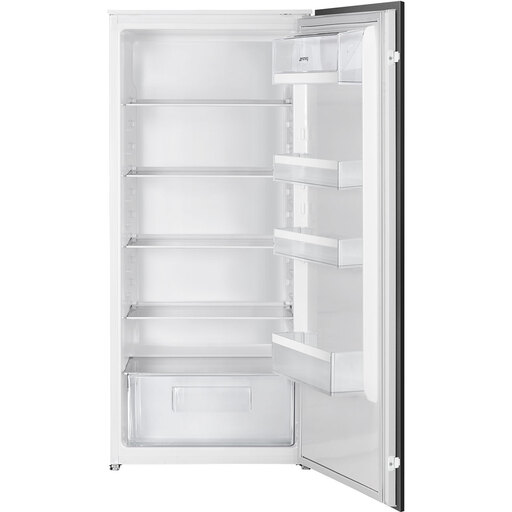
Why this choice suits this profile: This model is aimed at households who want to integrate their fridge into a fitted kitchen, while enjoying quiet operation and ample space for fresh food.
The built-in format requires a suitable niche, ruling out improvised installations from the start. The product page states a capacity of 188 L in the name and 208 L in the detailed specifications: check this point before ordering.
Stated noise level of 34 dB, automatic defrost, LED lighting and stated consumption of 101 kWh per year.
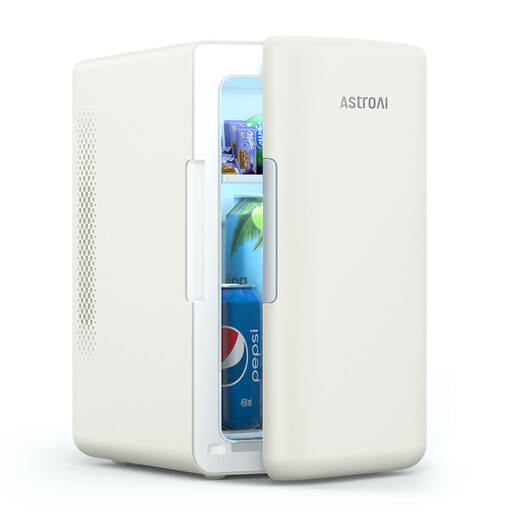
Why this choice suits this profile: Compatible with 220–240 V mains and 12 V power, it can be used at home, in the office or in the car to keep drinks, snacks and certain items cool without needing freezing.
The product page states it uses a thermoelectric chip and cannot freeze. So there's no risk of confusing it with a main food fridge.
Stated capacity of eight 330 ml cans, cooling and warming modes, removable condensation drip tray.
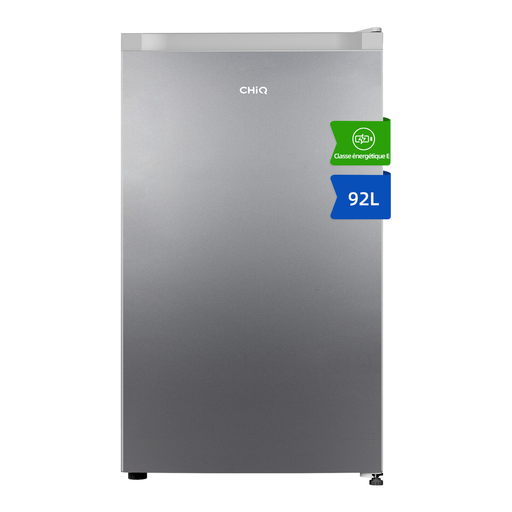
Why this choice suits this profile: With its 92 litres and stated width of 47 cm, it's suitable for a small kitchen, student accommodation, an office or a guest bedroom.
Its reversible door makes installation easy in all sorts of layouts. The seven temperature settings allow you to adapt the temperature to daily use.
Crisper drawer, adjustable glass shelves, compact freezer compartment and energy rating E.
We've put together a comprehensive, real-time updated selection of products that meet these demanding criteria and European safety standards.
An appliance of 40 to 50 litres can be enough for a few drinks, fresh items and snacks. For storing more varied groceries, go for a capacity of 80 to 100 litres, which is more practical thanks to the salad crisper and door balconies.
Yes, as long as you check its noise level, vibrations and ventilation requirements. A model rated at 34 or 35 dB will generally be less noticeable than one showing 40 or 41 dB. However, the room layout and your own sensitivity are still key factors.
The calculation is based on the annual consumption in kWh shown on the energy label and the price per kilowatt-hour on your contract. Room temperature, frequent door openings and proximity to a heat source can all affect actual consumption.