What sets these formats apart?
First decide where the dishwasher can be installed, then compare its capacity with the washing up you typically have. Width and installation type answer two different questions: a slimline model can be either freestanding or integrated.
| Consideration |
What to check |
Who is it for? |
| Space and connections |
Measure the width, depth and height, as well as the clearance needed to open the door. Check the manual for the connections to the mains water supply, waste outlet and electricity. |
If space is tight or there’s no designated recess, I need to be able to install and open the dishwasher without getting in the way in the kitchen; around 33% of consumers in this situation would put this compatibility first. |
| Capacity and cycle frequency |
Compare the stated place settings with the dishes and pans you use. Que Choisir lists a capacity of 6 place settings for the countertop compact models it reviewed, and 9 to 10 for 45 cm models. |
If washing up builds up every day, I want to avoid a capacity that’s too small and means running more cycles; this would be the main priority for around 27% of consumers in this situation. |
| Noise in an open-plan kitchen |
Compare the dB rating and noise class shown on the model’s label, and consider when you’ll run the cycles. |
In a room that opens onto the living area, I’d prefer to run a cycle without disturbing nearby activities; around 20% of consumers in this situation would prioritise noise levels. |
| Energy and water use, and repairability |
Compare the kWh per 100 cycles and litres per reference cycle. In France, also check the model’s repairability index. |
If the dishwasher will be used regularly, I want to compare its running costs over time rather than just its size; around 20% of consumers in this situation would share this priority. |
According to ADEME, the consumption figures on the label relate to a reference cycle. They don’t, on their own, predict how much you’ll use with your chosen programmes and frequency of use.
Compact countertop dishwashers on Joybuy
These three countertop models are best suited to anyone looking to save floor space. Compare their capacity with your everyday washing up and measure your worktop before choosing. They don’t cover the slimline or integrated options mentioned above.
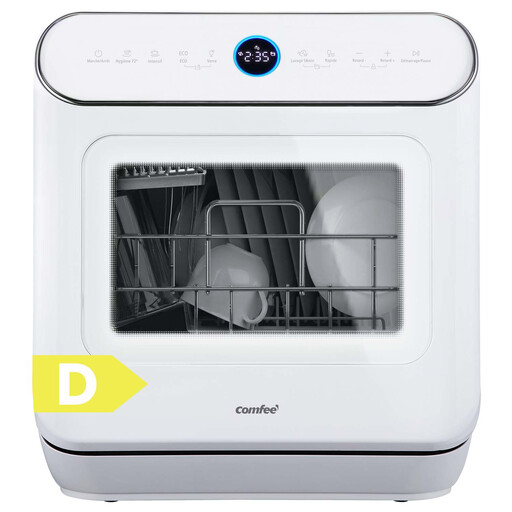 Image unavailable
COMFEE CDWMT305WD, 3 place settings, white
Worth considering if you have a small amount of washing up and space on your worktop. The product description gives dimensions of 420 × 436 × 465 mm and says the tank needs to be filled manually. Before installation, also check the drainage arrangements and electrical requirements.
View on Joybuy
 Image unavailable
Heinrich's HTG 8840 Schwarz, 6 place settings
Worth comparing if 3 place settings would be too limiting, but you still want a countertop model. The product information lists 7 programmes. Measure the space the dishwasher needs, including room to open the door, then check its label and manual for noise, consumption and connection details.
View on Joybuy
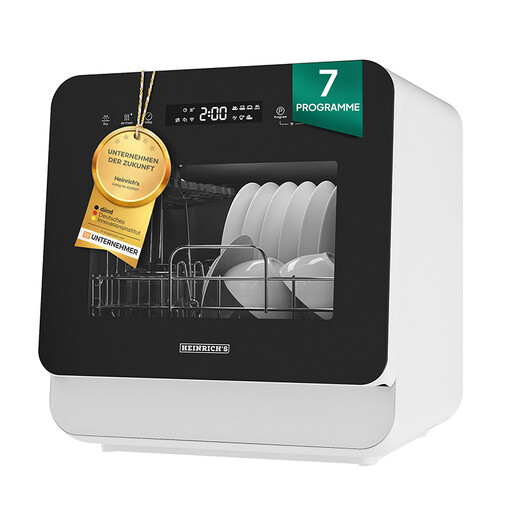 Image unavailable
Heinrich's HTG 8855, 3 place settings
Worth considering if you have a small amount of washing up and choosing between a tank and a mains water connection matters for your set-up. The product description specifies a 5-litre tank or a direct connection. Check the dimensions, drainage and electrical supply in the manual. To compare noise levels, check the model’s label.
View on Joybuy
Frequently asked questions
What should I measure before choosing a compact or slimline dishwasher?
Measure the width, depth and height, as well as the space needed to open the door. Then check the model’s manual for its connections to the mains water supply, waste outlet and electricity. These requirements are covered, for example, in the Bosch dishwasher manual, but the details vary by model.
Does a compact dishwasher always use less water?
No. A smaller capacity alone doesn’t mean it will use less water. Compare the litres per reference cycle shown on the label, then consider how much washing up you have and how many cycles you’ll need at home. This reflects ADEME’s distinction between reference figures and actual use.
What should a small household look for on the energy label?
Compare the capacity in place settings, kWh per 100 cycles, litres per reference cycle and noise level. The European Commission lists this information for dishwashers; weigh it against how often you expect to use yours.
How can I take repairability into account in France?
Check the repairability index for the model you’re considering: the French ministry responsible for ecology says dishwashers are covered by this indicator. Use the score alongside capacity, dimensions and installation requirements, rather than as a substitute for them.


