
Livraison le jour même ou le lendemain

Qualité garantie

Débloquez vos offres de bienvenue: Livraison GRATUITE | Jusqu'à -80 % | 30 jours d'essai gratuits à JoyPlus
Téléchargez l'application
Buying a digital camera might seem straightforward… until you start comparing resolution, zoom, video formats and connectivity claims. A compact camera, a bridge camera and an action camera don’t all serve the same purpose. The right choice depends above all on how you plan to use it: family photos, travel, vlogging, hiking, cycling or simply getting started as a beginner.
A high megapixel count doesn’t automatically mean more detailed photos. The results also depend on the sensor, lens, lighting and image processing. For everyday use, it’s better to look at the full specification rather than focusing on a claim such as “64 MP” or “5K”.
Optical zoom uses the lens to bring your subject closer. Digital zoom, on the other hand, enlarges part of the image and can reduce its sharpness. If you want to photograph distant landmarks, animals or travel scenes, a camera with optical zoom will generally be a much better choice.
An extra battery, a compatible memory card or a waterproof housing can make a real difference to everyday use. Conversely, a camera advertised as water-resistant may need a housing to reach its stated maximum depth. Always check the manufacturer’s guidance and inspect the covers, seals and accessories before using it underwater.
For family, street or travel photography, a CMOS sensor with an automatic mode is often easy to use. ISO sensitivity, stabilisation and lens quality can have more of an impact indoors than a very high resolution.
A camera for beginners should have clear controls, a sufficiently large screen and scene modes that are easy to select. Face detection and a self-timer can also make portraits and group photos easier to take.
A wide-angle lens of around 24 mm is useful for landscapes and landmarks. An 8× to 25× optical zoom is suitable for everyday photography and travel. Bridge cameras go further: the Kodak PIXPRO AZ528, for example, has 52× optical zoom and a 24 mm wide-angle lens.
Bear in mind, though, that high magnification requires a steady hand. In low light, a tripod or a firm support can quickly become essential.
For a 4K camera or an action camera, check the recording frame rate, stabilisation, storage and battery life. 4K produces large files, so make sure you have a compatible microSD or SD card, as well as enough space for backups.
For vlogging, a tilting screen, an audio input or a built-in directional microphone are real advantages. For cycling, skiing or hiking, prioritise the mounting options, weight, battery life and water protection.
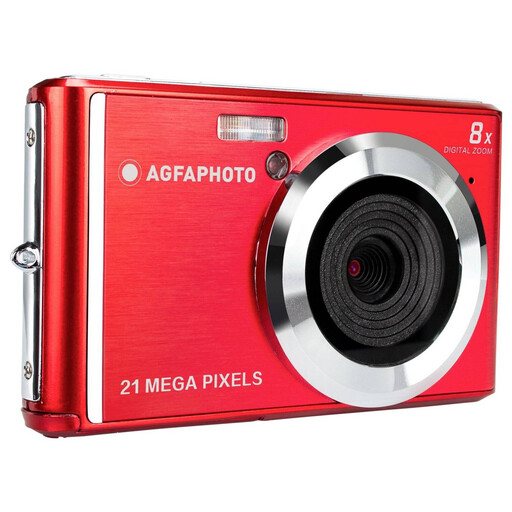
Why it suits this type of user : Its compact design, 2.4-inch screen and automatic operation make it easy to use for beginners and handy for everyday outings.
The specifications clearly distinguish 8× digital zoom from photo resolution and state that video recording is in HD 720p, helping to avoid unrealistic expectations about 4K.
21 MP CMOS sensor, face detection, electronic stabilisation and rechargeable battery.
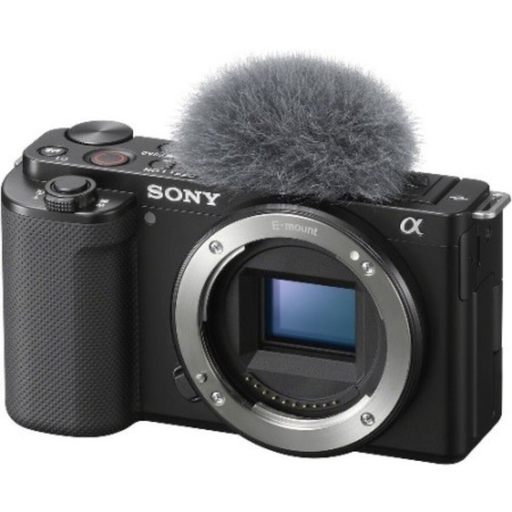
Why it suits this type of user : This mirrorless camera is designed for creators who want to develop their skills with interchangeable lenses and shoot videos to camera.
The term “body only” makes it clear that a lens must be bought separately, so you won’t mistake the camera body price for the price of a complete kit.
24.2 MP APS-C sensor, 4K video at up to 30 frames per second, tilting screen and built-in directional microphone.
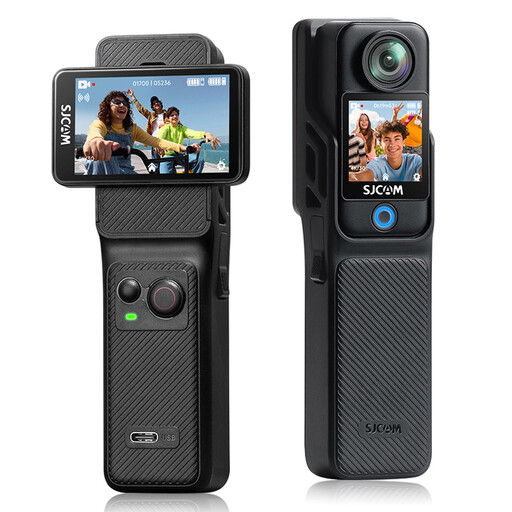
Why it suits this type of user : Its compact design is ideal for cycling, hiking, fishing and vlogging on the move, with a mount suited to action shots.
The stated operating depth of 30 m applies to the supplied waterproof housing. Use it whenever the camera is submerged, and stay within its limits.
4K video at 30 frames per second, 6-axis gyroscopic stabilisation, dual touchscreens and a 64 GB memory card stated as included.
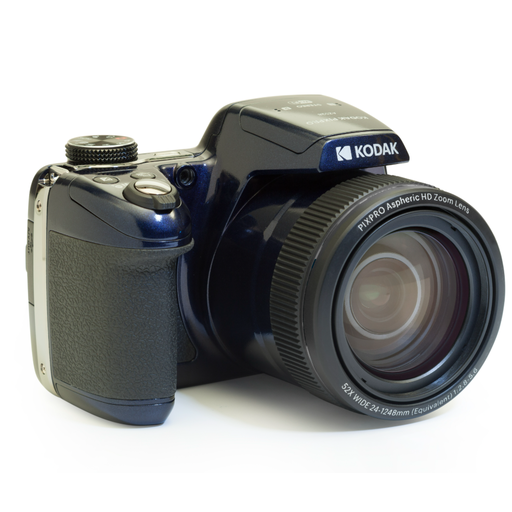
Why it suits this type of user : This bridge camera is ideal for travellers and nature lovers who want one camera for landscapes, distant scenes and everyday photography.
The stated zoom is optical, not solely digital. The specifications also state that the camera should be protected from water and moisture.
52× optical zoom, 16 MP CMOS sensor, burst shooting at 6 frames per second, Wi-Fi and an extra battery stated as included in the kit.
We’ve put together a comprehensive, regularly updated list of products that meet these strict selection criteria and comply with European safety regulations.
A compact model with an LCD screen, automatic exposure, face detection and a rechargeable battery will be easier to use. If you regularly photograph distant subjects, choose a bridge camera with optical zoom rather than a model that relies solely on digital zoom.
It’s best suited to activities on the move, shots taken from a helmet or bike, and wet environments when a suitable housing is included. For portraits, static landscapes and distant details, a compact or bridge camera will generally be more practical.
4K produces large files. Check the maximum capacity supported and choose an SD or microSD card with a speed class that meets the manufacturer’s recommendations. A 64 GB card or larger can be useful for longer outings, but the capacity you need mainly depends on the length of your videos and the settings you choose.