
Livraison le jour même ou le lendemain

Qualité garantie

Débloquez vos offres de bienvenue: Livraison GRATUITE | Jusqu'à -80 % | 30 jours d'essai gratuits à JoyPlus
Téléchargez l'application
A comfortable pillow isn’t just about its thickness or appearance. Your sleeping position, how warm you feel during the night, sensitivity to dust mites, and ease of care all play a key role in your daily comfort.
Some marketing claims are worth a closer look. A filling described as “natural” might lack support, a so-called “ergonomic” foam could turn out to be too firm, and a washable cover doesn’t necessarily mean the pillow’s core can go in the machine too.
A very thick pillow isn’t automatically more comfortable. Someone who sleeps on their side may need a certain height to keep their head aligned with their body. Conversely, a stomach sleeper will often be more at ease with a soft, low-profile model.
The stated thickness should therefore be considered alongside the filling’s composition and its ability to hold its shape over time.
These labels need to be backed up by concrete details: the cover material, an open-cell or perforated structure, washability, and any certifications mentioned by the manufacturer. A cotton cover can feel pleasant against the skin and help air circulate, but it doesn’t replace regular cleaning.
A 50 x 70 cm pillow won’t fit the same pillowcase as a 60 x 60 cm model. You also need to check whether the washing instructions apply only to the cover or to the whole product. With memory foam, the core generally shouldn’t be machine-washed.
If you tend to get hot at night, you can look for a breathable pillow, a cotton cover, or perforated foam. Good ventilation won’t eliminate warmth entirely, but it can help reduce the build-up of hot air inside the filling.
Models described as temperature-regulating are designed to promote air circulation and moisture management. However, it’s best to check the exact composition and care recommendations rather than relying on a vague promise.
A removable, washable cover makes everyday cleaning easier. For a fully washable pillow, you must follow the maximum temperature, drying instructions, and any guidance on the label.
References to STANDARD 100 by OEKO-TEX, CertiPUR-US, Sanitised, or ISO 9001 are part of product-related testing or management frameworks. These mentions are not a medical guarantee. They should be verified on the product page and compared with the actual composition.
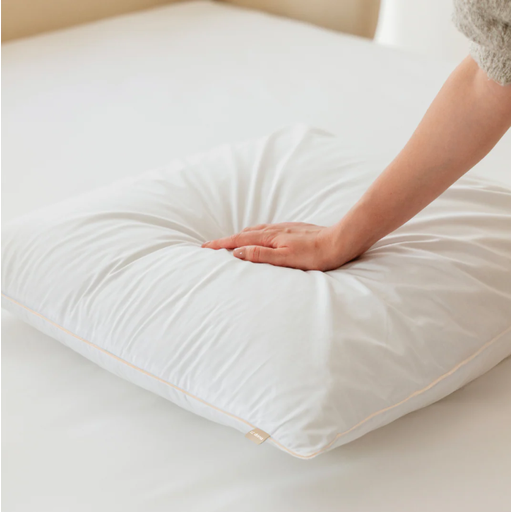
Why this choice suits this profile: Its 50 x 70 cm size fits most pillowcases, and its natural filling is ideal for anyone looking for a soft feel without jumping straight to a technical foam.
The composition is clearly stated: 90% duck feathers and 10% down. The manufacturer also specifies machine washing up to 40°C.
Standard size, 100% cotton cover, stated thickness of 20 cm, and clearly indicated care instructions.
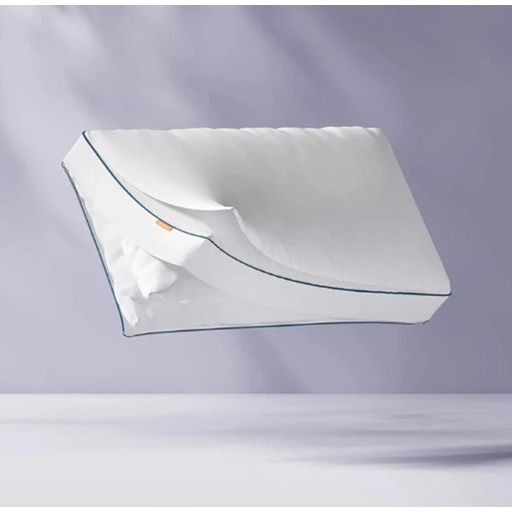
Why this choice suits this profile: This square model is designed for sleepers who want to adjust the height and prefer a soft feel, with a construction described as temperature-regulating and breathable.
The height isn’t fixed: the adjustable filling lets you gradually fine-tune the comfort, rather than relying solely on a stated thickness.
60 x 60 cm size, adjustable filling, stated hypoallergenic properties, and machine washable according to the label.
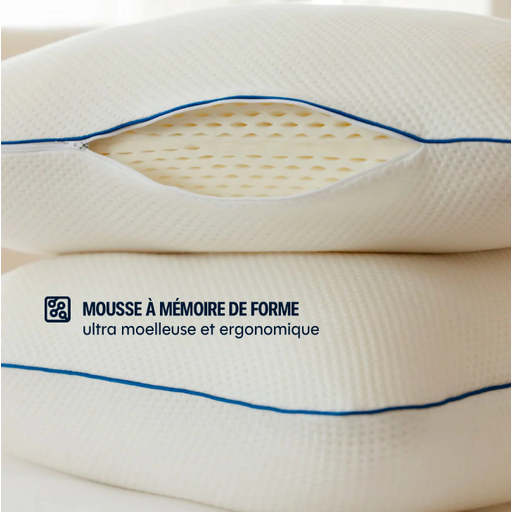
Why this choice suits this profile: Its perforated foam and removable cover make it a good fit for anyone wanting more structured support and easier regular care.
The product page clearly distinguishes the foam core, which must not be washed, from the removable, washable outer cover.
Perforated foam, 12 cm thickness, polyester and lyocell cover, certifications stated by the manufacturer.
The square MORPHEA Drimz 60 x 60 cm model is also worth a look for fans of feathers and down. It combines 90% duck feathers and 10% down, a cotton cover, and a stated thickness of 20 cm. For another ergonomic option, the memory foam pillow 60 x 60 cm features a perforated structure and a washable cover.
In the living room or bedroom, the Vivaraise Fara rectangular velvet cushion, sized 40 x 65 cm, offers a soft texture and a grape hue. Cleaning should follow the label instructions, with extra care around the fringes if young children are around.
We’ve put together a comprehensive, real-time updated list of products that meet these demanding selection criteria and European safety regulations.
A side sleeper may need more height and support, while a back sleeper will often be more comfortable with a medium thickness. Memory foam and adjustable filling allow you to fine-tune the comfort more precisely, but the choice also depends on your body shape and mattress.
The lifespan varies depending on the filling, how often it’s washed, and the pillow’s ability to retain its volume. Persistent flattening, deformation, a lingering odour, or a very worn cover are all signs that it’s time to consider a replacement.
Follow the stated temperature, dry the filling completely, and air the pillow regularly. For a foam model, only remove the washable cover and never put the core in the machine.