
Livraison le jour même ou le lendemain

Qualité garantie

Débloquez vos offres de bienvenue: Livraison GRATUITE | Jusqu'à -80 % | 30 jours d'essai gratuits à JoyPlus
Téléchargez l'application
A comfortable mattress topper can soften a bed that is too firm, compensate for a slightly worn surface or make a sofa bed more inviting. However, not every model meets the same needs. Greater thickness does not necessarily mean better support, while a particularly plush material may require more maintenance.
Before placing your order, focus on three points: the material, the thickness and compatibility with your mattress. These simple checks help you avoid unpleasant surprises after a few weeks of use.
A duck feather mattress topper provides a soft, enveloping feel. It is suited to those looking for a cosy sensation, but its filling may need to be regularly plumped up and redistributed. By contrast, a memory foam mattress topper follows the contours of the body more closely. Depending on its density and thickness, however, it may feel more enveloping and retain more heat.
The right choice therefore depends mainly on the type of comfort you want: a soft, traditional feel with feathers, or more gradual adjustment with foam.
A model that is too small leaves areas of the mattress uncovered at the sides. If it is too large, it may create folds beneath the fitted sheet. Measure the width and length of your mattress precisely rather than relying solely on the bed’s name or size category.
The most common dimensions include:
Also remember to measure the height of the mattress and check the depth of the fitted sheet once the topper has been fitted.
Phrases such as “5-star hotel”, “breathable” or “dust-mite resistant” are often marketing terms, or describe a feature claimed by the manufacturer. They do not replace checking the composition, washing instructions and certifications actually stated.
For everyday use, a washable mattress topper or one with a removable cover makes care considerably easier. People who are sensitive to allergens may wish to choose a model described as hypoallergenic or dust-mite resistant, while still checking the exact scope of these claims in the product listing.
The term pressure-point relief refers to the feeling of body weight being distributed more evenly. It is not a medical claim: the result varies according to body shape, sleeping position and the characteristics of the mattress underneath.
A 5 cm mattress topper changes the feel more noticeably than a 2.5 cm model, while adding less height than an 8 cm mattress topper. The latter thickness may suit those who want to significantly transform the sleeping surface, but it requires particular attention to the stability of the bed and the depth of the fitted sheet.
For a mattress that is slightly too firm, a thinner topper may be sufficient. On a genuinely rigid surface, a thicker model will generally provide a plusher feel. However, it cannot restore a sagging or misshapen mattress.
A mattress topper with elastic straps generally stays in place more effectively during the night. Straps at all four corners are practical when the dimensions match the mattress perfectly. A central strap can provide additional stability.
Also check:
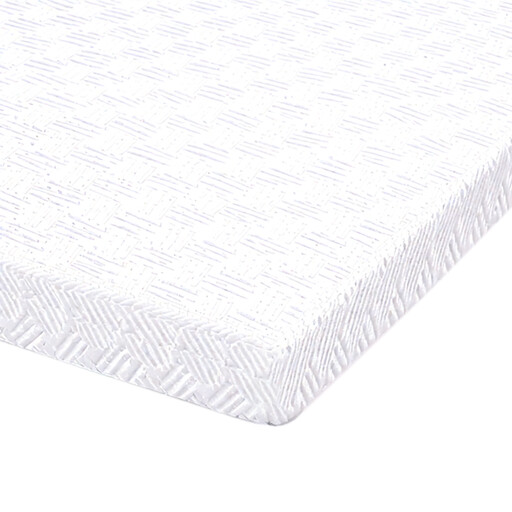
Why this choice suits this profile : this sensible thickness allows you to gradually adjust the comfort of a single bed without adding an overly bulky layer.
The listing combines memory foam with a clearly stated 90x200 cm format, reducing the risk of choosing the wrong size.
A 2.5 cm thickness and a product listing that describes the model as ultra-soft and hypoallergenic.

Why this choice suits this profile : its duck feather filling and cotton cover are designed for those seeking an especially soft feel on a large double bed.
The square quilting and four corner straps, complemented by a central strap, are clearly detailed in the listing.
A 180x200 cm format, a cotton cover and care instructions stating that it can be washed at 40 °C.
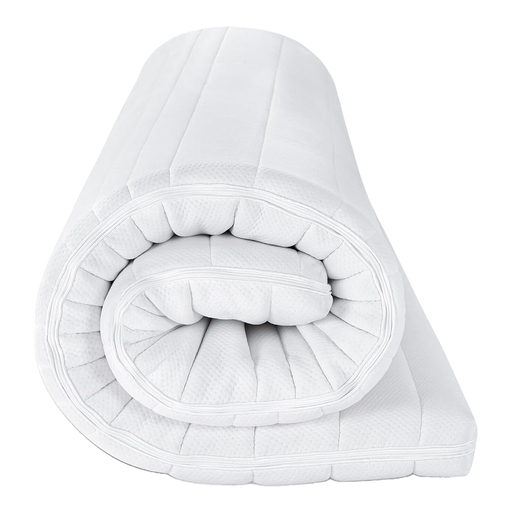
Why this choice suits this profile : at 8 cm thick, this model is suited to those who want to significantly change the feel of a double bed or occasional sleeping surface.
The cover has a side zip, is removable and can be machine-washed at up to 40 °C, according to the supplied information.
Memory foam, a cover described as breathable, Oeko-Tex 100 certification stated in the listing and an 8 cm thickness.
Why this choice suits this profile : this size suits many French double beds, while the soft filling is designed to provide a plusher feel.
The 140x190 cm format is clearly specified. The fitting system includes four corner elastic straps and a central strap.
A cotton cover, square quilting, and airing and washing instructions detailed in the product description.
We have put together a complete, real-time updated list of products that fully meet these strict selection criteria and European safety regulations.
When your topper arrives, unfold it on a flat surface. A foam model may need 24 to 48 hours of airing before first use, allowing it to regain its shape and disperse any manufacturing odour. Never wash the foam core: only the cover designed for this purpose should be machine-washed.
For a feather model, gently shake the product, air it regularly and turn it over when you change the sheets. Follow the stated maximum temperature and never use bleach. A washable protective cover can also help limit soiling between cleanings.
A thickness of 2.5 to 5 cm is often enough to moderately change the feel of a mattress. An 8 cm model changes the sensation more significantly and adds considerably more height. In all cases, check the depth of the fitted sheet and the stability of the complete setup.
The feeling of warmth depends on the structure of the foam, the cover, the room temperature and the rest of the bedding. A cover described as breathable may help air circulate, but it cannot guarantee the same temperature for every sleeper. If you tend to feel hot at night, compare foam with a duck feather filling.
Its lifespan depends on how often it is used, the weight it supports, how well it is cared for and the condition of the mattress underneath. Replace it when its thickness becomes uneven, the filling remains compressed or the surface no longer provides the comfort you want. Check the stitching, straps and cover regularly.