Households with a single cooking niche
You want to combine oven cooking, reheating and defrosting in one built-in space. A compact combination oven is worth considering if you genuinely use microwave functions regularly and the niche is compatible.


Choose a built-in combination oven if you only have one space available and regularly use reheating, defrosting or microwave and fan-assisted cooking modes. Opt for a 60 cm convection oven if oven cooking is your priority, or choose a separate oven and microwave if you have two niches and want to use both appliances at the same time. Research by INC in partnership with ADEME found no consistent energy advantage for combination ovens, with results varying according to the dishes, models and brands.
You want to combine oven cooking, reheating and defrosting in one built-in space. A compact combination oven is worth considering if you genuinely use microwave functions regularly and the niche is compatible.
If you often prepare oven dishes or cook several things at once, and the microwave is secondary, a 60 cm convection oven is a more direct fit for your needs. A separate microwave can then be added to the installation if required.
When two built-in appliances can be installed, a separate configuration means one appliance does not have to handle cooking and reheating at the same time. The dimensions and installation diagrams for each model must still be checked.
Choose this if: one space needs to handle cooking, defrosting and reheating, with microwave functions used regularly.
Keep in mind: the compact combination ovens checked are around 45 cm high and offer between 44 and 50 L, depending on the model.
Choose this if: oven cooking is your main priority and a 60 x 60 cm installation suits your kitchen unit.
Keep in mind: reheating and rapid defrosting will require another appliance if you use these functions frequently.
Choose this if: two compatible niches are available and you want to cook and reheat at the same time.
Keep in mind: each appliance requires its own checks for integration, connection and ventilation.
| Priority | What to check | Your needs |
|---|---|---|
| Usefulness of combination functions | Check the exact model’s microwave, defrosting, reheating and combination cooking modes. Make sure you know which programmes genuinely combine fan-assisted heat, the grill or microwaves. | I want to reheat or defrost regularly without adding a second appliance. If these functions are only occasional, a convection oven may be a better fit. |
| Compatibility with the niche | Compare the built-in dimensions with the internal measurements of your unit. Also check the depth, ventilation, clearances and installation diagram. | My existing niche must accommodate the appliance. I cannot assume that a compact 45 cm format and a 60 cm oven are interchangeable. |
| Capacity and availability | Compare the cavity volume, appliance height and number of available niches. For a separate installation, check the connections required for each appliance. | I often cook in the oven, or I want to be able to reheat something while a dish is cooking. Two appliances may therefore suit my needs better than a compact combination oven. |
| Energy consumption and cooking results | Look for tests involving the dishes you prepare and compare appliances of the same type. Check the product information and energy class where available. | I want a solution suited to my recipes, without assuming that a combination oven is always more economical. INC and ADEME indicate that efficiency varies according to the dish, model and brand. |
A combination appliance brings several functions together, but that does not guarantee an overall energy advantage. The INC-ADEME study found that results varied according to the dishes, models and brands.
List the functions you use regularly: reheating, defrosting, combination cooking, baking, roasting and cooking on several levels. Then compare the modes available on the exact model.
Appliances with a similar width may require different niche heights, depths or clearances. Compact combination ovens and traditional ovens do not necessarily occupy the same space.
Measure the existing niche, then compare your measurements with the manufacturer’s installation diagram, including ventilation, the electrical supply and access to the connection.
A 60 cm oven combined with a built-in microwave can let you use both appliances at the same time, but it involves two separate appliances and two installations to plan.
Compare the complete project: number of niches, dimensions, connections, accessories and installation requirements for each appliance.
Two appliances also require two compatible spaces and separate installation checks.
The accessories supplied and the precautions for use vary between models, particularly when the microwave is combined with other cooking modes.
Before first use, read the exact model’s manual and identify which containers, racks and drip trays are permitted in each mode.
In France, Bosch offers 60 x 60 cm built-in ovens as well as compact 60 x 45 cm combination microwave ovens.
Electrolux sells compact built-in appliances for 45 cm niches, including multifunction combination microwaves and microwaves with a grill.
Siemens offers compact combination microwave ovens, as well as separate built-in microwaves for wall units or tall columns.
In France, Samsung offers built-in combination microwaves, including the 50 L NQ5B6753CAK.
Joybuy options for a built-in kitchen where oven cooking is the priority.
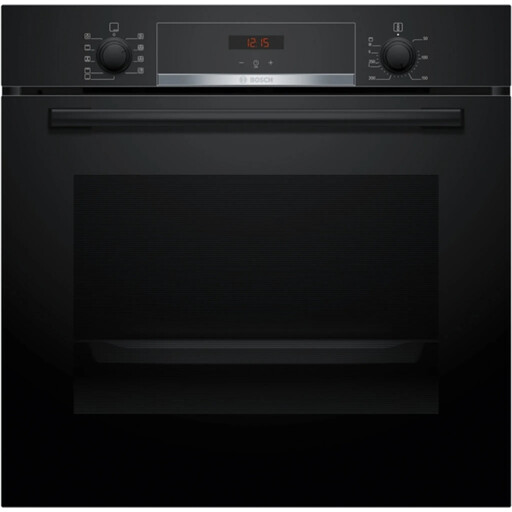 Image unavailable
Worth considering when oven cooking is your main priority and you have a compatible 60 cm niche.
71 L built-in oven with 3D hot air.
It does not replace microwave functions for reheating or rapid defrosting on its own. Check the exact configuration before buying.
No. The combination ovens checked are compact appliances around 45 cm high, while a conventional convection oven may be in a 60 x 60 cm format. Compare the niche, cavity, dishes you use and cooking functions before treating them as interchangeable.
Record the internal dimensions of the niche, then check the exact model’s diagram for the built-in and overall dimensions, ventilation, clearances, electrical power, connection requirements and compatible accessories. Two appliances designed for a 45 cm niche may have different capacities, power ratings and accessories.
No. The INC study carried out with ADEME compared four combination ovens and ten convection ovens in cooking, defrosting and reheating tests. It found that efficiency depends on the dishes, models and brands, without demonstrating a clear advantage for the combination ovens tested.
This solution is suitable when two compatible spaces are available and you want to use the oven while someone else reheats or defrosts food in the microwave. Check the niches, installation requirements and connections for both appliances separately.