If you often cook large dishes or use several shelves at once, start by comparing conventional ovens. The Electrolux model featured here offers 72 L, compared with 44 to 52 L for the compact combination ovens from Bosch, Electrolux and Whirlpool. A combination microwave is worth considering if you have a compact cabinet space and regularly reheat or defrost food, provided its cavity and cooking modes suit your recipes. To keep a large cavity while separating these uses, consider pairing a conventional oven with a microwave, if you have room for two appliances.
Who are these options for?
Households that cook large dishes
If you often cook gratins, roasts or several batches, check the dimensions of your dishes and how many shelves you can use. For example, Electrolux lists a capacity of 72 L for its conventional EOF3C40TH oven, compared with 44 L for its compact EVL9E2XT combination oven.
Kitchens with limited cabinet space
An integrated combination oven can bring together microwave and oven functions in a compact space. Be sure to check the exact cabinet dimensions, though: Electrolux specifies 450 × 560 × 550 mm for the EVL9E2XT, but these measurements won't apply to every model.
People who often reheat meals
If reheating and defrosting are part of your routine, compare a combination oven with the option of adding a microwave to a conventional oven. If you don't have a suitable cabinet space, a freestanding appliance is another option to consider, taking into account the space available and its capacity.
What should you compare before choosing?
Start with the dishes you cook, then check whether they will fit in the cavity, where the appliance will go and which modes you will actually use.
| Criteria |
What to check |
What I need |
| Capacity |
Compare the usable capacity, the dimensions of your dishes and the shelves available in your chosen mode. Bosch and Electrolux list a capacity of 44 L for the CMA585GS1 and EVL9E2XT combination ovens; Whirlpool lists 52 L for the WCT7A9PHTSBF, while Electrolux lists 72 L for the conventional EOF3C40TH oven. |
I regularly cook large dishes or several batches: the space actually available in the cavity matters more than the format's name alone. |
| Reheating |
Check that the model has a microwave mode and see which combination modes are available. If comparable tests are available, look at reheating speed and evenness separately: UFC-Que Choisir assesses these as distinct criteria. |
I often reheat portions or defrost food, but don't want to assume how well it will cook based on a function's name alone. |
| Space and fitting |
Check the built-in dimensions and consult the model's manual. Electrolux specifies a cabinet space of 450 × 560 × 550 mm for the compact EVL9E2XT, compared with 590 × 560 × 550 mm for the conventional EOF3C40TH. For a freestanding appliance, check the available space and the clearances required in its manual. |
I have a specific cabinet space to fill, or I prefer a freestanding appliance if my kitchen layout allows for it. |
| Two appliances |
If you want to pair a conventional oven with a separate microwave, make sure you have a suitable space for each and check the instructions for both appliances. |
I want to keep a large cavity for my dishes while still being able to reheat a meal without using the oven. |
| Energy and installation |
For an oven sold in France, check the energy label for the specific model: the French Ministry of the Economy states that energy labels are compulsory for ovens, both in shops and online. Also check the fitting and connection instructions. The Bosch manual consulted says that appliances without a plug must be connected by a qualified, approved professional. |
I want to compare energy information for the models I'm considering and confirm that the appliance can be installed in my kitchen. |
What should you watch out for?
-
Choosing a combination oven without measuring your dishes
A compact cavity may limit the dishes you can cook and the number of shelves you can use. The Bosch, Whirlpool and Electrolux models featured here show combination ovens with capacities of 44 to 52 L, while Electrolux lists 72 L for its conventional EOF3C40TH oven.
Measure the dishes you use regularly and check the capacity and the shelves available in your preferred cooking mode.
-
Assuming a listed function guarantees a particular cooking result
The presence of a grill or fan-assisted cooking doesn't, by itself, tell you how evenly the appliance cooks or how well it controls the temperature. UFC-Que Choisir assesses these aspects separately in its microwave testing protocol.
Look for the functions that suit your recipes and consult comparable test results where available.
-
Ordering a built-in appliance before checking the cabinet space
Built-in dimensions vary between compact and conventional models. The Bosch manual consulted also states that appliances without a plug must be connected by a qualified, approved professional.
Compare the fitting diagram for the exact model with your cabinet, and arrange for the connection to be checked if the manual requires it.
Which brands showcase these formats?
Bosch
The CMA585GS1 is an example of a compact, built-in combination microwave.
- Bosch lists a 44 L cavity, appliance dimensions of 454 × 594 × 570 mm and a maximum stated microwave power of 900 W for this model.
- Check that its dimensions and cavity suit your cabinet and dishes, and follow the installation instructions for the model you buy.
Whirlpool
The built-in WCT7A9PHTSBF and freestanding MCP349WH show two possible ways to position a combination oven.
- Whirlpool lists a 52 L capacity and cooking on three levels for the WCT7A9PHTSBF; the freestanding MCP349WH is listed with a 25 L cavity and fan-assisted cooking mode.
- The MCP349WH's 25 L capacity is worth checking carefully if you use large dishes.
Electrolux
The compact EVL9E2XT and conventional EOF3C40TH are two examples of distinct built-in formats.
- Electrolux lists a 44 L capacity and a cabinet space of 450 × 560 × 550 mm for the EVL9E2XT, compared with 72 L and a cabinet space of 590 × 560 × 550 mm for the EOF3C40TH.
- The difference in capacity and cabinet space can help you choose a format, but it doesn't mean one will always deliver better cooking results.
A conventional oven to consider on Joybuy
This option suits anyone choosing a built-in conventional oven for meals that need a large cavity. It isn't a substitute for comparing combination ovens if you use a microwave every day.
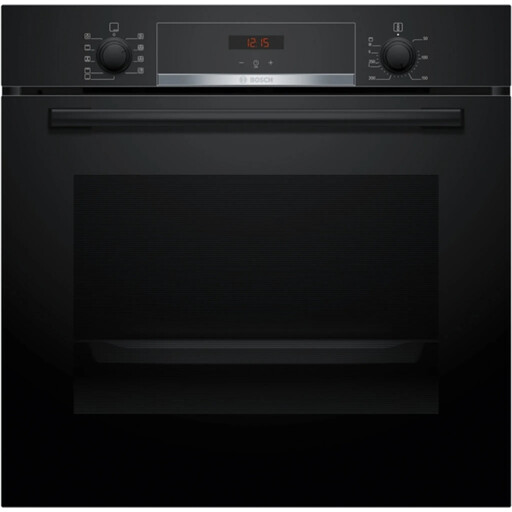 Image unavailable
Bosch HBA514BB3, 71 L built-in oven with 3D hot air
Worth considering if you want a large cavity for your dishes: the product title lists a capacity of 71 L and 3D hot air. Before buying, check the number of cavities, as the original title refers to a double oven while the description mentions just one compartment. Also compare the installation instructions with your cabinet space and check the energy label for this model.
View on Joybuy
Frequently asked questions
Can a combination oven replace a conventional oven for every meal?
Not necessarily. First compare the size of your dishes, the capacity and the modes of the combination oven you're considering. Bosch lists a capacity of 44 L for the CMA585GS1, while Electrolux lists 72 L for its conventional EOF3C40TH oven. UFC-Que Choisir also assesses several cooking and reheating results separately in its microwave tests.
Is a 45 cm cabinet space enough for a built-in combination oven?
No, height alone isn't enough. Check all the built-in dimensions, clearances and connection requirements in the manual for the model you choose. For example, Electrolux specifies a cabinet space of 450 × 560 × 550 mm for the EVL9E2XT, but these measurements won't apply to other models.
When should you consider a freestanding combination microwave?
It's worth considering if you don't have a suitable built-in cabinet space and have a location that meets the manual's requirements. Check the size of your dishes, too: Whirlpool lists a 25 L cavity for the freestanding MCP349WH, compared with 52 L for its built-in WCT7A9PHTSBF combination oven.
Does an oven sold in France need an energy label?
Yes. The French Ministry of the Economy states that ovens are among the products that must display an energy label when sold in France, both in shops and online. Check the label for the specific model you're comparing.


