Homes with just one appliance space
An integrated combination oven can bring oven and microwave functions together in the same housing space. Before you choose, check the installation dimensions, ventilation requirements and cavity capacity.


A combination microwave with fan oven function is a good choice if you want to cook, defrost and reheat in a single cavity, provided its dimensions and features suit your dishes and kitchen. If you use large dishes, or want to reheat food while another dish is cooking, a fan oven and separate microwave are better suited to those needs, as long as you have enough space. If you already have an oven that works for you, adding a microwave could save you from replacing it.
An integrated combination oven can bring oven and microwave functions together in the same housing space. Before you choose, check the installation dimensions, ventilation requirements and cavity capacity.
If you use large dishes or cook on several shelves, compare the capacity and internal dimensions of a fan oven with those of the combination model you’re considering. Saving space is no benefit if the cavity is too small for the dishes you normally use.
If you’re happy with your fan oven and mainly want to reheat or defrost food, a separate microwave lets you keep your oven. You’ll need to make space for the second appliance.
Consider one if : you want a single cavity for oven cooking, reheating and defrosting.
Bear in mind : the cavity size may limit which dishes you can use, and the appliance can’t cook two separate dishes at the same time.
Consider one if : oven cooking and space for your dishes matter more than microwave functions.
Bear in mind : a fan oven without a microwave function won’t also handle microwave reheating and defrosting.
Consider this set-up if : you want to reheat food while another dish is cooking, or keep an existing fan oven.
Plan for : the microwave will need its own space, either on a worktop or in a suitable housing space.
| Criteria | What to check | What I need |
|---|---|---|
| Functions | Check separately for microwave, defrost, grill and fan oven modes. Refer to the manual for the specific model to see which combination modes it offers. | I want to bake, as well as reheat and defrost food: a basic microwave with a grill or an oven without a microwave function may not cover all three needs. |
| Space and capacity | Compare the required height, width and depth for installation, then check the cavity capacity and whether your dishes will fit. Similar-looking front widths don’t guarantee that appliances will fit the same housing space. | My dishes need to fit inside the cavity. If my kitchen has just one housing space, I also need to know whether the model I choose is designed to be built in. |
| Results and everyday use | Where available, look for tests covering defrosting, reheating and oven cooking. Also check the controls and cleaning instructions. | Consistent reheating and cooking my recipes matter more to me than the maximum power rating on its own. |
| Installation | Follow the installation diagram, ventilation clearances and connection instructions in the manual. If you’re unsure about the electrical installation, seek advice from a qualified professional. | I want to know where the appliance can be installed before choosing it, whether it’s replacing a built-in oven or taking up extra space. |
A microwave with a grill doesn’t necessarily have the oven-cooking functions of a combination microwave with a fan oven.
If the appliance is meant to replace your oven, check the manual for the specific model to make sure it has a fan oven function and the combination modes you want.
Two appliances with similar widths may require different housing heights and offer different cooking capacities.
Measure the space and compare it with the installation diagram and clearances specified for the model you’re considering.
An unsuitable housing space may mean modifying the unit or finding somewhere else to install the appliance.
A study by the French National Consumer Institute and ADEME compares four combination ovens with ten fan ovens; all the appliances tested are built in. Its findings can’t automatically be applied to a freestanding model.
For any appliance you’re interested in, check its functions and dimensions. When looking at test results, only rely on findings that apply to the appliance type and use being compared.
A stated power rating doesn’t tell you how evenly food will defrost. UFC-Que Choisir’s test protocol, for example, assesses the temperature both on the surface and at the centre of defrosted food.
If this matters to you, look for available defrosting test results and check the controls and programmes on the model you’re considering.
These models give you an idea of the formats and capacities to compare; their specifications don’t apply to every model from the same brand.
Electrolux offers the compact KVLBE08X combination oven and the EOF3C40TH fan oven, two models that are useful for comparing the space required and capacity available.
The range includes compact combination ovens and 60 × 60 cm built-in ovens.
Siemens offers compact combination ovens, as well as other sizes of built-in oven.
These two appliances are examples of combination microwaves for cooking and reheating. Don’t assume they’ll fit in a built-in housing space: check the installation type and instructions for each model.
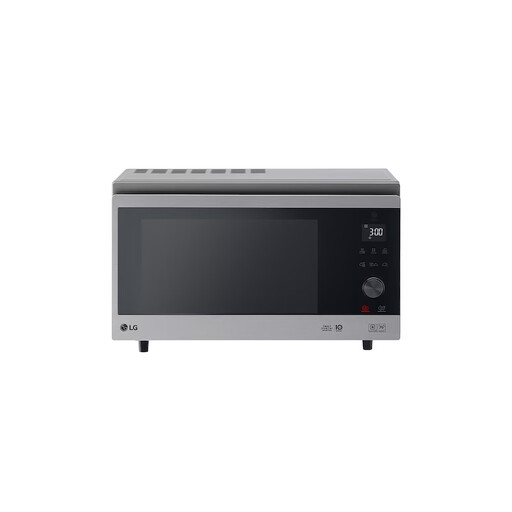 Image unavailable
This 39 L model is designed for anyone who wants to cook and reheat food in the same cavity. If defrosting is important to you, check the programmes in the manual. Also check the installation type and required clearances before deciding where to put it.
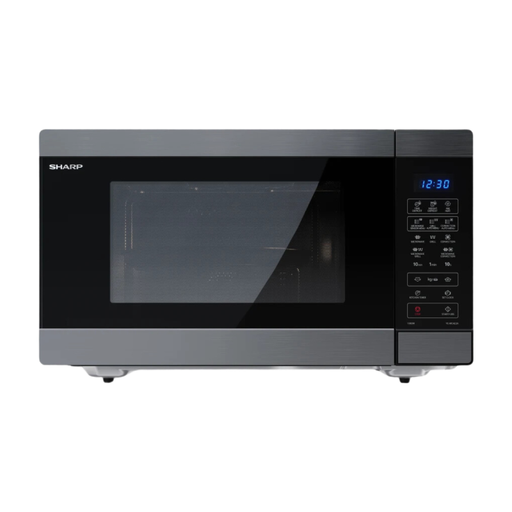 Image unavailable
This 42 L combination microwave is an option if you want to cook and reheat food in an appliance that sits on a flat, stable surface. If you defrost food regularly, check that the manual confirms the programme you need. Also check the required ventilation clearances.
Yes, if its cooking modes and cavity are suitable for the dishes you make. For example, Electrolux France lists a 43 L capacity for the KVLBE08X combination oven and 72 L for the EOF3C40TH fan oven. Compare your dishes with the space available rather than assuming these sizes are interchangeable.
Measure the height, width and depth of the housing space, then compare them with the installation diagram for the exact model. Check the ventilation clearances and the manufacturer’s connection instructions too: the width of the front panel alone isn’t enough to confirm that it will fit.
No : it doesn’t, on its own, tell you how evenly food will defrost or reheat. If you’ll use these functions often, look at the modes available and any test results for the exact model. UFC-Que Choisir’s defrosting test protocol, for example, measures temperatures both on the surface and at the centre of the food.
Not necessarily : it depends on your existing installation and the instructions for the new appliance. Check the manual and, if a new circuit needs to be installed or you’re unsure whether the connection is suitable, ask a qualified professional to assess it.