If you have space for just one built-in oven, a combination oven is worth considering if you often reheat or defrost food and want these functions alongside conventional oven cooking. If oven cooking is your priority and you have another spot for a microwave, choose your oven based first on its capacity and cooking modes. Either way, check the installation instructions for the exact model: the INC and ADEME study found no general energy-efficiency advantage for the combination ovens it tested.
Who is this choice for?
If you only have space for one built-in oven
You want to combine oven cooking, reheating and defrosting without having to find space for a separate microwave. UFC-Que Choisir highlights the space-saving benefits of a combination oven, but you’ll still need to make sure the model suits your housing unit and the dishes you cook.
If you prioritise your main oven
You regularly cook oven-baked dishes and want to prioritise capacity and modes that suit the way you cook. If your kitchen layout allows, you can keep the microwave as a separate appliance.
If you’re mindful of energy use
You don’t want to assume how much energy an appliance uses just because it’s labelled a “combination oven”. The INC and ADEME study found that results varied by dish, model and brand, with no general energy-efficiency advantage demonstrated for the combination ovens tested.
What are the key differences?
Start by checking the space you actually have, then decide which use matters most: everyday microwave cooking or oven cooking. A separate oven and microwave are still an option if your kitchen has room for both.
| What matters to you |
What to check |
Who this suits |
| Available space |
Dimensions of the housing unit and appliance; oven capacity. |
If you only have space for one built-in appliance, combining several functions becomes a priority; around 33% of consumers put saving space at the top of their list. |
| Microwave use |
Whether it has the microwave, defrost and combination modes you want; compatible accessories. |
If you often need to reheat or defrost food, having these functions matters most; around 27% of consumers prioritise everyday microwave use. |
| Oven cooking |
Usable capacity, shelf positions and the modes your recipes require. |
If oven-baked dishes drive your choice, capacity and cooking modes come before combining appliances; around 27% of consumers prioritise oven cooking. |
| Energy use |
Energy-use information for the exact model and the way you plan to use it. |
Rather than assuming a combination oven uses less energy, some people want to look at the energy required for their cooking; around 13% of consumers make this their main concern. |
The INC and ADEME study looks at built-in ovens, and its energy-use results vary depending on the dishes and appliances tested. You can’t predict a model’s energy use from its category alone.
What to look out for
-
Assuming a combination oven always uses less energy
The INC and ADEME study does not demonstrate a general energy-efficiency advantage for combination ovens over the fan ovens it tested.
Check the information for the exact model and the uses it relates to, rather than relying on the presence of a microwave function alone.
-
Confusing appliance dimensions with housing-unit dimensions
A compact appliance won’t necessarily fit your existing kitchen unit. For example, Siemens lists overall dimensions of 455 × 594 × 548 mm for the CM776G1B1; these don’t cover every possible housing unit.
Measure the space and check the installation dimensions, ventilation clearances and connection instructions in the manual for your chosen model.
If the appliance doesn’t fit, you may need to rethink where it will go or delay installation.
-
Using the same cookware in every mode
An accessory that’s suitable for oven cooking may not be suitable for microwave mode. Metal utensils and some plastics aren’t safe to use in this mode.
Check the combination oven’s manual before using any container or accessory in microwave, grill or combination mode.
Brands to consider
The models below feature in the sample of built-in combination ovens studied by the INC and ADEME; their inclusion in the sample does not constitute a ranking.
Samsung
The NQ5B6753CAK is one of the built-in combination ovens included in the study. Samsung describes it as a combination microwave oven.
- Worth considering if you’re looking for oven and microwave functions in a single model.
- Samsung’s claims about faster cooking don’t guarantee the same results for every recipe; check the model’s functions and instructions for use.
Siemens
The CM776G1B1 is a compact built-in oven with a microwave function. Siemens lists dimensions of 455 × 594 × 548 mm and a capacity of 45 L.
- Its overall dimensions give you a specific size to check against your fitted kitchen.
- These measurements alone won’t confirm that it will fit your housing unit: check the installation dimensions and required clearances.
Sauter
The SKC6302LW is one of the built-in combination ovens included in the INC and ADEME study.
- A model worth looking at if you’re comparing the cooking modes of built-in combination ovens.
- To decide whether its programmes and installation suit your needs, check the product specification and manual for the SKC6302LW.
De Dietrich
The DKC7340X is also among the built-in combination ovens studied by the INC and ADEME.
- This lets you compare a specific model rather than relying on claims about combination ovens as a category.
- Its inclusion in the study is not a recommendation: check the cooking modes, built-in dimensions and instructions in the manual for the DKC7340X.
A built-in oven to consider on Joybuy
If your priority is oven cooking and you only have space for one built-in appliance, this oven is an option in the conventional oven category. Consider separately how you’ll reheat and defrost food using a microwave.
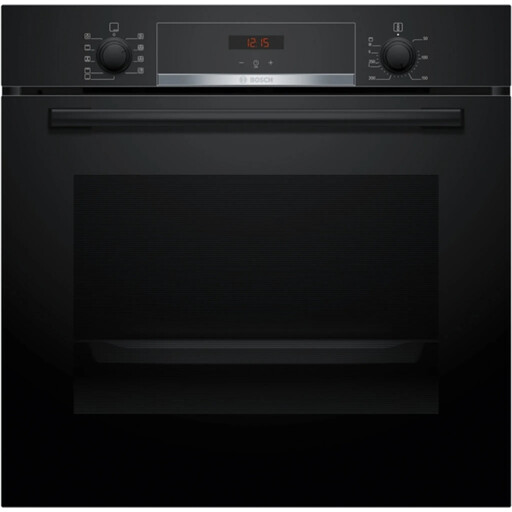 Image unavailable
Bosch HBA514BB3, 71 L built-in oven
Worth considering if you’re choosing a built-in appliance primarily for oven cooking. This model is listed with a capacity of 71 L and 3D hot air.
Before you buy, check that it’s compatible with your housing unit, and review the ventilation and connection requirements in the HBA514BB3 manual. Also check the number of cavities and, if you need one, whether this exact model has a microwave function.
View on Joybuy
Frequently asked questions
Can a built-in combination oven replace a conventional oven?
It can combine functions that would otherwise require a separate oven and microwave, but it won’t necessarily suit every recipe. Compare the capacity, modes and accessories of the model you’re considering with the way you usually cook. The INC and ADEME study found that results varied depending on the dishes and appliances tested.
What dimensions should I check before ordering?
Measure the housing unit and its depth, then compare these with the installation dimensions and clearances listed in the manual for the exact model. The overall dimensions of 455 × 594 × 548 mm listed by Siemens for the CM776G1B1 are not standard dimensions for all combination ovens.
What should I check when connecting a built-in oven?
Check that your available power supply matches the instructions for the model you’ve chosen; don’t rely on the requirements for another oven. If the installation needs to be modified or you’re unsure whether it’s suitable, ask a qualified professional to assess it.
Can you use any dish in a combination oven’s microwave function?
No. Metal utensils and some plastics aren’t suitable for microwave mode. Follow the combination oven’s manual to choose containers and accessories approved for each mode, especially when microwave and oven cooking are used together.


