Buying priorities
Combination microwave and convection oven
A good choice if: one appliance needs to handle defrosting, reheating and some oven-cooking tasks.
Keep in mind: check the capacity, available modes and installation requirements of the exact model.
Traditional convection oven
A good choice if: oven-baked dishes, a large cavity and cooking on several levels are your main priorities.
Keep in mind: it does not automatically offer the same fast reheating as a microwave.
Separate oven and microwave
A good choice if: you have enough space for a large-capacity oven and a dedicated reheating appliance.
Keep in mind: two appliances require more space, installation work and maintenance, and may eventually need replacing separately.
Start with the tasks you do most often, then check that the capacity, installation requirements and programmes suit your kitchen.
| Priority |
What to check |
Your needs |
| Three uses in one appliance |
Microwave, convection and grill modes; defrost function; cavity size and included accessories. |
I want to reheat and defrost without giving up oven-baked dishes. Check the functions listed for the exact model. |
| Size and capacity |
Installation type; external and built-in dimensions; usable capacity suited to the dishes you usually prepare. |
A compact appliance must still accommodate the portions and dishes I actually prepare. |
| Energy use in everyday cooking |
Energy label where applicable; selected function; comparison using the same recipe and capacity. |
I compare the model's data rather than assuming that a multifunction appliance always uses less energy. In the tests carried out, the Institut national de la consommation and ADEME found no clear energy advantage for either type of oven. |
| Installation and reheating |
Fitting instructions, connection and ventilation; whether packaging is microwave-safe; specified power and cooking time. |
I check that the housing and power supply are suitable for the model, then follow the packaging instructions when reheating food. |
Joybuy products
Joybuy options for comparing a combination oven designed to bring several functions together with a convection oven focused more on oven-baked dishes.
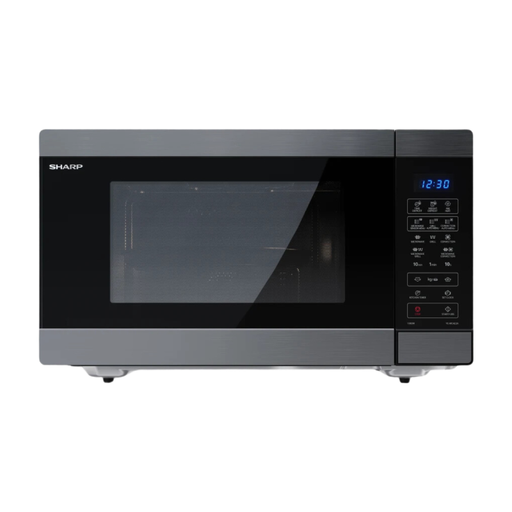 Image unavailable
SHARP YC-MC422AE-SB, 42 L combination oven
An option for switching between oven cooking, reheating and defrosting in one appliance.
Microwave, grill and convection functions; stated capacity of 42 L; temperature range from 140 to 230 °C and 30 automatic programmes. Check the ventilation clearances and instructions before installation.
Joybuy
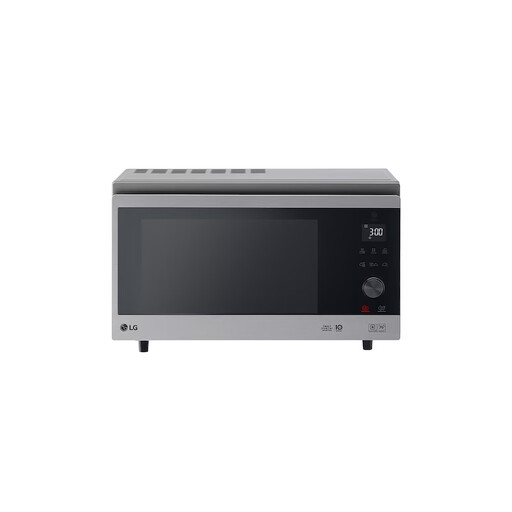 Image unavailable
LG MJ3965ACS, 39 L combination microwave
A choice worth considering if you want one appliance for heating, defrosting and cooking.
Microwave, grill, convection and steam-cooking functions; 39 L cavity, 36 cm turntable and temperature range from 40 to 200 °C. Confirm the installation type, ventilation and whether the temperature range suits your recipes.
Joybuy
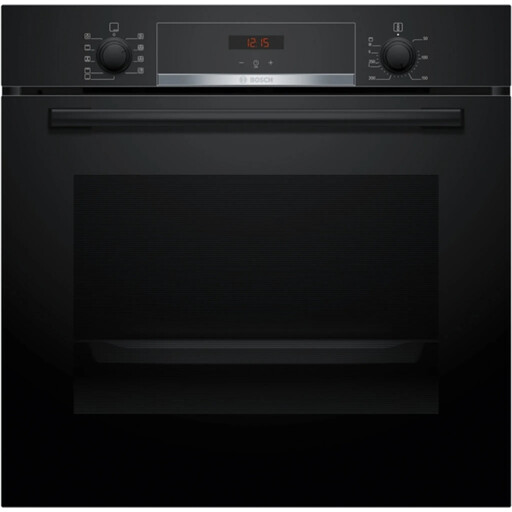 Image unavailable
Bosch HBA514BB3, 71 L built-in oven
An option focused on oven-baked dishes and larger containers.
Stated capacity of 71 L, seven cooking modes, five shelf positions and a temperature range from 50 to 275 °C. Consider a separate appliance if fast microwave reheating is a priority, and check the housing, ventilation and connection requirements.
Joybuy
Frequently asked questions
Does a combination oven use less energy than a convection oven?
Not necessarily. The summary by the Institut national de la consommation and ADEME, based on four built-in combination ovens and ten built-in convection ovens, found no clear energy advantage in the tests carried out; it cannot be generalised to all models or recipes.
What should I check before installing a built-in appliance?
Check the dimensions of both the appliance and the housing, the required ventilation clearances and the type of connection specified in the instructions. Bosch states that an appliance without a plug must be connected by qualified, approved personnel.
Can a freestanding combination microwave be placed in a closed cabinet?
Only if the model's instructions allow it and the specified ventilation requirements are met. Ventilation openings must not be blocked; also check the supporting surface and the clearances required by the manufacturer.
How should I reheat packaged food in a microwave?
Only use packaging designed for microwave use and follow the specified power and cooking time. Anses recommends following these instructions, as more intense reheating may increase the migration of substances from certain packaging into food.
Can the energy label be used to compare ovens?
Yes, for ovens covered by this labelling scheme. ADEME presents the energy label as a useful comparison guide: compare appliances in the same category and check that the label is included in the documentation for the model you are considering.


