A combination microwave oven is a good choice if you plan to use both the microwave and fan oven functions in the same cavity, provided your dishes and available space are suitable. If oven cooking is still your priority, keeping a fan oven and pairing it with a separate microwave lets you reheat or defrost food while another dish is cooking. In tests by ADEME and the National Consumer Institute on built-in ovens, results varied depending on the recipes and models tested, so you shouldn’t assume that combination ovens are always better.
Which setup is right for you?
Households that often reheat and defrost food
If portions, leftovers and frozen food are a regular part of your day, the microwave function matters more than fan cooking alone. A combination oven only offers an extra benefit if you’ll also use its oven modes; UFC-Que Choisir describes microwaves as well suited to quick reheating.
Home cooks who want several functions in one appliance
A single cavity can meet your needs for both microwave and fan oven cooking when space is limited. However, check that its capacity, the size of your dishes and the permitted accessories suit the recipes you prepare.
Households that mainly cook in the oven
If you regularly bake, roast or cook several batches, start by considering the space your dishes need and the cooking modes you usually use. Tests by ADEME and the National Consumer Institute show that results vary between combination and fan ovens, depending on the recipes and appliances tested.
What are the key differences?
First, choose a setup that keeps the functions you need available at the same time. Then check the size of your dishes and the space available for the appliance.
Fan oven
Best for: households that mainly bake, roast and cook in batches.
Bear in mind: you’ll need another appliance if you want to reheat and defrost food using microwaves.
Combination microwave oven
Best for: using the microwave and fan oven functions in a single cavity.
Bear in mind: you can’t use the same cavity at the same time to cook two dishes in different modes.
Separate oven and microwave
Best for: reheating a portion while another dish cooks in the oven.
Bear in mind: you’ll need two suitable spaces, each meeting the installation requirements for its appliance.
| Criterion |
What to check |
Who it matters to |
| Reheating and defrosting |
Microwave and defrost functions; usable dimensions for your portions and containers. |
When leftovers and frozen food are often on the menu, I want to prepare them without having to use the oven for that task alone. About 33% of consumers put this need first. |
| Oven cooking |
Cavity and dish dimensions; fan oven settings and permitted accessories. |
For regular baking, roasting or batch cooking, I mainly want to keep the space I need for my recipes. This is a priority for about 27% of consumers. |
| Space and combined functions |
Installation type, external dimensions and clearances required in the model’s instructions. |
If my kitchen has limited space, I want to combine the functions I’ll actually use in one appliance. About 20% of consumers prioritise this above all else. |
| Energy use in practice |
Model and programme data for comparable recipes; don’t assume energy use based on the technology alone. |
I want to look at the energy used for the dishes I usually cook, rather than assume a combination oven will always use less. This is the top criterion for about 20% of consumers. |
What should you watch out for before choosing?
-
Assuming a combination oven is better for every dish
In tests by ADEME and the National Consumer Institute, results depended on the recipes, models and brands. Having several cooking modes doesn’t necessarily tell you how well your dishes will turn out.
Make a note of the dishes you usually cook, then check the required mode, dish size and compatible accessories for each one.
-
Relying on the stated capacity alone
A capacity in litres doesn’t tell you whether your largest dish will fit inside the cavity. Nor can the external dimensions tell you what ventilation clearances the model needs.
Measure your dishes and the space available, allowing for the door to open, then check the installation instructions for the exact model.
-
Using the same containers in every mode
A dish that’s suitable for oven cooking isn’t necessarily suitable for microwave use. Anses recommends following the preparation instructions on packaging designed for microwave use.
Check the guidance on the container or packaging, as well as the instructions for each mode you plan to use.
Brands to compare by model
Bosch
Worth considering if you’re looking for a compact built-in combination oven and have a suitable cabinet space.
- According to Bosch Électroménager France, the CMG7761B1 measures 455 × 594 × 548 mm and has a stated capacity of 45 L.
- These specifications apply to the CMG7761B1, not all Bosch ovens. Check the installation requirements in its instructions.
Whirlpool
The range includes freestanding and built-in combination ovens to suit different spaces.
- According to Whirlpool France, the freestanding MCP349WH has a 25 L cavity, while the built-in WMW47HMBF has a stated capacity of 40 L.
- Their capacities and installation types differ, so check the model, accessories and available space before choosing.
Panasonic
A brand to consider for a freestanding combination oven if you don’t plan to have it built in.
- The model reviewed combines microwave and convection cooking in a freestanding appliance.
- Check the exact model, dimensions and instructions: one model’s functions aren’t necessarily available across the whole range.
Two ovens for different needs
These Joybuy models illustrate the two options: combine microwave and convection cooking in one appliance, or keep a built-in oven dedicated to oven cooking.
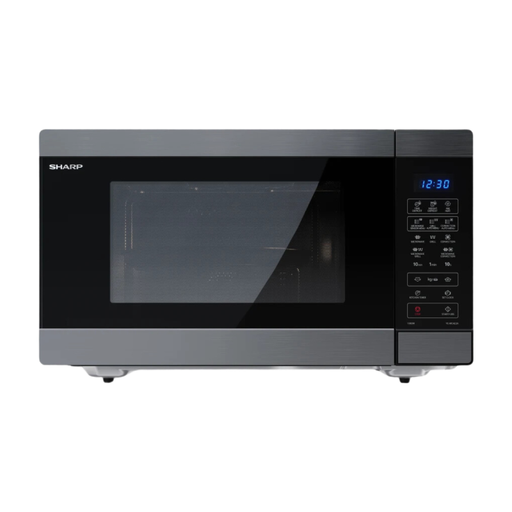 Image unavailable
SHARP YC-MC422AE-SB, 42 L combination microwave oven
Worth considering if you want microwave and convection cooking in one appliance. It has a stated capacity of 42 L. If defrosting is important to you, check the programmes available on the exact model, as well as its installation requirements in the instructions.
View on Joybuy
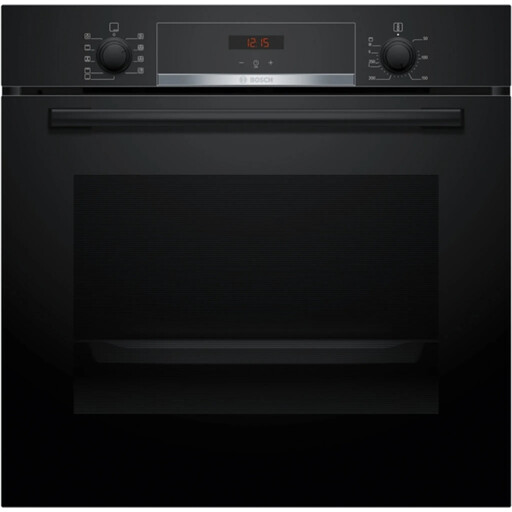 Image unavailable
Bosch HBA514BB3, 71 L built-in fan oven
Worth considering if oven cooking is still your priority. This built-in model has a stated capacity of 71 L and 3D fan cooking. You’ll need a separate appliance to reheat or defrost food using microwaves. Also check that the cabinet space is suitable, following the oven’s instructions.
View on Joybuy
Frequently asked questions
Is a combination microwave oven always a better choice than a fan oven?
No. It depends on what you cook and how much you’ll use the microwave function. Tests by ADEME and the National Consumer Institute, covering four combination ovens and ten built-in fan ovens, don’t show that combination ovens are generally better for every recipe and model.
Can I put any food tray in a combination oven?
No. The container must be suitable for the mode you’re using, so check its guidance and the oven’s instructions before using the microwave, grill or convection function. For food packaging designed for microwave use, Anses recommends following the preparation instructions.
How can I tell if the oven will fit in the space available?
Measure the cabinet space or worktop, then compare the measurements with the dimensions and installation requirements for the exact model. Check the instructions for ventilation clearances and door opening space; the external dimensions alone aren’t enough to confirm it will fit.


