For everyday reheating and defrosting
You mainly want to prepare everyday meals in student accommodation or a second home, without needing to cook in an oven. UFC-Que Choisir distinguishes these uses from browning and oven cooking.


If you mainly reheat and defrost food, a standard microwave may be all you need. Add a grill if you want to brown or crisp food, and check that the cooking mode you want, particularly convection, is clearly specified before choosing a combination model. UFC-Que Choisir explains that some combination models bring together microwave and oven functions. However, the study by ADEME and the National Institute of Consumer Affairs cited here concerns built-in ovens, so it does not compare a freestanding combination microwave with a mini oven.
You mainly want to prepare everyday meals in student accommodation or a second home, without needing to cook in an oven. UFC-Que Choisir distinguishes these uses from browning and oven cooking.
You’d also like to brown food or cook certain dishes in the oven. Compare the modes each appliance actually offers: Panasonic and Moulinex product specifications show how designs and functions can differ.
You want to keep the number of appliances to a minimum, while checking the external dimensions, handle and ventilation clearances required. Samsung’s general guidance is no substitute for the instructions for the model you choose.
For consumers in France looking for an appliance for a small kitchen without a suitable conventional oven, the choice mainly comes down to useful functions, available space, ease of use and the conditions of use you’ll need to check.
Consider this if: you mainly reheat and defrost food, and don’t regularly cook in an oven.
Keep in mind: the microwave function doesn’t replace a grill or oven functions.
Consider this if: you mainly need a microwave, with browning or crisping as an added extra.
Keep in mind: a grill doesn’t mean the appliance also has a convection function.
Consider this if: you want to reheat, defrost and cook in an oven using a single appliance, and convection is explicitly specified.
Keep in mind: combining functions doesn’t guarantee a smaller footprint once installed or lower electricity consumption.
Consider this if: oven cooking is your main priority and the modes suit the recipes you make.
Keep in mind: a defrost programme doesn’t mean the appliance has a microwave function.
| Priority | What to check | Who is this for? |
|---|---|---|
| Choose the functions you need | Tell the difference between microwave, grill and convection; check the modes and temperatures that suit the recipes you have in mind. | To make the dishes I actually cook, I want to check the modes rather than rely on the number of programmes. Around 34% of consumers prioritise cooking functions. |
| Allow for the space it takes up when installed | Measure the width, height and depth, including the handle; follow the clearances specified in the instructions for the exact model. | In a small kitchen, I need to be able to install the appliance and open its door without compromising ventilation. Around 33% of consumers prioritise the space needed once an appliance is installed. |
| Make everyday use easier | Identify the controls you’ll need and check which containers and accessories are suitable for each mode. | If I use the appliance often, I want settings and maintenance that suit my habits. Around 20% of consumers prioritise ease of everyday use. |
| Understand how it works and what the warranty covers | Distinguish between rated power and energy use per cooking session; check the terms of the statutory guarantee and any commercial warranty. | I want to understand how much electricity the appliance is designed to use and what protection applies, without confusing power with consumption. Around 13% of consumers prioritise the cost of ownership. |
The stated depth may not include the handle, and ventilation clearances vary by model.
Measure the available space, then check the installed dimensions and clearances in the instructions for the exact model. Samsung notes that its recommendations for free space vary by model.
Forgetting about the handle, door opening or clearances could mean having to rearrange the space you’d set aside.
This label doesn’t tell you how the oven mode heats: for example, a model may specify top and bottom heating rather than convection.
Check the stated heating mode and choose one that suits the recipes you plan to make. Panasonic lists different functions for its NN-CT57RM and NN-DF38PBEPG models.
The stated power rating for a mode doesn’t tell you how much energy a recipe will use. The study by ADEME and the National Institute of Consumer Affairs concerns built-in ovens and doesn’t demonstrate energy savings for the freestanding models compared here.
Distinguish between the electrical power required and energy use per cooking session. Only use an energy-saving figure when the appliances and test conditions are comparable.
Moulinex’s stated 15-year repairability commitment doesn’t mean the appliance will work for 15 years without costing you anything.
Distinguish this commitment from the statutory guarantee of conformity and any commercial warranty. For purchases from a professional seller covered by this guarantee, Service-Public states that you have two years from delivery to report a lack of conformity.
The NN-CT57RM and NN-DF38PBEPG models show two types of combination appliance with different functions.
The MG23K3515AK/EF is an example of a microwave with grill, with dimensions and power specifications for this model.
The Optimo range includes compact ovens; the OX444810 specifications list several cooking modes.
This selection features freestanding microwaves, either standard or with a grill, for reheating and defrosting, with a grill as an extra depending on how you use the appliance. For an electrical appliance sold in France, check that it carries the CE marking required by the applicable regulations; the Directorate-General for Enterprise outlines the relevant rules.
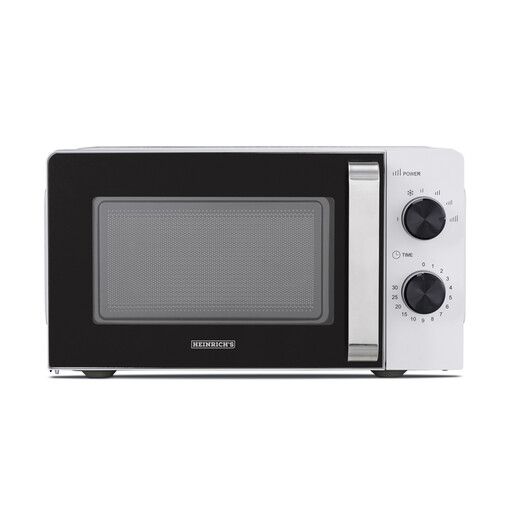 Image unavailable
Worth considering if you mainly need to reheat and defrost food.
700 W; 6 power levels; 30-minute timer; defrost function; 360° turntable.
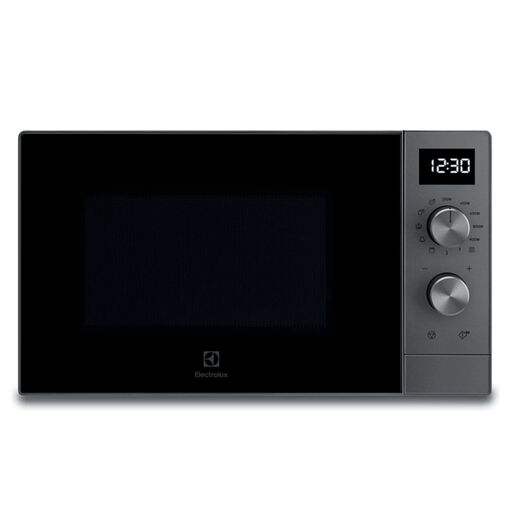 Image unavailable
Worth considering if you want microwave functions and a grill in a freestanding appliance.
25 L; 900 W; titanium finish. The product title identifies this as a model with grill.
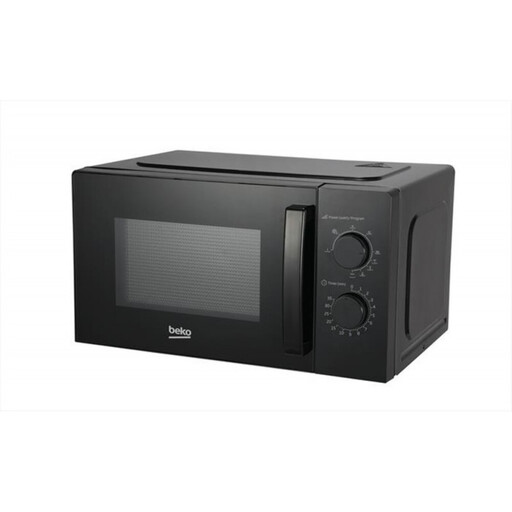 Image unavailable
Worth considering if you’re looking for a 20 L microwave with a grill function.
700 W; black. The product title specifies a grill function.
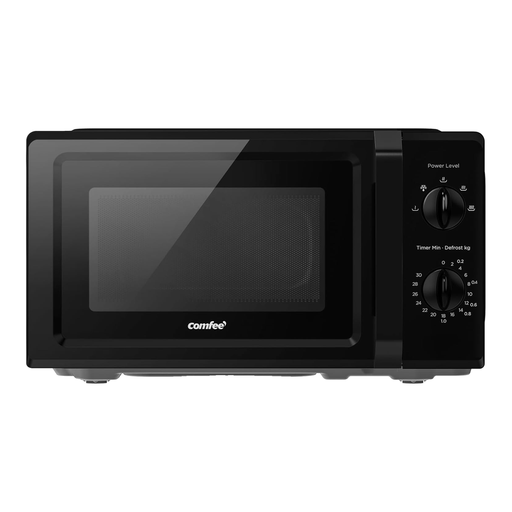 Image unavailable
Worth considering if you’re looking for a microwave to reheat and defrost food.
700 W; 5 power levels; 30-minute timer; 245 mm turntable; black.
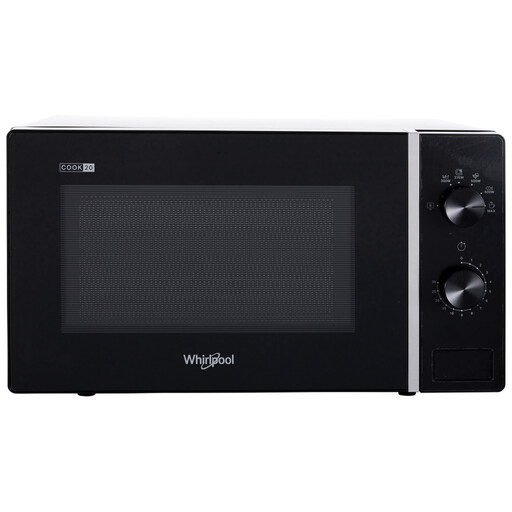 Image unavailable
Worth considering if you want a 20 L microwave with a grill function, as well as reheating and defrosting.
700 W. The product title specifies a grill function.
No. Check the heating type listed for the exact model. Panasonic, for example, offers a combination model with top and bottom heating; if you want convection, it should be explicitly specified.
Not based on the appliance dimensions alone: you also need to allow for the handle and ventilation clearances. Samsung notes that the required free space varies by model and recommends checking the instructions for the exact model.
The cited study by ADEME and the National Institute of Consumer Affairs doesn’t establish any general energy savings between these two types of appliance, as it concerns built-in ovens. To compare energy use, check that the appliances and test conditions reflect the uses you have in mind.
For a purchase covered by the statutory guarantee of conformity from a professional seller, Service-Public states that the fault must appear within two years of delivery. This statutory guarantee is separate from any commercial warranty.
No. The CE marking is neither an indication of geographical origin nor an independent performance certification. The Directorate-General for Enterprise states that equipment covered by RoHS rules must carry the CE marking; check the requirements that apply to the appliance in question.