Households that shop weekly
If you store food for several people and want an integrated freezer, look separately at the space for fresh and frozen food. Total capacity alone won’t tell you whether both compartments will suit your needs.


To avoid buying an oversized appliance, start with usable capacity: UFC-Que Choisir suggests 100 to 150 L for one person, plus 50 L for each additional person. Adjust this according to your shopping habits and how much room you need for frozen food. A combi fridge freezer is a good choice if you want an integrated freezer in a more compact width. Consider a multidoor model if you value extra capacity and easy access to food, but check it will fit along the delivery route first. Storage zones can help you organise food in either format, but they don’t replace checking the temperature.
If you store food for several people and want an integrated freezer, look separately at the space for fresh and frozen food. Total capacity alone won’t tell you whether both compartments will suit your needs.
A larger model can make it easier to separate different foods, provided the compartment layout suits your shopping habits. If you’re considering a multidoor model, measure the delivery route too: UFC-Que Choisir notes that its weight and dimensions can be comparable to those of an American-style fridge freezer.
If your fridge freezer is near your living area, compare noise levels as well as capacity. The energy rating, annual energy consumption and capacity are among the details available on the energy label and in the European EPREL database, according to the European Commission.
Consider it: if you want an integrated freezer and a more compact width for your household’s shopping.
Things to weigh up: check that the drawers and freezer capacity can really accommodate the food you buy.
Consider it: if you do big shops and prioritise easy access to the fridge and separate food storage.
Things to weigh up: its size and weight can make installation more difficult. For this format, UFC-Que Choisir compares them to those of an American-style fridge freezer.
Storage zones aren’t a third format. First choose compartments that suit your shopping habits, then look at the zones offered by each model.
| Priority | What to check | My needs |
|---|---|---|
| Usable capacity | Compare the fridge and freezer capacities separately. UFC-Que Choisir suggests 100 to 150 L for one person, plus 50 L for each additional person, as a starting point. | I shop for several people, but how much freezer space I need also depends on how often I shop and which meals I prepare in advance. |
| Installation | Check the width, height, depth and door clearance. Also measure the packaged appliance and every part of the delivery route. | A large capacity won’t help if the fridge freezer won’t fit up the stairs or its doors can’t open properly once it’s in place. |
| Storage and cooling | Look at the drawers, shelves, adjustable zones and defrosting system. Anses recommends keeping food between 0 °C and +4 °C in the coldest part of the fridge. | I regularly separate vegetables, sensitive foods and homemade meals. Dedicated zones appeal to me if they have the right amount of space and settings for these foods. |
| Noise and energy use | For appliances with similar capacities and formats, compare kWh/year and noise levels in dB. According to the European Commission, the energy label and EPREL also provide access to capacity and dimensions. | In an open-plan kitchen, I’ll consider noise as well as annual energy use, rather than choosing on the basis of the energy rating alone. |
| Convenience features | Think about whether you’d use a door alarm, a humidity-controlled zone, a water dispenser or smart features. Check the installation requirements for the specific model. | A feature that makes everyday storage easier matters more to me than a smart option I won’t use. |
A large appliance may still have too little freezer space for a household that cooks ahead, or devote a disproportionate amount of space to frozen food you rarely eat.
Think about what you usually buy, then compare fridge and freezer capacities separately. UFC-Que Choisir’s per-person guideline is a starting point for working out the size you need, not a rule for how the litres should be divided.
UFC-Que Choisir notes that a multidoor model’s weight and dimensions can be comparable to those of an American-style fridge freezer. So a space that’s big enough doesn’t guarantee you can get the appliance there.
Ask the retailer for the packaged dimensions, then measure doorways, corridors, corners and lifts. Check the delivery and installation arrangements before you order.
Smart features or a water dispenser won’t make up for poorly divided capacity, unsuitable noise levels or dimensions that don’t fit your space.
Start by comparing the compartments, dimensions, kWh/year, noise levels and interior layout. Then consider convenience features based on how you’ll use them.
A specialist drawer or frost-free system doesn’t remove the need to store food correctly and check the fridge temperature.
Anses recommends keeping food between 0 °C and +4 °C in the coldest part of the fridge. Store the most sensitive foods there and avoid overfilling the appliance so air can circulate.
These models show a range of configurations worth comparing; one model’s features don’t necessarily apply to the whole brand.
Bosch’s French range includes a freestanding multidoor fridge freezer that’s 90.5 cm wide.
In France, LG lists the GBV3200DSW combi fridge freezer with a stated capacity of 387 L, a noise level of 35 dB and Door Cooling+.
The Samsung RM70F63NER multidoor model is listed with a capacity of 648 L. Its French product details give dimensions of 912 mm wide, 1 853 mm high and 683 mm deep.
Haier describes the HFR7819ENGC as a four-door French Door model with No Frost, My Zone and Humidity Zone.
These Joybuy models offer different ways to store your household’s shopping: multidoor, combi, dedicated storage zones or side-by-side. Compare their compartments and check the dimensions of each model before choosing.
 Image unavailable
Its four doors may appeal if you want separate access to different storage areas. The model name lists a capacity of 467 L, Total No Frost and an E energy rating. Check the space for fresh and frozen food, and make sure the doorways along the delivery route are wide enough.
 Image unavailable
Worth considering if you’d like dedicated spaces to organise a varied shop: the model name features My Zone, three doors and a capacity of 360 L. It also lists Total No Frost, an E energy rating and Wi-Fi. Most importantly, check the fridge and freezer capacities separately.
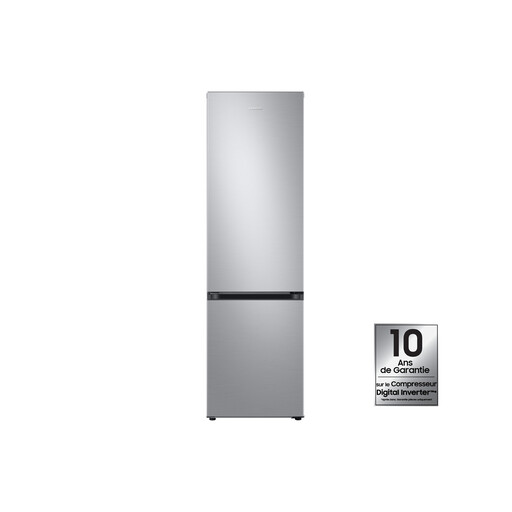 Image unavailable
This 390 L combi fridge freezer is worth comparing if you prefer this format to a multidoor model. Its name gives an energy rating of C. Check the capacity of each compartment, then the height, depth and delivery route.
 Image unavailable
If you store lots of frozen food, compare its stated capacities of 333 L for the fridge and 192 L for the freezer with your needs. Its name lists No Frost, 37 dB and an E energy rating. Check the model’s external dimensions and annual energy consumption on its product details page.
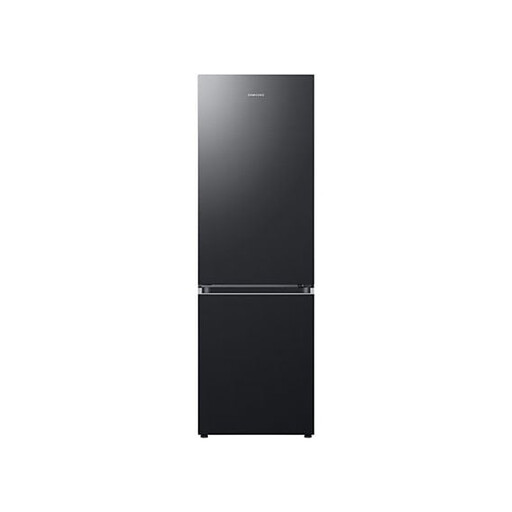 Image unavailable
This 344 L combi fridge freezer is worth considering if you want to stick with this format for your household’s shopping. Its name gives an energy rating of D. Before comparing it with another model, check the capacity split between fresh and frozen food, annual energy consumption, noise levels and full dimensions.
UFC-Que Choisir suggests 100 to 150 L for one person, plus 50 L for each additional person, as a starting point. Adjust this guideline to suit how often you shop and what meals you store, then check the available capacity for fresh and frozen food separately.
Compare appliances with similar capacities and formats using their kWh/year and noise levels in dB, rather than relying on their energy ratings alone. According to the European Commission, the QR code on the energy label links to EPREL, which includes details such as annual energy consumption, noise, dimensions and capacity.
No. A dedicated zone helps you organise food, but it doesn’t replace temperature control: Anses recommends keeping food between 0 °C and +4 °C in the coldest part of the fridge. Store the most sensitive foods there and leave room for air to circulate around the appliance.
Measure the space where it will go, the door clearance and the entire delivery route, then ask for the dimensions of the packaged appliance. UFC-Que Choisir notes that multidoor models can be comparable in weight and size to an American-style fridge freezer, so check narrow doorways and the lift too.