Everyday reheating
If you mainly reheat meals and defrost food, a separate microwave may be enough if you want to keep your oven free for other types of cooking. UFC-Que Choisir describes the microwave as a handy way to reheat food quickly.


If you mainly reheat and defrost food, and already have an oven that suits you, a separate microwave will cover your main needs. A combi is a better choice if you also plan to use its grill and convection functions. Before replacing your oven, though, check that its temperature range and dimensions suit the recipes you make.
If you mainly reheat meals and defrost food, a separate microwave may be enough if you want to keep your oven free for other types of cooking. UFC-Que Choisir describes the microwave as a handy way to reheat food quickly.
A combi may appeal if you want to use the microwave, grill and convection functions in one appliance. The Panasonic NN-CD87KSUPG is an example of this type of set-up, although its features should not be assumed to apply to every model.
If you’re thinking of replacing your oven, compare the temperatures and dish sizes your recipes require with the appliance’s specifications. A question about defrosting bread, posted on the Darty customer service community, shows how important the expected result can be, but doesn’t establish how well a particular model performs.
Compare appliances based on your main priority: reheating and defrosting, sticking with your oven recipes, fitting the appliance into your kitchen, or managing the cost of buying and running it. The proportions below relate to consumers faced with this choice, grouped by their main priority.
| Priority | What to check | Who is it for ? |
|---|---|---|
| Reheating and defrosting | Check that the specific model offers the functions and settings you need. UFC-Que Choisir describes the microwave as a handy way to reheat food quickly. | I want to reheat and defrost without paying for functions I’m unlikely to use, while keeping my oven for other dishes. Around 31 % of consumers in this group put these uses first. |
| Oven recipes | Compare the temperatures your recipes require with the range listed for the model. The Panasonic NN-CD87KSUPG is listed with a convection range of 100 to 220 °C, as well as a 40 °C setting. | If I replace my oven, I want to know whether the temperatures and dish sizes I use will still be suitable. Around 25 % of consumers in this group prioritise being able to keep making their usual recipes. |
| Size and installation | Compare the appliance’s external dimensions with the installation instructions for the specific model: they don’t, on their own, tell you the required niche size or clearances. Bosch lists the CMG7761B1 as 455 × 594 × 548 mm. | When space is limited, I check the size and installation requirements before choosing. Around 25 % of consumers in this group prioritise how well the appliance fits into their kitchen. |
| Cost and energy use | UFC-Que Choisir describes combi appliances as more expensive than basic models. Panasonic claims energy savings of up to 43 % for the NN-CD87 when using combi cooking; this manufacturer claim doesn’t tell you how much energy you’ll use over a year. | I’d rather compare the cost of the appliance with how I plan to use it than pay for settings I’ll rarely use. Around 19 % of consumers in this group prioritise the costs of buying and running an appliance. |
Size and functions are two different things. Bosch lists compact ovens and microwave combi ovens as separate categories in its range.
Check that the exact model explicitly includes a microwave function rather than relying on the word “compact” alone.
A combi’s extra functions are only useful if they match the dishes you actually plan to make. UFC-Que Choisir describes combi appliances as more expensive than basic models.
Make a list of the things you usually cook and check that the grill and convection functions meet a genuine need before you choose.
Panasonic’s figure applies to the NN-CD87 and combi cooking; it doesn’t mean every appliance or dish will deliver the same savings.
Compare energy use for the same dish, and bear in mind which model and conditions the claim relates to.
The French range includes solo microwaves, grill microwaves and combi models. The NN-CD87KSUPG is an example of a 34 L combi with microwave, grill and convection functions.
The French range includes standard, compact and built-in combi ovens. The CMG7761B1 is a compact built-in model with a microwave function.
The French MC28M6035CK/EF is presented as a 28 L microwave combi, with an output power of 900 W.
This selection includes separate microwaves and combi models, so you can compare everyday reheating with the option of having extra cooking functions.
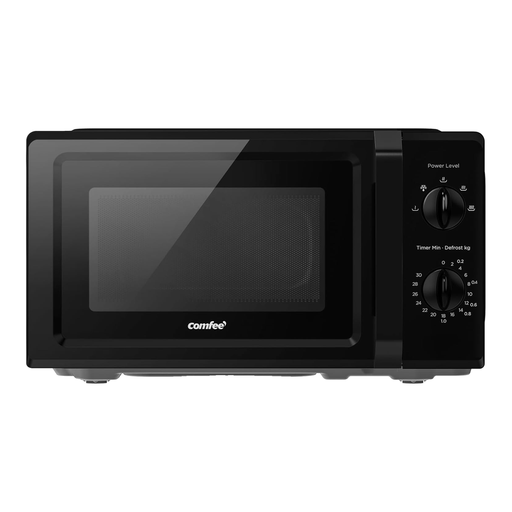 Image unavailable
This solo model may suit you if you want to reheat and defrost food while keeping a separate oven.
The title lists 700 W, five power levels, a defrost function, a 30-minute timer and a 245 mm turntable.
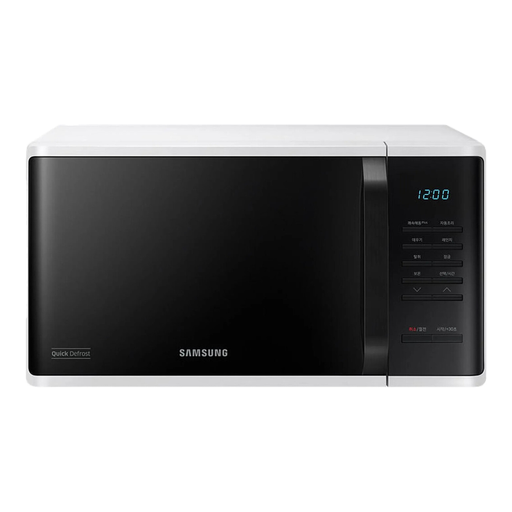 Image unavailable
A solo model is worth considering if reheating and defrosting are your priorities, and you don’t need to combine microwave and oven functions.
The title lists a 23 L capacity and a quick defrost function. Check the specifications for the exact variant before comparing its power or programmes.
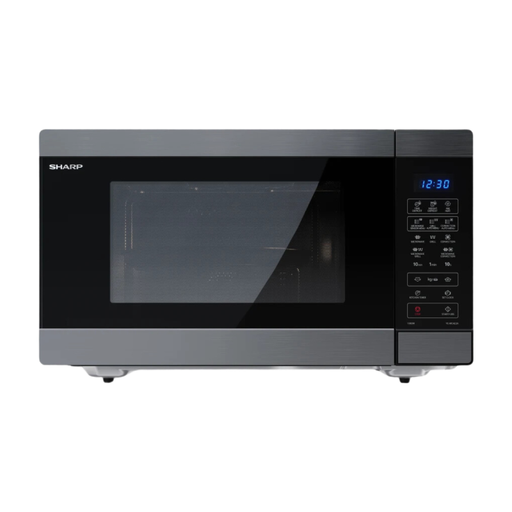 Image unavailable
This model may appeal if you want to combine microwave and cooking functions in one appliance.
The title describes it as a 42 L, 3-in-1 combi. Its listed temperature range is 140 to 230 °C, so compare it with the temperatures your recipes require.
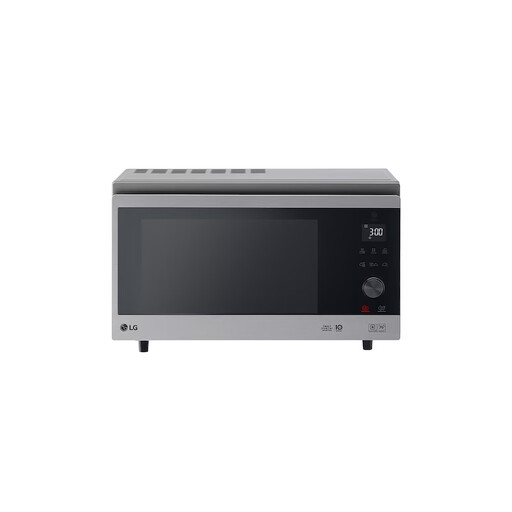 Image unavailable
A combi may be a good choice if you want to reheat food and have cooking functions in the same appliance.
The title lists a 39 L capacity. Its advertised temperature range is 40 to 200 °C; check that it suits the recipes you make.
No. Bosch lists compact ovens and microwave combi ovens as separate categories in its range. Check the functions listed for the exact model, not just the word “compact”.
Not automatically. The convection function on the Panasonic NN-CD87KSUPG is listed as reaching up to 220 °C, so a recipe that requires a higher temperature falls outside that range. This doesn’t mean that all cakes, pizzas or bread will turn out badly.
No, these figures aren’t interchangeable. The Bosch CMG636BW1 specifications distinguish between 900 W of microwave power and 3 600 W of connected load, with 16 A and 220–240 V. This example applies to this model only; check the documentation for the model you’re considering.
Follow the preparation instructions on the microwave-safe product. Anses makes this recommendation in the context of research into substances migrating from packaging into food; it isn’t a general approval for every type of container.
No. Panasonic’s claim applies to the NN-CD87 and combi cooking. It isn’t enough to calculate your annual bill without comparing the same dishes, cooking times and energy use.