How do the options compare?
First decide whether you want the microwave built into your oven, in a separate appliance or not to be a deciding factor. Then check the capacity and installation requirements of the model you choose.
Fan oven
Consider this if: oven cooking is your main use and a microwave isn’t essential.
The trade-off: it doesn’t combine microwave reheating and defrosting functions in the same appliance.
Microwave and convection combi oven
Consider this if: you expect to use both modes regularly and want them in one appliance.
The trade-off: sizes and capacities vary between models. A compact combi oven may not offer the cooking space you’re looking for.
Separate oven and microwave
Consider this if: you want to keep oven cooking and microwave functions in separate appliances.
The trade-off: you’ll need space for both appliances, although you can replace each one separately later on.
| Priority |
What to check |
Who it matters to |
| Reheating and defrosting |
Check the microwave and defrost modes for the model, then look at its usable capacity. |
When I often need to reheat portions or defrost food, I want these tasks to fit easily into my cooking set-up. Around 42% of consumers make this their priority. |
| Oven cooking |
Compare the cavity capacity and the cooking modes you’ll use. |
If I mainly prepare oven-cooked dishes, cavity space and cooking functions matter more to me. This is the priority for around 33% of consumers. |
| Fitting and flexibility |
Measure the housing unit and check the instructions for clearances, ventilation and electrical connection requirements. |
If I have a fixed-size housing unit, or want to be able to replace my appliances separately, their positioning guides my choice. Around 25% of consumers put this need first. |
Don’t judge electricity use by oven type alone. ADEME explains that actual consumption depends on factors including appliance size and how it’s used. Its test with the National Consumer Institute found that results varied depending on the dishes and models tested.
Brands to consider
These ranges give you different configurations to compare. The features mentioned apply to the specific models listed, not every appliance from each brand.
Bosch
According to Bosch’s specifications, the compact built-in CMG7761B1 combi oven has a 45 L cavity and a stated maximum microwave power of 900 W.
- The specifications list fan cooking, as well as pyrolytic and hydrolytic cleaning functions for this model.
- At 455 mm high, the appliance may not fit your housing unit or offer the capacity of a 60 cm oven.
Siemens
Siemens lists a 67 L cavity and a maximum microwave power of 800 W for its built-in HM778GMB1 combi oven.
- This model combines fan cooking and a microwave function with telescopic rails, according to the manufacturer.
- At 595 mm high, it’s important to check your housing unit dimensions and the installation instructions.
Smeg
Smeg’s Linéa range includes 60 cm fan ovens and compact 45 cm microwave combi ovens.
- These two configurations let you compare an oven dedicated to cooking with an appliance that combines several functions.
- The range’s format alone doesn’t confirm the built-in dimensions or functions of the model you choose.
Whirlpool
Whirlpool combi ovens offer different functions depending on the model. The WCT9A9PHTSBF specifications list a 52 L capacity, 950 W microwave power, fan-assisted cooking and steam.
- This combination of modes may suit households that genuinely plan to use them.
- Check the dimensions and included accessories. A particular mode on its own doesn’t guarantee how your dishes will turn out.
Electrolux
According to Electrolux’s specifications, the EVL9E2XT compact combi oven combines oven and microwave functions in a 44 L cavity.
- The specifications include fan cooking, reheating and defrosting.
- Its stated built-in dimensions of 450 × 560 × 550 mm and total electrical power of 3 000 W mean you’ll need to check the planned space and electrical connection.
Appliances available on Joybuy
These appliances show two ways to meet your needs: combine several functions in a microwave combi oven, or choose a built-in fan oven. Before choosing, check the instructions for the modes you need and the installation requirements for each model.
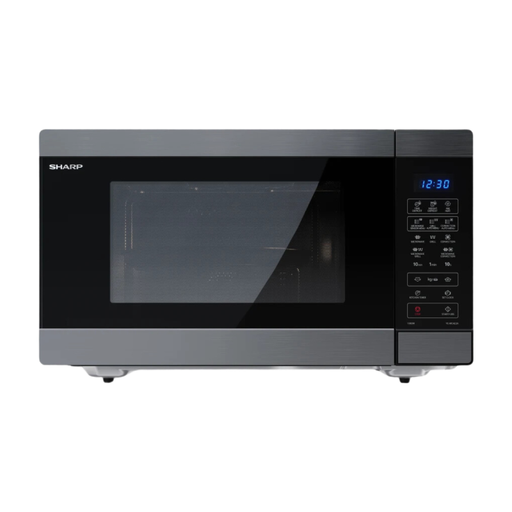 Image unavailable
SHARP YC-MC422AE-SB, 42 L microwave combi oven
Worth considering if you want one 42 L appliance for several cooking and reheating tasks. It’s described as a 3-in-1 model. Install it in accordance with the instructions; don’t assume it’s suitable for fitting into a housing unit.
View on Joybuy
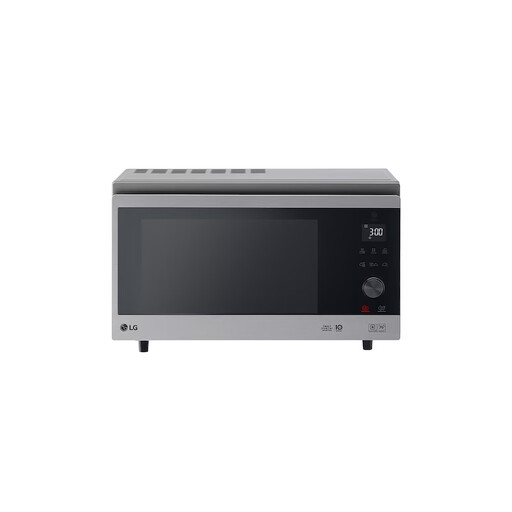 Image unavailable
LG MJ3965ACS, 39 L black microwave combi oven
Consider this if you’re looking for a 39 L microwave combi oven. Check the instructions to confirm it has the modes you need, which accessories are suitable, how it should be installed and what ventilation clearances are required.
View on Joybuy
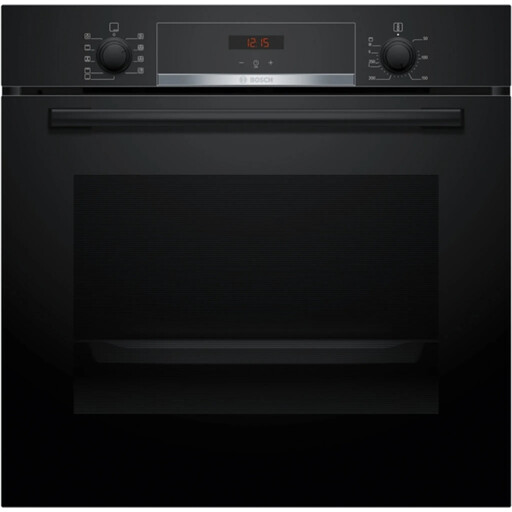 Image unavailable
Bosch HBA514BB3, 71 L built-in oven
Worth considering if your priority is cooking in a 71 L built-in oven with 3D Hotair. Check the configuration before buying: the title suggests a double oven, but the detailed information describes a single cavity. Also check the planned housing unit and electrical connection.
View on Joybuy
Frequently asked questions
Does a combi oven always use less energy than a fan oven?
No. In a test of four combi ovens and ten fan ovens, ADEME and the National Consumer Institute found that efficiency varied depending on the dishes, brands and models, with no clear advantage for combi ovens. When choosing, check the exact model and the modes you’ll use.
What should I measure before replacing a built-in oven?
Measure the height, width and depth of the housing unit, then compare them with the installation diagram for the new model. Also check the instructions for ventilation clearances and electrical connection requirements: a similar-looking front doesn’t guarantee a compatible fit.
Are all containers suitable for the microwave mode on a combi oven?
No. Check that the container is suitable for the mode you’re using and follow its instructions, as the DGCCRF advises. For packaged food intended for microwave use, Anses recommends following the power and cooking time guidance on the packaging.
Does a commercial warranty replace the statutory guarantee of conformity?
No. In France, according to the Ministry of the Economy, the statutory guarantee of conformity applies to new, second-hand and refurbished goods sold by a business to an individual. Any commercial warranty is separate: check what it covers and excludes, and don’t confuse it with this legal protection.


