
Livraison le jour même ou le lendemain

Qualité garantie

Débloquez vos offres de bienvenue: Livraison GRATUITE | Jusqu'à -80 % | 30 jours d'essai gratuits à JoyPlus
Téléchargez l'application
Choosing colouring pens isn't just about counting how many colours come in a box. For a child, a pen that dries out quickly or has a tip that flattens soon becomes unusable. For a drawing enthusiast, ink that's too uniform can limit creative effects. And when it comes to lettering, a standard tip isn't always enough to achieve consistent strokes.
So before you place an order, it's worth looking at a few concrete features. Washability, tip shape, grip and the surface you're using will often matter more in daily use than the promises printed on the packaging.
The term washable usually refers to skin and most fabrics. However, it doesn't guarantee that every trace will vanish from a sofa, carpet or delicate garment. An old stain will also be harder to remove than a fresh mark.
For activities with young children, choose washable pens for kids that are water-based, and have a smock or protected surface ready. Even with washable colouring pencils, it's best to clean up marks without delay.
A fine tip is ideal for outlines and details, but it covers large areas slowly. On the other hand, a broad tip can lack precision. Brush pens offer great versatility, while dual-tip pens often combine a brush tip with a chisel tip.
The right choice therefore depends on the activity you have in mind: colouring, drawing, decorative writing, manga, watercolour or window decoration.
A pack of 48 or 65 colours might seem like good value. Yet a smaller, well-organised palette can often be more practical for school, travel or early art activities. Also remember to check whether a case is included, how easy the colours are to identify, and how easily the lids go back on.
Water-based pens are suitable for most paper-based activities. Their ink can sometimes be diluted or blended with a damp brush to achieve a watercolour-like effect. This technique works best on paper that's thick enough – a sheet that's too thin may buckle.
Watercolour pens intended for artistic drawing usually have a flexible tip and water-soluble ink. They're better suited to sketchbooks, journaling and illustrations than to toddlers' colouring activities.
For decorating glass surfaces, use window pens designed specifically for glass. Their ink should wipe off with a damp cloth, but it's still a good idea to test on a small area first.
For a child who presses down hard, a spring-mounted or reinforced tip can help prevent deformation. Also pay attention to the age recommendation on the packaging, particularly because of any small parts and lids.
A triangular or chunky barrel can help young children hold their pen more comfortably. To make the ink last longer, replace the lids after every session and store the pens according to the manufacturer's instructions. Some models need to be kept horizontally to maintain a steady ink flow.
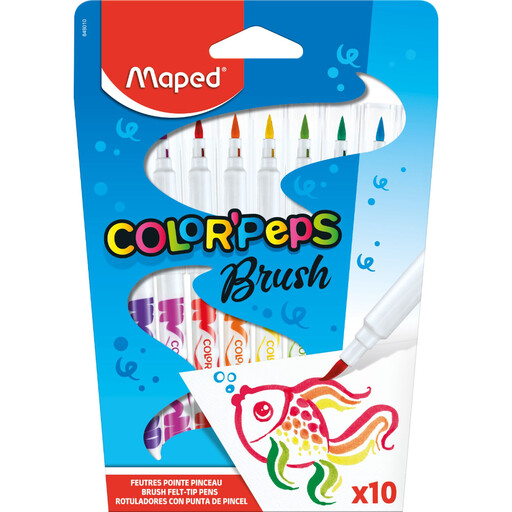
Why this suits this profile: This pack of 10 colours gives you a versatile starter palette for drawing, comics and decorative writing, without building up a collection you don't need.
The flexible 2.8 mm brush tip means you don't need to buy separate pens for fine lines and filling in areas. The water-based ink is washable from skin and most fabrics.
10 colours, ergonomic grip zone and flexible tip for varying stroke width.
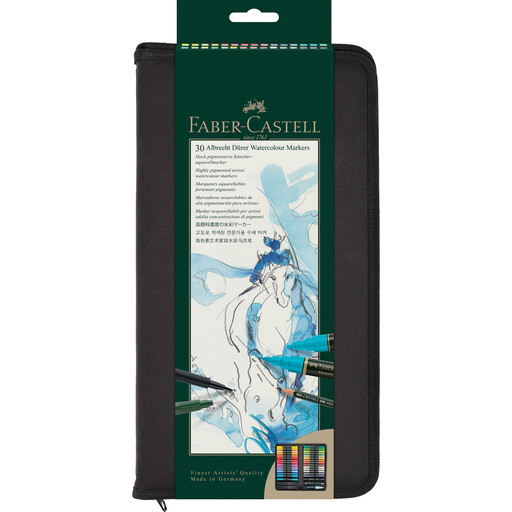
Why this suits this profile: Presented in a case, this set is aimed at illustrators who are already comfortable with the basics and watercolour enthusiasts who want to carry a well-organised palette with them.
The two tips reduce the compromise between precision and coverage. The water-soluble ink lets you create gradients with a damp brush on suitable paper.
30 colours, brush tip and fine tip, zip-up case and water-activated ink.
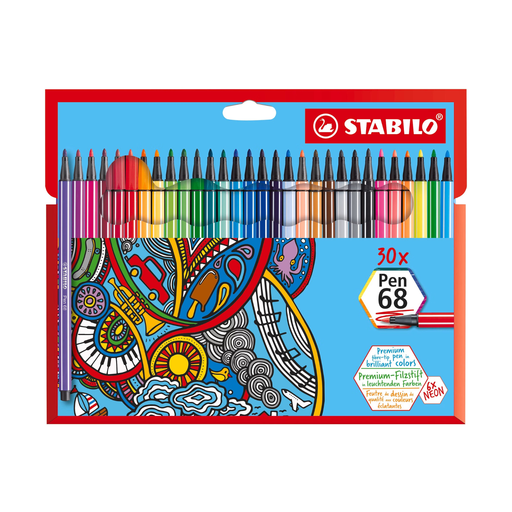
Why this suits this profile: This set is suitable for regular colouring, drawing, creative journaling and any activity that needs a consistent line.
The 1 mm bullet tip is designed to draw a consistent line. The advertised dry-resistant technology is said to withstand up to 24 hours without a cap, according to the product sheet. It's still best to put the lids back on after each use.
30 colours, water-based ink advertised as odour-free and a barrel made from 96% bio-based plastic, according to the product sheet.
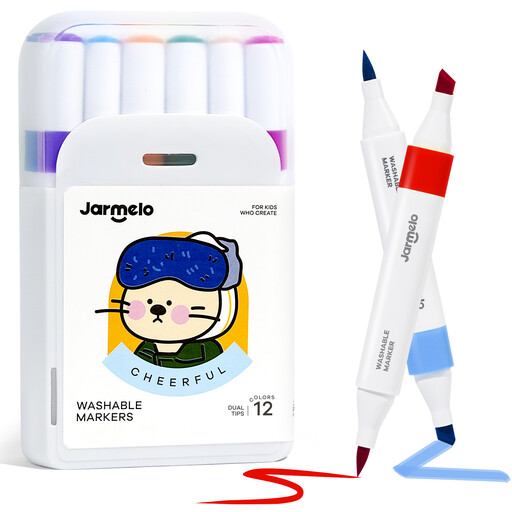
Why this suits this profile: The set combines practical storage, a chunky barrel that's easy to hold and two types of tips for children who move from colouring to drawing and then to their first decorated letters.
The brush tip and chisel tip mean you don't have to use just one format for every action. The water-based ink is advertised as washable from skin and most fabrics.
12 colours, case with handle, ventilated lids and two tips per marker.
We've put together a full selection, updated in real time, of products that meet these exacting criteria and European safety standards.
It depends on the model. Check the recommended age and warnings from the manufacturer. Some products are not recommended for children under 3, while others have a minimum age of 4 or 6. With young children, adult supervision is essential, particularly because of the lids and small parts.
Put every lid back on immediately after use, avoid leaving the tips exposed to sunlight and store the pens in their case. For liquid-ink models, storing them horizontally can help maintain a more consistent ink flow. Don't add water to try to revive the ink unless the manufacturer says you can.
For lettering, a flexible brush tip lets you vary the stroke thickness depending on pressure. Pens for drawing and lettering, especially those with a brush tip, are suitable for letters, outlines and filling in areas. For watercolour, choose a water-soluble ink and use suitable paper to minimise bleeding and buckling.