
Livraison le jour même ou le lendemain

Qualité garantie

Débloquez vos offres de bienvenue: Livraison GRATUITE | Jusqu'à -80 % | 30 jours d'essai gratuits à JoyPlus
Téléchargez l'application
Choosing a set of colouring pens isn't just about counting the colours. The type of nib, the ink formulation and the surface you're using often matter far more. A nib that flattens, ink that bleeds through the paper or a poorly thought-out palette can quickly turn an appealing set into a disappointing purchase.
Here are the criteria to consider before choosing watercolour pens, brush pens, artist markers or acrylic pens.
A set of 50 or 65 shades offers a generous palette, but that doesn't necessarily replace a dual-tip set or one designed for a specific purpose. In brush lettering, the flexibility and precision of the nib matter more than the number of colours. For filling in small areas, a fine, consistent nib will often be more enjoyable to use.
Also look at the composition of the palette: greys, browns, skin tones, cool colours and dark shades are invaluable for creating shadows and nuanced illustrations. A set made up entirely of very bright colours will quickly show its limitations.
Transparent, water-based inks don't behave like opaque paint. On thin paper, they can create halos or bleed through the page. To achieve beautiful gradients, it's best to use watercolour paper or, at the very least, a surface that's thick enough.
Acrylic markers, whose ink is opaque, can be used on wood, glass, ceramic, metal or canvas. However, always test on a small area first: adhesion and the final result depend on the surface preparation and its porosity.
A nib left exposed to the air dries out quickly, especially if the cap doesn't seal properly. Horizontal storage is generally recommended to ensure even ink distribution. To extend the life of your pens, recap them immediately after use and avoid very hot places or direct sunlight.
The term 'flexible' doesn't mean all nibs offer the same range of stroke width. For beginners, a nib that's soft but still controllable will be easier to master than a very responsive model.
A water-based ink is generally suitable for paper and allows you to create blends or watercolour effects using a damp brush. Transparent inks let the paper show through, while acrylic inks offer more opaque coverage, even on some dark surfaces.
Don't assume that a 'bleed-proof' marker will work on all papers. The weight, texture and drying time of the paper strongly influence the result. In a colouring book or bullet journal, slip a protective sheet under the page to avoid unpleasant surprises.
The right set depends above all on how often you plan to use it. A set of 6 to 12 colours is enough to try out a technique or add to a collection. Sets of 24 to 36 colours offer more scope for drawing, manga, creative journaling and illustration. Larger sets become worthwhile if you colour regularly and want to avoid buying more pens as your projects progress.
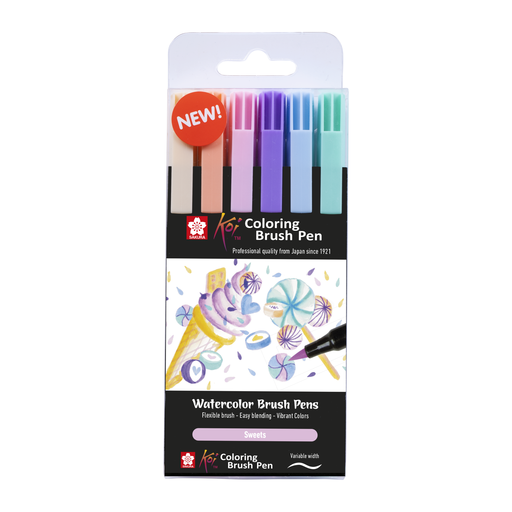
Why this choice suits this profile: With its six colours, this set lets you discover brush pens without investing in a large palette. Its transparent, water-based ink is suitable for sketches, notebooks and your first attempts at gradients.
Its compact format stops you buying a large palette before you know if watercolour ink really suits your practice.
Flexible brush nib, blendable ink and the ability to create effects with water.
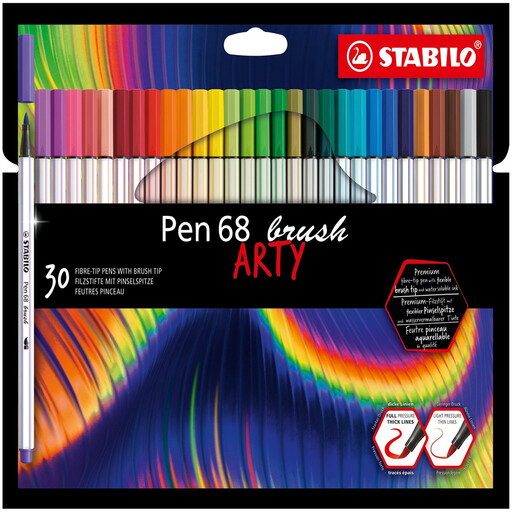
Why this choice suits this profile: With 30 shades and a flexible nib, this set supports illustration, lettering and adult colouring projects done on a regular basis.
The flexible nib and water-based ink let you vary your stroke width and create gradients with just one set.
30 colours, adjustable stroke width and a cardboard case. The manufacturer states that the barrel and cap are made from 96% ISCC PLUS certified bio-based plastic.
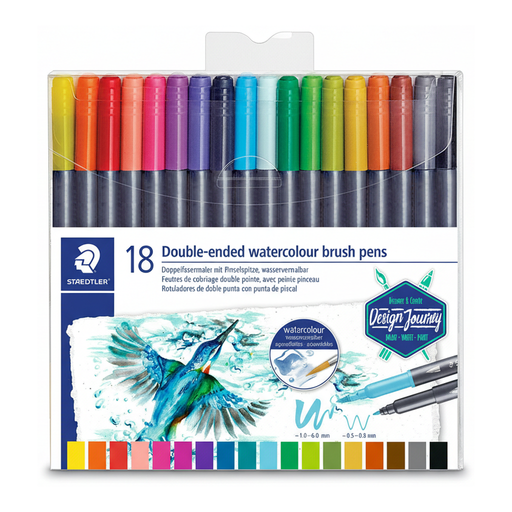
Why this choice suits this profile: Each pen combines a brush nib with a fine nib. A format well suited to illustrators, art students and manga enthusiasts who switch between fine details and broad washes.
The dual tip reduces compromises: the fine nib handles outlines, while the brush nib allows for expressive strokes and washes.
18 colours, water-based ink and two nibs per pen. Blends can be created on suitable paper using a damp brush.
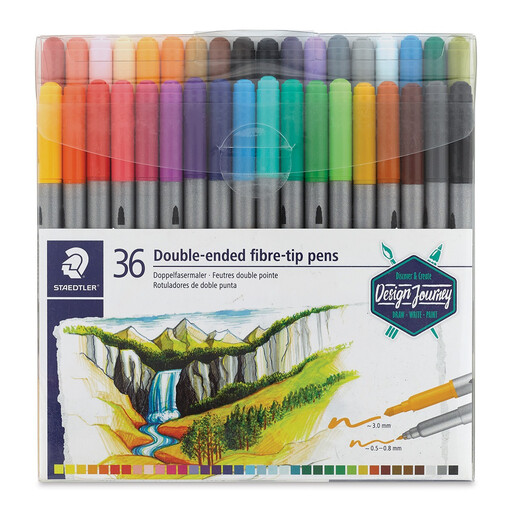
Why this choice suits this profile: Its extensive palette and fine and broad nibs are suitable for daily drawing, bullet journaling, colour-coded notes and a wide variety of creative projects.
You get two stroke widths without having to carry two different sets, which avoids duplicate purchases.
36 colours, dual fine and broad nibs, water-based ink and horizontal storage recommended.
We've selected a complete, real-time updated range of products that meet these exacting criteria, while complying with European safety regulations.
For large areas, a bullet or broad nib gives an even fill. For detailed patterns, go for a fine nib. Brush pens are a good choice if you want to vary your stroke width or add watercolour effects. The paper in your colouring book also plays a key role: always test the colour on a similar page before you start.
Apply the ink to watercolour paper, then spread it with a damp brush. Depending on the pen's formulation, you can also layer two shades before they dry. Transparent, water-based inks generally lend themselves better to this technique than opaque inks.
The lifespan depends on how often you use them, the pressure you apply to the nib, the type of paper and storage conditions. Heavy use on a rough surface wears down the fibres more quickly. Recapping pens straight away and keeping them away from heat reduces the risk of them drying out prematurely.