
Livraison le jour même ou le lendemain

Qualité garantie

Débloquez vos offres de bienvenue: Livraison GRATUITE | Jusqu'à -80 % | 30 jours d'essai gratuits à JoyPlus
Téléchargez l'application
Colouring pens aren’t just about the number of colours printed on the box. A generous palette can hide shades that are too similar, a fragile nib, or ink that bleeds through the page. Whether you’re into adult colouring, school projects, lettering or manga illustration, a few technical criteria can help you avoid disappointing purchases.
A set of 36 or 48 shades won’t necessarily suit every purpose. Fine-tip pens are perfect for outlines and tiny details, but they fill large areas slowly. Conversely, a broad tip covers a zone quickly, at the expense of precision.
To vary your uses without buying multiple sets, dual-tip pens combine a fine tip and a wider tip in one tool.
Water-based pens are very common for writing, schoolwork and colouring on paper. They’re generally easier to clean, but the result depends heavily on the paper weight. On paper that’s too thin, the ink can make the page buckle or show through on the reverse.
Acrylic pens offer a finish close to paint, often opaque, and can be used on various surfaces such as wood, glass, ceramic or canvas. However, they don’t replace classic pens in every situation: you need to check their drying time, adhesion and compatibility with the surface.
A nib that dries out quickly turns a set into an expensive purchase. After each session, caps must be replaced properly. Some brands also recommend horizontal storage, particularly to ensure a consistent ink flow. Heat, direct sunlight and porous surfaces can also damage your equipment.
For lettering, brush-tip pens require a bit of skill, but allow you to create more expressive thick and thin strokes. For colouring with intricate patterns, a combination of fine and medium tips often proves more practical.
Thick colouring paper reduces the risk of ink bleeding through. For a standard notebook, choose a formula advertised as bleed-resistant and test it on a similar page. Markers designed for adult colouring can produce intense colours, but multiple passes over the same spot can still saturate the paper.
Drawing markers intended for arts and crafts should be tested on an inconspicuous area when used on wood, glass, metal or a varnished surface. Metallic pens are useful for decorative touches, but their visibility can vary depending on the colour of the surface.
A triangular barrel or a contoured grip zone can make long sessions more comfortable. Also check the readability of the colour code and whether a reusable box is included. For children over 3 years old, caps remain small parts: adult supervision is recommended, in line with the warnings on product sheets.
Here is a selection organised by different usage profiles.
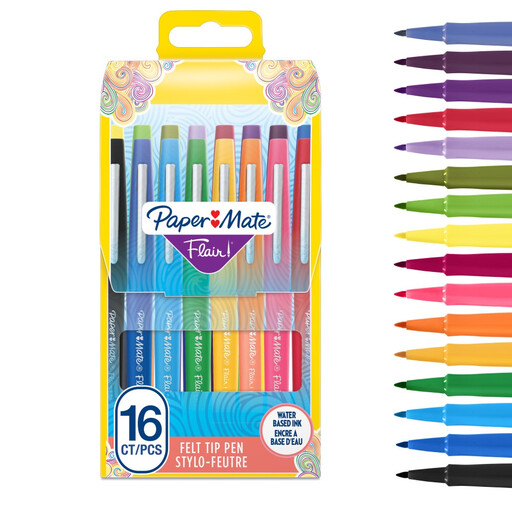
Why this choice suits this profile: With 16 colours and a medium 0.7mm tip, this set is ideal for colourful writing, school activities and first attempts at colouring on standard paper.
The medium tip stops you being limited to tiny details, while the water-based ink is advertised as bleed-resistant and designed to minimise paper show-through.
16 assorted shades, 0.7mm fibre tip, contoured grip barrel and water-based ink. Replace the cap after each use.
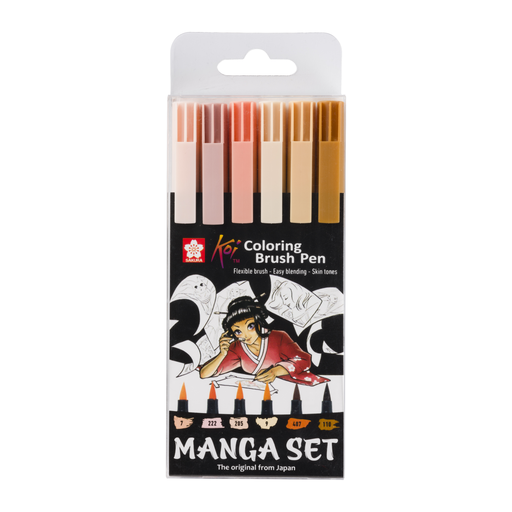
Why this choice suits this profile: Illustration, manga and creative journal enthusiasts can work on both details and broad areas thanks to a flexible brush tip and an included colourless blender.
The flexible tip meets several needs, unlike a set limited to a single line width. The transparent ink can be layered or blended to create shades.
Six pens, one colourless blender, a synthetic brush tip and water-based ink. Horizontal storage and careful capping are recommended.
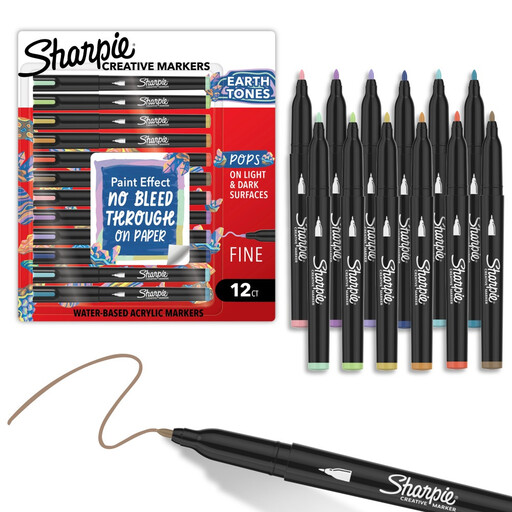
Why this choice suits this profile: DIY enthusiasts, customisers and those working on varied surfaces benefit from a fine tip and water-based acrylic ink designed for metal, wood, glass, ceramic and canvas.
It isn’t limited to paper, and its fine tip makes drawing complex lines easier. A test on an inconspicuous area is still essential before any application on a delicate surface.
12 assorted colours, fine tip, paint-like finish and the ability to layer colours without immediate blending, according to the product sheet.
We’ve put together a comprehensive, real-time updated selection of products that meet these strict criteria and European safety regulations.
Metallic pens add details that stand out on both light and dark paper. Watercolour pencils, meanwhile, let you move from a dry line to a diluted effect with a brush and a little water. For large areas of colour, a broad tip or a chisel-tip marker will be more comfortable than a fine tip.
If you use your pens regularly, organise colours by family, note down the references you’ve used and keep a test sheet. This method avoids duplicates and lets you check the finish before committing to a whole page.
They can bleed through thin paper, especially after several passes. Always test a colour on a page of equivalent weight. Thicker, less absorbent paper generally reduces the risk, though it doesn’t eliminate it completely.
A medium tip works for most areas. A fine tip is useful for detailed patterns, while a brush tip offers width variations and a more artistic finish. A dual-tip set can save you from buying several ranges.
Replace caps immediately, avoid heat and direct sunlight, and follow the manufacturer’s storage instructions. For some water-based or acrylic pens, horizontal storage is recommended. Also avoid pressing the tip against a surface for too long to prevent it from becoming crushed.