
Livraison le jour même ou le lendemain

Qualité garantie

Débloquez vos offres de bienvenue: Livraison GRATUITE | Jusqu'à -80 % | 30 jours d'essai gratuits à JoyPlus
Téléchargez l'application
Choosing the perfect coloring pencils for your child can feel overwhelming. Between promises of durability, ergonomic claims, and a jungle of formats, it's easy to get lost. Whether you're a parent or a teacher, your goal is the same: to find tools that spark creativity while being safe, sturdy, and age-appropriate.
This guide is here to bring you clarity. We'll break down the essential criteria to consider before you make a purchase and present a selection of tried-and-true products, from a toddler's first scribbles to the more detailed works of budding artists.
A few key points are all you need to guide your choice and ensure a successful creative experience.
For young children (ages 2-5), fine motor skills are still developing. A jumbo coloring pencil or a triangular pencil is therefore ideal. Their wider diameter and specific shape make them easier to hold and help the child position their fingers correctly without fatigue. Some ergonomic pencils go a step further with pre-molded grip zones that guide the hand intuitively. This is excellent preparation for learning to write.
Some pencils do more than just color on paper. The 3-in-1 pencil, for example, serves as a coloring pencil, wax crayon, and watercolor all at once. Capable of marking on glass, plastic, or cardboard, it multiplies the creative possibilities. A simple coloring tool becomes a gateway to artistic experimentation. It's a perfect option for creative school supplies that stand out from the crowd.
Who hasn't felt the frustration of a lead that breaks under the slightest pressure? To avoid this, opt for a thick lead (over 4 mm), a true mark of durability, especially with children who press down hard. Also, remember to check the composition: prioritize pencils made from wood from sustainably managed forests (e.g., PEFC certified) and with high-quality pigments for vibrant colors and good coverage.
Here are a few gems that stand out for their unique features, catering to different needs and age groups.
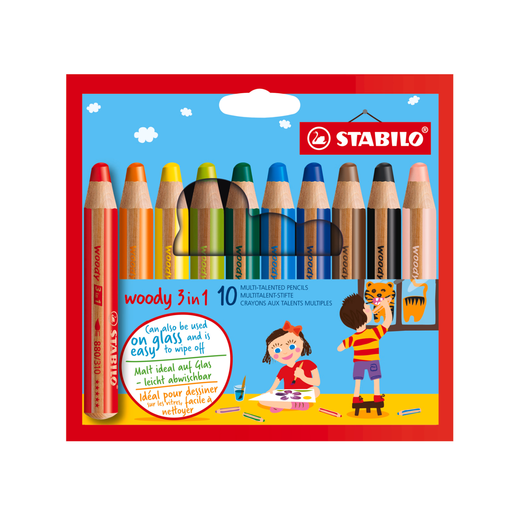
Why it stands out: The STABILO Woody 3-in-1 pencil is the Swiss Army knife of creativity. It functions as a coloring pencil, wax crayon, and watercolor pencil. The fact that it can write on almost anything (paper, cardboard, glass, metal, etc.) makes it incredibly fun.
Advantages:
Who is it for? Ideal for toddlers taking their first steps in coloring, but also for families and institutions (daycares, preschools) looking for a creative, durable, and all-purpose tool.
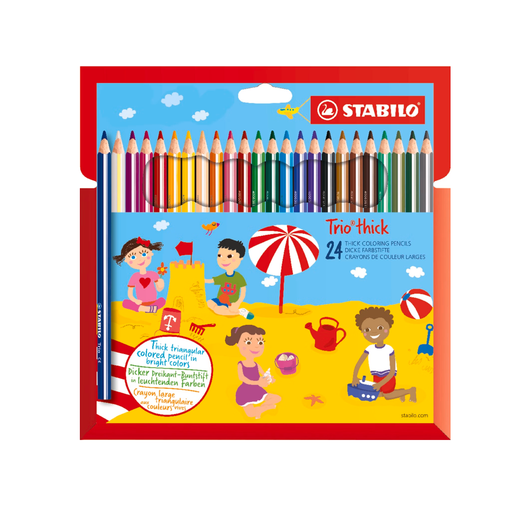
Why it stands out: This pencil gets straight to the point: ergonomics and durability. Its triangular shape was specifically designed for children learning to hold their pencils correctly.
Advantages:
Who is it for? Perfect for preschool and early elementary school children. An excellent choice for both home and the classroom, where durability is a non-negotiable criterion.
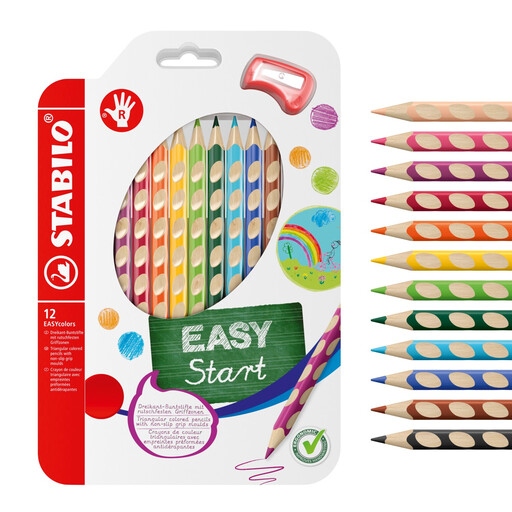
Why it stands out: The STABILO EASYcolors takes the concept of ergonomics a step further with a design tailored for right-handers (a left-handed version is also available). Its pre-molded grip zones intuitively guide finger placement.
Advantages:
Who is it for? Specially designed for right-handed children who are learning to draw and write and need a little helping hand to position their fingers correctly.
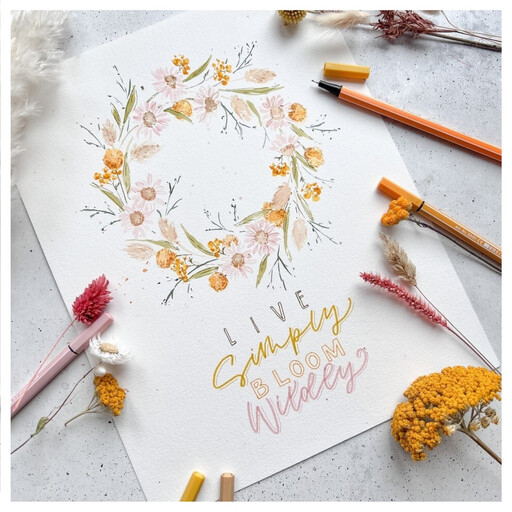
Why it stands out: A must-have alternative to wood pencils, this coloring felt-tip pen has been a true classic for over 50 years. It offers a color intensity and smooth glide that wood pencils can't match, delivering a brilliant finish.
Advantages:
Who is it for? An excellent option for older children (elementary, middle school), teens, and even adults who enjoy creative hobbies, drawing, or bullet journaling, and who are looking for both precision and intensity.
If our selection doesn't quite meet your needs, or if you want to create a custom coloring set for a child, the possibilities are endless. Fine-tipped markers, pastels, themed sets... the world of creative hobbies is a vast playground.
Take a look at our complete collection of Gift Box Assortments to get inspired and find the perfect gift that will hit the mark.
As early as 18 months or 2 years old, a child can begin to handle their first coloring tools. At this age, opt for jumbo coloring pencils or thick crayons, like the STABILO Woody 3-in-1, which are easy to grip and very sturdy. Of course, adult supervision is essential.
A classic pencil has a thin, often hexagonal body. An ergonomic pencil, on the other hand, is thicker and has a triangular shape. This design is specifically engineered to fit a child's hand, reduce fatigue, and help them develop a proper grip, which is essential for drawing and, later, writing.
To extend the life of your coloring pencils, always use a high-quality sharpener that is appropriate for their diameter. Remember to store them in a pencil case or box to protect the leads from impact. For felt-tip pens, the rule is simple: always recap them securely after use to prevent the tip from drying out.